Explore our curated collection of politics & society book reviews and recommendations.
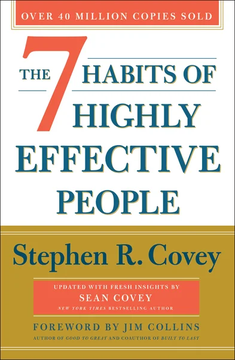
First published in 1989 and reissued in an anniversary edition by Simon & Schuster, Stephen R. Covey's The 7 Habits of Highly Effective People is a foundational business and self-help book that has sold over 40 million copies and was named the #1 Most Influential Business Book of the Twentieth Century — a record that makes it one of the most consequential works in its genre.
Feb 21, 2026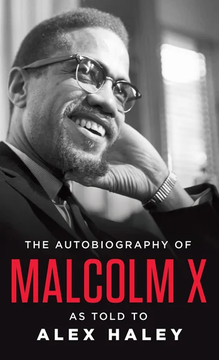
The Autobiography of Malcolm X, released posthumously on October 29, 1965, stands as one of the most significant works in American nonfiction — a New York Times bestseller and one of Time's ten most important nonfiction books of the twentieth century. Coauthored by Malcolm X and journalist Alex Haley through a series of in-depth interviews conducted between 1963 and 1965, the book traces Malcolm Little's journey from childhood poverty in Omaha and Lansing through petty crime and imprisonment, to his transformation into Nation of Islam spokesman Malcolm X, and finally to his founding of the Organization of Afro-American Unity. Its power as a religious conversion narrative, a document of Black pride and pan-Africanism, and a portrait of a man whose thinking outran his own life has made it required reading across generations.
Feb 17, 2026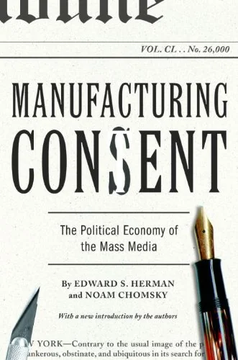
First published in 1988 and never out of print, Manufacturing Consent: The Political Economy of the Mass Media is one of the most consequential works of media criticism of the twentieth century, presenting a systematic propaganda model to explain how U.S. Mass media serve elite economic and political interests without any need for overt coercion.
Feb 19, 2026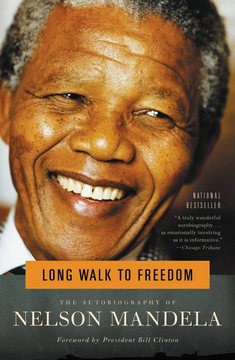
Nelson Mandela's Long Walk to Freedom is a landmark autobiography tracing his journey from a childhood rooted in the royal Thembu dynasty, through 27 years of imprisonment under apartheid, to his election as South Africa's first democratically elected president — a record praised by Kirkus Reviews as "the work of a man who has led by action and example."
Feb 19, 2026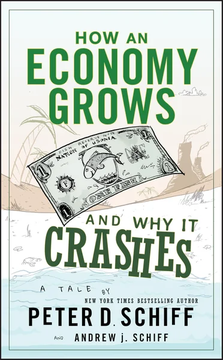
A New York Times bestseller and 2010 getAbstract International Book Award winner, How an Economy Grows and Why It Crashes is an illustrated allegorical book in which Peter D. Schiff and Andrew J. Schiff use humor, cartoons, and fictitious storytelling to explain inflation, deficit spending, central banking, international trade, and the 2008 financial crisis through a distinctly Austrian economics lens — arguing that production and savings, not consumption and inflation, are the true engines of prosperity.
Feb 11, 2026
Martin Gilbert's Churchill: A Life stands as the authoritative single-volume biography of Sir Winston Churchill, distilling decades of primary scholarship into a chronological portrait of one of the twentieth century's most consequential public figures.
Feb 18, 2026
Jonathan Haidt's The Righteous Mind: Why Good People Are Divided by Politics and Religion is a social psychology book, originally published in 2012 and reissued by Vintage in 2013, that argues human morality is driven primarily by intuition rather than reason — and that this fundamental fact explains the chasm between liberals, conservatives, and libertarians in modern political life. Structured across three distinct arguments, the book introduces Haidt's moral foundations theory, mapping six dimensions of moral judgment — care/harm, fairness/cheating, loyalty/betrayal, authority/subversion, sanctity/degradation, and liberty/oppression — to show why different political tribes speak what amount to different moral languages. It is a challenging, research-grounded work that draws both strong admiration and pointed critique, and remains one of the most discussed social psychology books of the past decade.
Feb 17, 2026
Barbara W. Tuchman's The Guns of August is a Pulitzer Prize-winning work of narrative military history that chronicles the outbreak of World War I — from the prewar mobilization plans of the great powers through the Franco-British offensive that halted the German advance into France — with a scope and vividness that has kept it in print and in classrooms for more than six decades.
Feb 17, 2026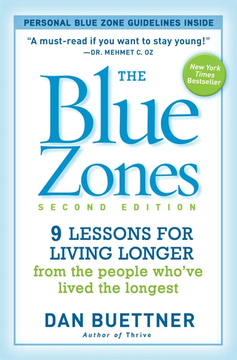
Dan Buettner's The Blue Zones distills field research from the world's longest-lived communities into nine actionable lessons, making a compelling case that a longer, healthier life is built less from genetics than from the right daily habits and community structures — a premise that has fueled both a publishing phenomenon and a real-world public health movement.
Feb 11, 2026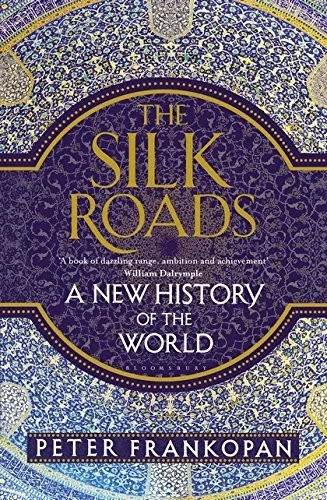
Peter Frankopan's The Silk Roads: A New History of the World is an international bestseller that mounts a sweeping, 25-chapter challenge to the Eurocentric narrative of civilisation, reorienting the story of humanity along the trade arteries connecting the Mediterranean to the Himalayas — a project that has earned wide critical praise alongside some pointed reservations about selective coverage and factual precision.
Feb 12, 2026
First published in 1960 by Simon & Schuster, William L. Shirer's The Rise and Fall of the Third Reich remains one of the most widely read single-volume histories of Nazi Germany — a National Book Award winner built on captured Nazi documents, Nuremberg trial testimony, and Shirer's own six years on the ground in Germany as a CBS Radio and UPI correspondent, though its central interpretive thesis has drawn sustained debate from academic historians ever since.
Feb 20, 2026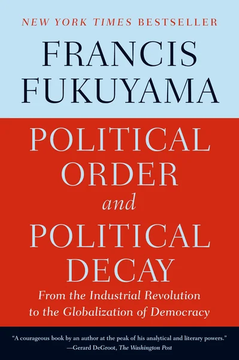
Francis Fukuyama's work Political Order and Political Decay is the second volume in his landmark series on the history of the modern state, picking up where The Origins of Political Order left off and tracing how state institutions developed — and began to erode — from the French Revolution to the present. Ambitious in geographical scope and deeply grounded in comparative political history, it is essential reading for anyone seeking to understand why liberal democracy succeeds in some settings and stagnates in others.
Feb 14, 2026Search
Rating
Active Filters
Search
Rating
Active Filters
Showing 61 - 72 of 76 reviews
