7 min read
4.7
· 3,008 Amazon ratingsShare This Review
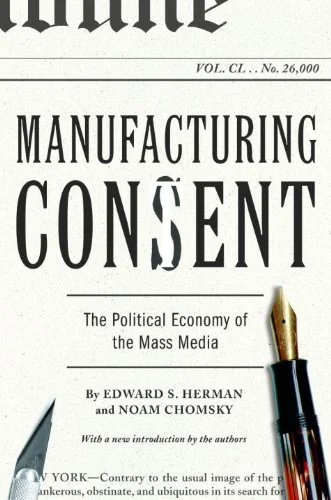
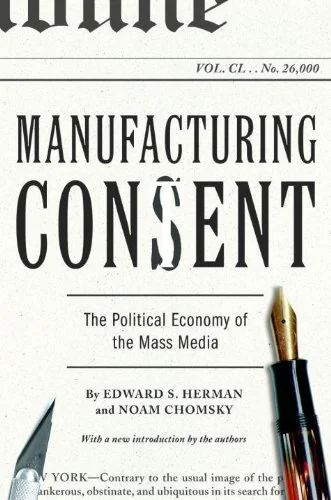
Manufacturing Consent by Edward S. Herman & Noam Chomsky Review: A Landmark Critique of Media Power
First published in 1988 and never out of print, Manufacturing Consent: The Political Economy of the Mass Media is one of the most consequential works of media criticism of the twentieth century, presenting a systematic propaganda model to explain how U.S. Mass media serve elite economic and political interests without any need for overt coercion.
LuvemBooks Verdict
Best for
Serious readers of political economy, media studies, or journalism who want a rigorous, evidence-grounded framework for understanding how corporate and state interests structurally shape mainstream news coverage.
Worth it if
The structural logic of the propaganda model — grounded in advertising economics, sourcing dependencies, and self-censorship rather than conspiracy — is exactly the kind of durable analytical framework you're looking for in media criticism.
Skip if
Readers seeking a concise or accessible introduction to media theory should look elsewhere: at 675 pages of exhaustive case studies presupposing familiarity with specific Cold War-era foreign-policy episodes, this book demands significant prior context and patience.
What readers & critics say
Kirkus Reviews described it as "heavy-handed analysis," noting that Herman and Chomsky aim to demonstrate that U.S. Media tend to "buttress elite groups and privileged organizations" rather than enable genuine public control over the political process. Academic sources on ResearchGate and SSRN characterise it as a landmark critical media theory work — a "masterpiece" presenting a structural, not conspiratorial, account of how mass media serves elite interests — while journalism.university identifies it as a "landmark 1988 work" whose central question is whether the very structure of media institutions makes genuine independence "nearly impossible."
“Heavy-handed analysis… the authors aim to demonstrate that the media in America tend to buttress elite groups and privileged organizations.”
— Kirkus ReviewsAsk LuvemBooks
Was this helpful?
- Is it worth reading?
- For readers seriously interested in media criticism, political economy, or the structural forces shaping public discourse, Manufacturing Consent is an essential — if demanding — text. Its propaganda model is grounded in economic analysis rather than conspiracy claims, which makes it more durable and analytically rigorous than much popular media criticism. The book's continuous print run since 1988, its Orwell Award recognition, and its influence across academia and documentary film all attest to its enduring importance. That said, its 675 pages, exhaustive case studies, and uncompromising prosecutorial stance make it a genuine challenge rather than casual reading.
- Similar books
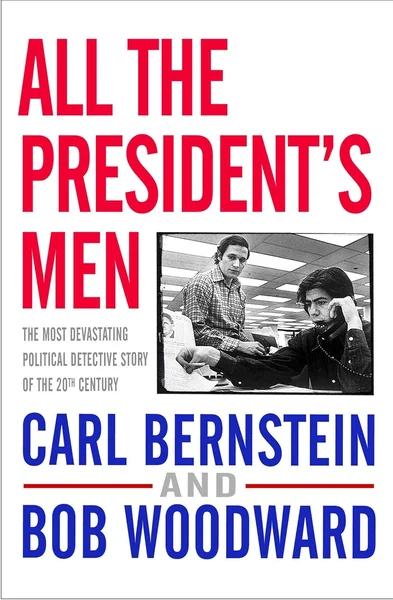
- Readers drawn to Manufacturing Consent's interrogation of power, institutions, and public discourse will find rewarding companions in several nearby titles. Bob Woodward and Carl Bernstein's All the President's Men offers a landmark case study in investigative journalism confronting political power directly. For a broader structural analysis of how institutions shape political and economic outcomes, Daron Acemoglu and James A. Robinson's Why Nations Fail: The Origins of Power, Prosperity, and Poverty applies comparable institutional thinking to national development. Alexis de Tocqueville's Democracy in America provides a foundational lens on democratic society and public opinion that contextualizes Herman and Chomsky's concerns. Sophie Gilbert's Girl on Girl: How Pop Culture Turned a Generation of Women extends the critique of media and cultural manufacturing into contemporary pop culture. Chomsky's Necessary Illusions: Thought Control in Democratic Societies is a direct companion to Manufacturing Consent but is not currently in the LuvemBooks catalogue.
- Who should read this?
- Manufacturing Consent is best suited to serious adult readers with an interest in media criticism, political economy, journalism, or U.S. foreign policy. It particularly rewards those who already have some familiarity with the specific historical episodes — Indochina, the Nicaraguan elections, the Bulgarian Connection — that anchor the book's case studies, as the chapters are exhaustive and presuppose contextual knowledge. Scholars, students of communications and political science, and engaged citizens seeking a structural framework for understanding media bias will find it essential. Readers who prefer accessible, balanced introductions to media theory, or who are put off by a committed prosecutorial argumentative style, are better served by a different entry point.
- Tell me about the adaptation
- A 1992 documentary film, Manufacturing Consent: Noam Chomsky and the Media, directed by Mark Achbar and Peter Wintonick, brought the book's ideas to a wider audience through a three-hour adaptation centered on the propaganda model and Chomsky's career and public profile. The film is notable both as an accessible introduction to the book's core arguments and as something of a cultural phenomenon in its own right — the review notes that a media-criticism book generating its own major documentary is itself a measure of the work's impact. The film is generally considered a more approachable entry point to the material for those daunted by the full 675-page text.
- What are the main themes?
- Manufacturing Consent is organized around several interlocking themes: the structural relationship between corporate media ownership and political power, the role of advertising revenue in shaping editorial decisions, the dependence of news organizations on powerful institutional sources, and the self-censorship that arises from internalized professional norms. A key theme throughout is the distinction between conspiratorial and structural accounts of media bias — Herman and Chomsky explicitly argue that the propaganda model requires no individual dishonesty or covert coordination, only the rational operation of economic incentives. The book also engages with the gap between the democratic ideal of a free press and the systemic reality of media output filtered through corporate interests.
- Who wrote what?
- The division of labor between Edward S. Herman and Noam Chomsky is documented within the book itself. By Herman's own account, he was responsible for the preface and Chapters 1 through 4, while Chomsky handled Chapters 5 through 7. Chomsky has also acknowledged that the propaganda model itself originated with Herman, and Herman's background as a professor of finance at the Wharton School of the University of Pennsylvania provided the financial and economic analysis that forms much of the book's empirical backbone. Both authors have credited Australian social psychologist Alex Carey — to whom the book is dedicated — as an important intellectual forerunner.
Summarize this book
Follow up
Synthesized from verified book data & published reviews · How we review
Press Enter to ask. Answers come from our editorial Q&A — start typing to see related questions.
Age & Reading Level
Recommended age
Adult
Reading level
Adult
who it suits
Skip if you want a balanced, multi-perspective survey of media theory rather than a sustained prosecutorial argument for a single structural framework.
Our Review
What the Book Actually Argues
Origins, Authorship, and Intellectual Context
Significance and Reception
Strengths of the Framework
Limitations and Who May Struggle
Sources & Further Reading
The key facts and claims in this review are grounded in the retrieved, verified sources listed below.
- 1
en.wikipedia.org
- 2
files.libcom.org
- 3
- 4
captainfez.com
- 5
- 6
- 7
- 8
- 9
mend.org.uk
- 10
Books like Manufacturing Consent
Curated picks for readers who enjoyed Manufacturing Consent, with our reasoning for each match.
If you liked Manufacturing Consent