Explore our curated collection of politics & society book reviews and recommendations.
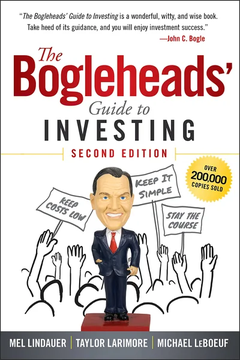
The Bogleheads' Guide to Investing is a practical, DIY personal-finance handbook built on the low-cost, passive-investing philosophy of Vanguard founder John C. Bogle. Co-authored by three community leaders — Taylor Larimore, Mel Lindauer, and Michael LeBoeuf — the second edition (published by Wiley in November 2021) updates foundational Boglehead principles with coverage of backdoor Roth IRAs, ETFs as buy-and-hold vehicles, estate taxes, gifting, and recent changes to retirement-plan law. This review is based on published sources and the book's documented contents, not hands-on application.
Feb 26, 2026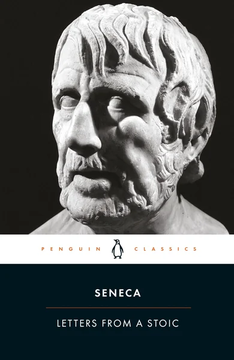
This Penguin Classics edition of Seneca's Epistulae Morales ad Lucilium — selected and translated by Robin Campbell — presents 124 letters written by the Roman philosopher Lucius Annaeus Seneca during his retirement after more than a decade serving Emperor Nero, offering one of antiquity's most enduring and personal meditations on how to live with virtue, courage, and equanimity.
Feb 25, 2026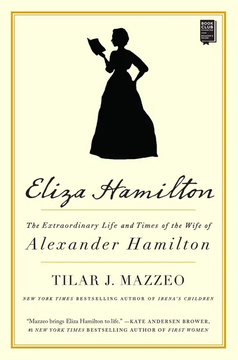
Tilar J. Mazzeo's biography of Eliza Schuyler Hamilton — originally published in September 2018 and reissued by Gallery Books in 2019 — makes a compelling case for Eliza's place among the unsung heroes of America's founding era, and offers a genuinely provocative central argument about the Maria Reynolds affair. Publishers Weekly called it an expertly told story certain to captivate Hamilton fans, while Kirkus Reviews found it a middling biography of a worthy subject — a split that fairly captures the book's real strengths and real limitations.
Mar 8, 2026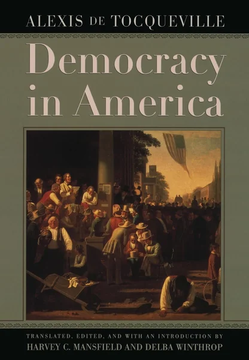
The University of Chicago Press edition of Democracy in America, translated by Harvey C. Mansfield and Delba Winthrop, presents Tocqueville's foundational two-volume work in what the press.uchicago.edu site describes as the finest and most definitive translation yet produced — one that Gordon S. Wood, writing in the New York Review of Books, called "an impeccable new edition and translation." Originally published in Paris in 1835 and 1840, Tocqueville's examination of American democracy, equality, religion, and the social costs of democratic life remains the most often cited work on the United States and on democracy as a form of government.
Mar 7, 2026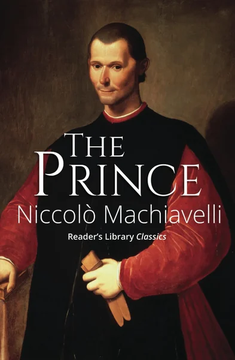
Machiavelli's The Prince is a 16th-century political treatise — composed in 1513 and first published posthumously in 1532 — that has endured for half a millennium as one of the most controversial and consequential works in the history of political thought, offering a bracingly pragmatic guide to acquiring and holding power.
Feb 22, 2026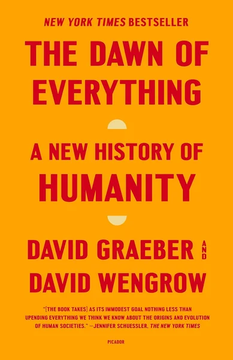
A New York Times bestseller co-authored by anthropologist David Graeber and archaeologist David Wengrow, The Dawn of Everything is a sweeping, award-winning reexamination of human prehistory that dismantles centuries-old assumptions about social evolution, the origins of agriculture, cities, democracy, and inequality — and argues that the human past holds far more possibility than conventional wisdom allows.
Mar 15, 2026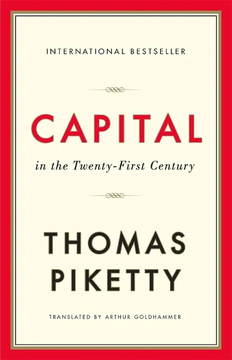
Thomas Piketty's Capital in the Twenty-First Century is a landmark work of economic nonfiction that draws on data from twenty countries spanning the eighteenth century to the present to argue that when the rate of return on capital outpaces economic growth, wealth concentrates among a shrinking minority — and proposes a global progressive wealth tax as the remedy. Originally published in French in 2013, translated into English by Arthur Goldhammer in 2014, and reissued in paperback by Belknap Press/Harvard University Press, the book reached number one on the New York Times Best Seller list for hardcover nonfiction and went on to sell over 2.5 million copies worldwide by the end of 2017, becoming the greatest sales success in Harvard University Press history. It is an essential, if demanding, text for anyone serious about understanding economic inequality.
Feb 26, 2026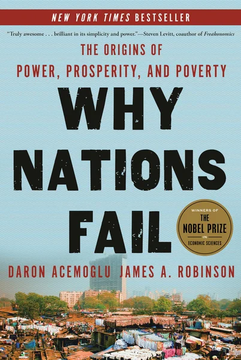
Why Nations Fail: The Origins of Power, Prosperity, and Poverty, first published in 2012 by economists Daron Acemoglu and James A. Robinson, constructs a sweeping institutional theory of why some countries accumulate wealth while others remain trapped in poverty — drawing on fifteen years of original research and historical evidence spanning the Roman Empire, the Mayan city-states, the Soviet Union, North and South Korea, medieval Venice, and Africa. The book argues, against geographic, cultural, and climatic explanations, that man-made political and economic institutions are the decisive factor in national prosperity. A New York Times and Wall Street Journal bestseller, it was named one of the best books of the year by The Washington Post, Financial Times, The Economist, BusinessWeek, Bloomberg, and The Christian Science Monitor. In 2024, Acemoglu and Robinson were awarded the Nobel Memorial Prize in Economic Sciences, partly for the body of scholarship this book represents.
Feb 25, 2026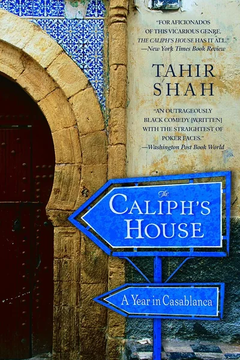
Tahir Shah's memoir chronicles his family's leap from England to Casablanca, where he purchases Dar Khalifa — a crumbling, jinn-haunted compound reputedly once belonging to the city's Caliph — and spends a tumultuous year restoring it, navigating Moroccan customs, and confronting a world where the supernatural and the everyday are inseparable.
Mar 12, 2026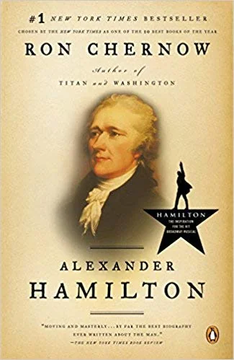
Ron Chernow's Alexander Hamilton is a #1 New York Times bestselling biography that recasts one of American history's most debated Founding Fathers — an illegitimate, self-taught Caribbean orphan who rose to become George Washington's aide-de-camp, the primary architect of The Federalist Papers, and the first Treasury Secretary of the United States — as the indispensable, if often misunderstood, engine behind the nation's political and economic foundations. Winner of the George Washington Book Prize and the inspiration for the Broadway musical Hamilton, it stands as the definitive full-length portrait of its subject, drawing accolades from historians including David McCullough, Joseph Ellis, and Robert A. Caro.
Mar 7, 2026
SuperSummary's study guide for Ron Chernow's biography Alexander Hamilton is a chapter-by-chapter academic companion designed to help students, educators, and general readers get more out of one of the most celebrated works of American biographical writing. Written by experienced educators and literary scholars, it covers all 43 chapters of the source biography with summaries, character analysis, theme breakdowns, and discussion material — making Chernow's densely researched account of the Founding Father more accessible without replacing the original text.
Mar 1, 2026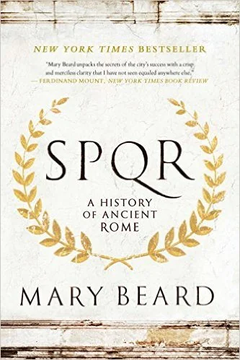
Mary Beard's SPQR: A History of Ancient Rome is a critically acclaimed work of popular history published in 2015, a New York Times bestseller and finalist for the National Book Critics Circle Award (Nonfiction), that interrogates Rome's origins, power structures, and multicultural world through close reading of fragmentary evidence rather than a smooth, triumphalist narrative.
Feb 28, 2026Search
Rating
Active Filters
Search
Rating
Active Filters
Showing 49 - 60 of 76 reviews
