At a glance
About the Author
Malcolm X and Alex Haley1 book reviewed
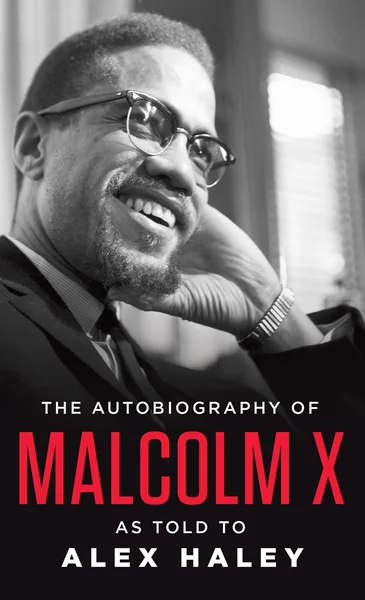
The Autobiography of Malcolm X
by Malcolm X and Alex Haley
LuvemBooks Verdict
Best for: Readers — whether general or students of American history, civil rights, religion, or autobiography as a literary form — who want to encounter Malcolm X's philosophy, his break with the Nation of Islam, and the arc of his thinking in his own constructed voice rather than through a secondary account.
Worth it? Skip it? Read the full verdict →Ask LuvemBooks
Was this helpful?
- Is it worth reading?
- For readers seeking to understand Malcolm X's actual philosophy, his break with Elijah Muhammad, and the trajectory of his thinking in the final years of his life, no secondary source substitutes for the Autobiography itself. Its critical reception has held for six decades — from Eliot Fremont-Smith's 1965 assessment of it as a 'brilliant, painful, important book' to Time naming it one of ten nonfiction books of 'required reading' in 1998. The Nation described it as possessing 'dead level honesty, its passion, its exalted purpose' and called it 'a monument to the most painful truth.' Readers who want the full picture should also be aware that Haley's editorial hand shaped the text in documented ways, making scholarly engagement with its construction part of the reading experience.
- Similar books
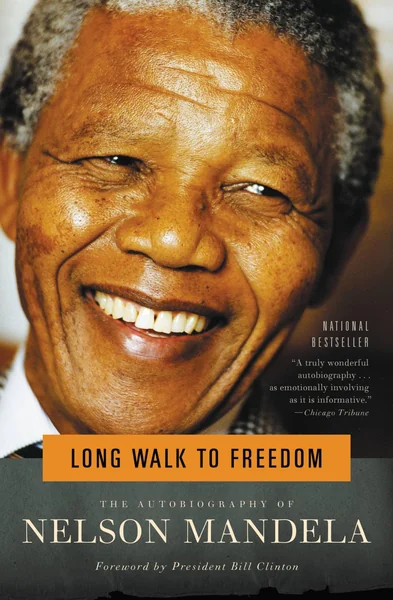
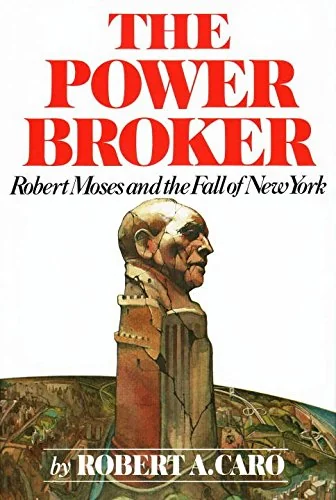
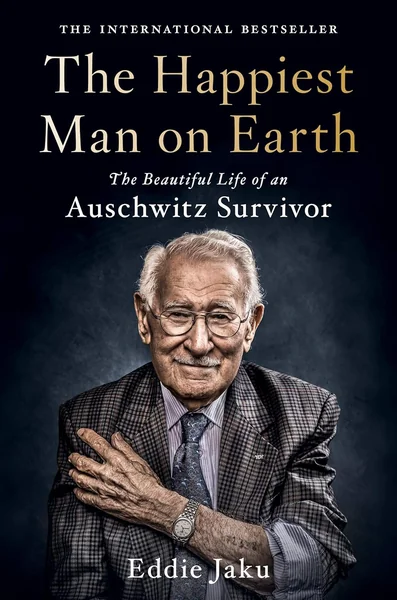
- Readers drawn to The Autobiography of Malcolm X often connect with other landmark political autobiographies and works of confessional nonfiction. Nelson Mandela's Long Walk to Freedom shares both the scope — a life shaped by incarceration and ideological transformation — and the genre's function as a willed act of legacy-building. For readers interested in the intersection of individual ambition and systemic power, Robert A. Caro's The Power Broker and Master of the Senate offer comparable depth of research and moral seriousness, though in biographical rather than autobiographical form. Yeonmi Park and Maryanne Vollers's In Order to Live and Eddie Jaku's The Happiest Man on Earth are memoir-driven accounts of survival and self-reconstruction that share the Autobiography's emphasis on personal testimony as a document of historical injustice.
- Who should read this?
- The book is designed for general readers as well as students of American history, civil rights, religion, and autobiography as a literary form. Penguin Random House frames it as offering 'extraordinary insight into the most urgent issues of our own time,' and scholars including Arnold Rampersad and Michael Eric Dyson have positioned it within the Augustinian confessional tradition — making it rewarding for readers approaching it as literature, not only as history. Readers who want a straightforward, externally verified biography of Malcolm X should be aware that this is a self-constructed narrative and may want to supplement it with independent scholarly sources.
- How was the book written?
- Journalist Alex Haley conducted a series of in-depth interviews with Malcolm X between 1963 and 1965, and from those sessions constructed a first-person narrative in which his own authorial voice deliberately recedes so that Malcolm X appears to address the reader directly. While Malcolm X and contemporaneous scholars regarded Haley as a ghostwriter, modern scholarship positions him as an essential collaborator whose editorial decisions shaped the book's tone and structure in documented ways. When Malcolm X left the Nation of Islam mid-project and was inclined toward a more polemical rewrite, Haley steered the narrative toward what has been described as a style of 'suspense and drama.' Biographer Manning Marable has also noted that Haley revised material he viewed as anti-Semitic before publication — making the text's seams, the tension between what Malcolm wanted to say and what Haley shaped, a significant part of its scholarly interest.
- What are the main themes?
- The book operates simultaneously as a religious conversion narrative, a document of Black pride and pan-Africanism, and a portrait of a man whose thinking outran his own life. Central themes include systemic racism, poverty, incarceration, and self-transformation — Malcolm Little's arc from childhood in Omaha and Lansing through crime and imprisonment to Nation of Islam leadership and, finally, to a pan-Africanist philosophy is the book's structural spine. Scholars have also identified it as working within the Augustinian confessional tradition, giving questions of faith, identity, and moral reckoning a literary weight beyond their political significance. The tension between self-construction and editorial mediation — what Malcolm X chose to say versus what Haley shaped — is itself a thematic thread that rewards close reading.
- Tell me about the adaptation
- The Autobiography of Malcolm X served as the source material for Spike Lee's 1992 film Malcolm X, starring Denzel Washington in the title role. The screenplay was adapted by James Baldwin and Arnold Perl from the book, though Baldwin's involvement went through several stages before Lee took the project over. The film follows the broad arc of the autobiography — Malcolm's childhood, his criminal years, his Nation of Islam period, and his break with Elijah Muhammad — and is widely regarded as one of the most significant American biographical films. Readers of the book will find the film a companion rather than a substitute: the Autobiography's confessional architecture, layered authorship, and documentary epilogue are elements that belong to the page.
Summarize this book
Follow up
Synthesized from verified book data & published reviews · How we review
Press Enter to ask. Answers come from our editorial Q&A — start typing to see related questions.
Age & Reading Level
Recommended age
Ages 16+
Reading level
Adult
4 content notes · who it suits
Content to know about
Best for: Adults / mature 16+ — the book's unflinching account of systemic racism, incarceration, and poverty, combined with its complexity as a constructed confessional narrative, suits mature readers.
Skip if you want a straightforward, externally verified biography rather than a self-constructed narrative shaped by its subject and collaborator.
Editorial Review
The Autobiography of Malcolm X, released posthumously on October 29, 1965, stands as one of the most significant works in American nonfiction — a New York Times bestseller and one of Time's ten most important nonfiction books of the twentieth century. Coauthored by Malcolm X and journalist Alex Haley through a series of in-depth interviews conducted between 1963 and 1965, the book traces Malcolm Little's journey from childhood poverty in Omaha and Lansing through petty crime and imprisonment, to his transformation into Nation of Islam spokesman Malcolm X, and finally to his founding of the Organization of Afro-American Unity.…
Read the Full ReviewBooks like The Autobiography of Malcolm X
Curated picks for readers who enjoyed The Autobiography of Malcolm X, with our reasoning for each match.
If you liked The Autobiography of Malcolm X