At a glance

LuvemBooks Verdict
Best for: Historically curious general readers who find the conventional Western-centric narrative of world history unsatisfying and want a sustained, accessible argument for why Central Asia, the Middle East, and the Silk Roads — not the Mediterranean — have been the true engine of civilisation.
Worth it? Skip it? Read the full verdict →Ask LuvemBooks
Was this helpful?
- Is it worth reading?
- For readers who find the conventional Western-centric narrative of history unsatisfying but lack a specialist background in Central Asian or Middle Eastern history, The Silk Roads is a richly stimulating read — the kind of book critics called 'a rare book that makes you question your assumptions about the world.' Its international bestseller status reflects genuine broad readership, and The New York Times, despite noting flickers of over-reach, concluded it earns its place as what historian Norman Stone would call 'an old-fashioned good book.' The honest caveat is that The Guardian identified factual errors, and researchers K. Laug and S. Rance have pointed to a meaningful gap in the treatment of India's economic history — so those seeking a definitive, error-free academic reference should read it alongside specialist sources.
- Similar books
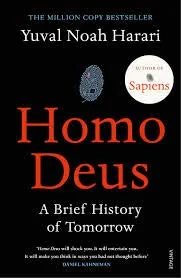
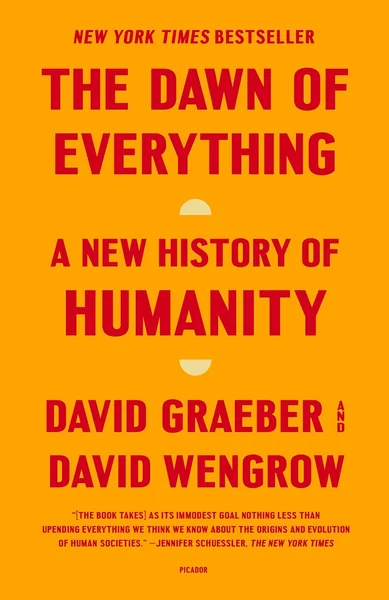
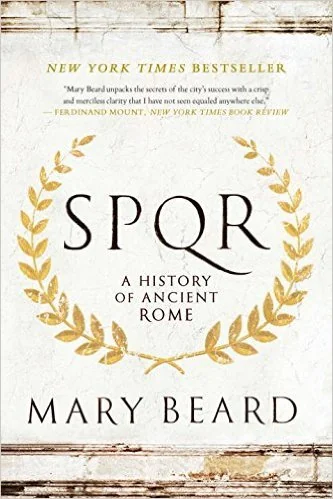
- Readers energised by The Silk Roads' revisionist sweep will find close company in several titles curated below. Yuval Noah Harari's Sapiens: A Brief History of Humankind shares the same grand-scale, single-thesis ambition and has become the defining popular history of recent years. Jared Diamond's Guns, Germs, and Steel similarly argues that geography and environment — rather than European ingenuity — drove the shape of civilisation, making it a natural companion read. David Graeber and David Wengrow's The Dawn of Everything: A New History of Humanity pushes revisionism further, questioning the standard story of human social evolution. Howard Zinn's A People's History of the United States performs a comparable de-centring move within American history, foregrounding the voices typically left out of mainstream narratives. Mary Beard's SPQR: A History of Ancient Rome offers rigorous popular scholarship on one of the civilisations Frankopan deliberately sidelines — useful context for understanding what his eastern reorientation is arguing against.
- Who should read this?
- The Silk Roads is written for general adult readers who find the conventional Western-centric narrative of history incomplete or unsatisfying and are looking for an accessible but substantive alternative framework. It will particularly reward readers drawn to the contemporary relevance of Central Asia, the Middle East, and China's re-emergence as a global power — Frankopan's historical framework speaks directly to those headlines. Specialist readers already deeply versed in Central Asian and Middle Eastern history may find stretches of the argument cover familiar ground, and those seeking a definitive academic reference should supplement it with specialist sources given The Guardian's documented factual concerns.
- About Peter Frankopan
- Peter Frankopan is a British historian, writer, and hotelier.
- What's Frankopan's central argument?
- Frankopan's central contention is that the network of trade routes connecting Eastern Europe, the Middle East, Central Asia, and China — loosely known as the Silk Roads, a term coined only in 1877 by German geographer Ferdinand von Richthofen — constitutes the true spine of world history, not the Mediterranean basin that dominates Western school curricula and museum galleries. He argues that the spread of Buddhism, Christianity, and Islam, the catastrophe of the Black Death, the slave trade, and the great wars of the twentieth century all pivot on this eastern axis. The book opens deliberately with the Persian empire rather than Greece or Rome to signal this reorientation from its very first pages.
- What are the book's specific blind spots?
- The most specific blind spot identified in critical reception concerns India: researchers K. Laug and S. Rance noted that Frankopan does not adequately account for India's rapid population expansion and the widening wealth gap when assessing the Silk Roads' role in Indian economic growth. The Guardian raised the additional concern that the book's Persian-centric framing, while illuminating, comes with factual errors that undercut confidence in some of its specific historical claims. Separately, readers who already know the landscape of Central Asian empires may find stretches of the narrative covering familiar territory.
Summarize this book
Follow up
Synthesized from verified book data & published reviews · How we review
Press Enter to ask. Answers come from our editorial Q&A — start typing to see related questions.
Age & Reading Level
Recommended age
Adult
Reading level
Adult
2 content notes · who it suits
Content to know about
Skip if you want a tightly scoped regional history rather than a sweeping single-thesis rewrite of world history spanning millennia
Editorial Review
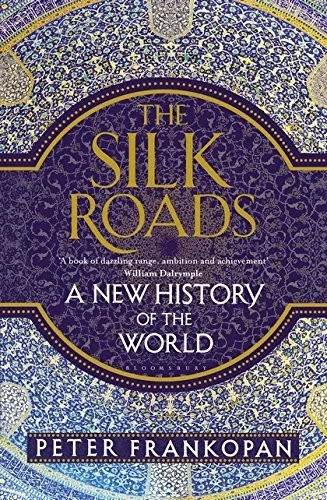
Peter Frankopan's The Silk Roads: A New History of the World is an international bestseller that mounts a sweeping, 25-chapter challenge to the Eurocentric narrative of civilisation, reorienting the story of humanity along the trade arteries connecting the Mediterranean to the Himalayas — a project that has earned wide critical praise alongside some pointed reservations about selective coverage and factual precision.
Read the Full ReviewBooks like The Silk Roads
Curated picks for readers who enjoyed The Silk Roads, with our reasoning for each match.
If you liked The Silk Roads