BOOKS
Published

Read Time

3 min read

Curated & edited by

LuvemBooks Editorial

How we create our reviews →
Share This Review

LuvemBooks Verdict

Best for

General readers of popular history who want a sweeping, argument-driven reorientation of world civilisation around Central Asia and the Silk Roads rather than the traditional Eurocentric narrative.

Worth it if

You're drawn to revisionist macro-history that uses a single bold thesis to reorganise the entire arc of human civilisation, and you're open to having long-held assumptions about Rome, Greece, and Western primacy genuinely challenged.

Skip if

You're either a specialist in Central or South Asian history — who may find the broad panoramic sweep covers familiar ground too quickly — or a complete newcomer to world history who could find the sheer geographic and chronological scale disorienting, especially given the factual errors The Guardian identified.

What readers & critics say

The Guardian praised the book as "full of intriguing insights and some fascinating details" across its 646 pages, but delivered the significant caveat that this "ambitious Persian-centric rewrite of world history is let down by factual errors," questioning who exactly the book is aimed at. Kirkus Reviews was more wholehearted, concluding that Frankopan "weaves together his many narrative strands with verve and impressive scholarship," calling it "a vastly rich historical tapestry that puts ongoing struggles in a new perspective."

An ambitious Persian-centric rewrite of world history, full of insight but let down by factual errors.

The Guardian

Frankopan weaves together his many narrative strands with verve and impressive scholarship.

Kirkus Reviews

Makes his case for the Silk Roads as the heart of the world in meticulous detail.

LSE Review of Books

A wonderfully refreshing book which gives new insight into world history.

Write Out Loud Blog
Sources: The Guardian, Kirkus Reviews, LSE Review of Books, Write Out Loud Blog
4.5from 9,661 Amazon ratings— reader ratings, not a LuvemBooks score

Look inside the book

Preview the actual pages, via Google Books

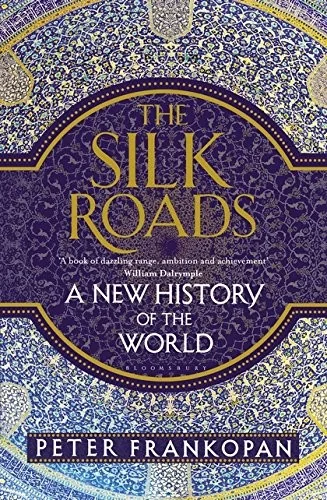
The Silk Roads: A New History of the World by Peter Frankopan Review: A Bold, East-Centered Rewrite of History

by Peter Frankopan

·

3 min read

In This Review
  • What Works & What Doesn't
  • What the Book Is and What It Argues
  • Significance and Place in the Field
  • Strengths: Depth, Accessibility, and Archival Reach
  • Genuine Limitations and the Audience Problem
  • Who This Book Is genuinely For

What Works & What Doesn't

What Works
  • Repositions world history around the East-West trade networks with a forceful, well-sourced central argument that major outlets including The Wall Street Journal and The New Yorker found genuinely thought-provoking
  • Covers an extraordinary chronological range — from the Persian empire through to modern geopolitics — across 25 structured chapters
  • Balances scholarly archival depth with accessibility, making complex historical interconnections legible to general readers, as noted by anthropologist Nikolay Kradin
  • Packed with specific, illuminating details — such as the 1877 coinage of the term 'silk road' — that reward attentive reading
  • An international bestseller that generated serious critical engagement across major literary and news outlets
What Doesn't
  • The Guardian identified factual errors in the text — a significant concern for a work whose authority rests on archival correction of mainstream history
  • Sits in an awkward middle ground for readers: those without broad historical background may struggle, while well-read historians may find parts of the argument familiar, as The Guardian noted
  • Researchers K. Laug and S. Rance identified a specific analytical gap in the treatment of India's economic history, particularly regarding population growth and wealth inequality
  • The Independent characterized it as 'bold, if imperfect,' reflecting a consensus that the book's reach occasionally exceeds its grasp
An international bestseller that forces a fundamental rethink of where world history actually happened, The Silk Roads is an ambitious, often exhilarating, and occasionally frustrating work of popular non-fiction history.

What the Book Is and What It Argues

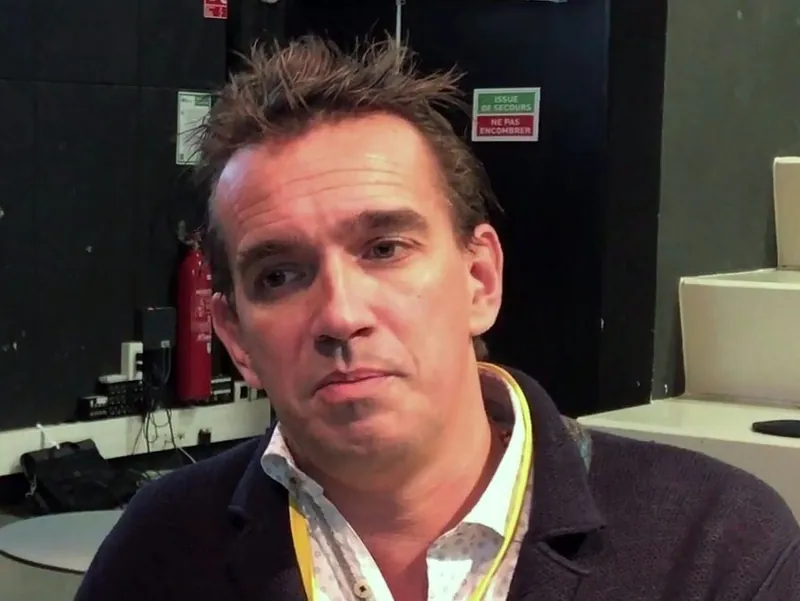
Peter Frankopan, a historian at the University of Oxford and director of the Centre for Byzantine Research, constructed The Silk Roads: A New History of the World around a single, forceful proposition: that the traditional Eurocentric narrative — in which Western civilization descends in a clean line from Rome to Greece to Egypt — fundamentally misrepresents the shape of world history. Frankopan relocates the centre of historical gravity eastward, to Iran and the "stans," to the vast network of trade routes running from the eastern Mediterranean through Central Asia to China. As The Guardian's review describes it, these silk roads are "the arteries along which people, goods, ideas, religions, disease and many other things have flowed." The book's 25 chapters trace this argument across millennia, opening with the rise of the Persian empire and moving through the spread of the great religions, the era of the Mongols and the Black Death, the age of Western expansion, and ultimately the rise of Eastern economic power in the modern period.

Significance and Place in the Field

The book arrived in 2015 as a deliberate intervention in how popular history is written and consumed in the English-speaking world. Frankopan's argument — that for most of recorded history the region linking East and West was the world's dominant zone of exchange, innovation, and power — was not entirely new to academic historians, but the scale and accessibility of his presentation gave it fresh force. The publisher, Penguin Random House, describes it as "truly a revelatory new history of the world, promising to destabilize notions of where we come from and where we are headed next." The Wall Street Journal credited Frankopan with "the ability to draw unusual connections across his vast canvas," while NPR stated that the book "forces us to sit up and reconsider the world and the way we've always thought about it." The New Yorker noted that Frankopan "marshals diverse examples to demonstrate the interconnectedness of cultures, showing in vivid detail the economic and social impact of the silk and the slave trades, the Black Death, and the Buddhist influence on Christianity." That breadth of major-outlet attention reflects the book's genuine impact as a work of popular intellectual history.

Strengths: Depth, Accessibility, and Archival Reach

Where critics consistently praised The Silk Roads, they did so for the combination of scholarly depth and readability that Frankopan achieves across an enormous canvas. According to Wikipedia's reception summary, anthropologist and archaeologist Nikolay Kradin found each chapter heading "highly intriguing" and commended Frankopan for masterfully balancing history with literature in a way that makes the book accessible even to readers unfamiliar with the subject. The Guardian's review, while mixed overall, acknowledged that the book is "full of intriguing insights and some fascinating details" — an observation borne out by details such as the fact that the term "silk road" itself was coined only in 1877 by German geographer Ferdinand von Richthofen. The New York Times, as cited in Wikipedia's reception summary, concluded that while the danger of glibness is present, "it is always held off," ultimately calling it "an old-fashioned good book." The Wall Street Journal's description of it as "a rare book that makes you question your assumptions about the world" captures what many readers and reviewers identified as its core achievement: it reframes the familiar past in ways that feel genuinely revelatory.

Genuine Limitations and the Audience Problem

The book's ambition is also the source of its most noted weaknesses. The Guardian's review raised a pointed concern: The Silk Roads sits in an awkward position for different types of readers. Those without a broad pre-existing grounding in world history may find it difficult to follow in places, while those well-versed in the great khans and Central Asian empires may find portions of the argument familiar. More seriously, The Guardian flagged factual errors within the text — a meaningful criticism for a work that stakes its credibility on archival depth and the correction of received wisdom. Researchers K. Laug and S. Rance, as noted in Wikipedia's reception summary, also identified a specific analytical gap: while Frankopan addresses the Silk Road's role in India's economic development, he does not adequately account for the country's rapid population expansion and the resulting wealth gap — a blind spot in an otherwise comprehensive framework. The Independent, also cited in Wikipedia's summary, characterized the book as "a bold, if imperfect, study that paints a picture of the past from a new perspective" — a formulation that fairly captures both its achievement and its limits.

Who This Book Is genuinely For

The Silk Roads is best suited to historically curious general readers who are willing to work through a dense, wide-ranging argument and who come with at least some familiarity with the broad outlines of world history. It is not a textbook, nor is it a region-by-region travel narrative; it is a sustained, thesis-driven work of popular history that uses the trade routes of Asia and the Middle East as a lens through which to reinterpret events stretching from antiquity to the present day. For readers interested in understanding why the Middle East's political instability and China's economic rise feel so consequential today, Frankopan offers a historical framework — rooted in centuries of interconnection — that makes those developments legible in new ways. Those who want to interrogate Western assumptions about the origins of modernity, or who are drawn to the long sweep of civilizational exchange, will find the book consistently stimulating, even where it invites argument.

Sources & Further Reading

The key facts and claims in this review are grounded in the retrieved, verified sources listed below.

  1. 1

    Peter Frankopan, Wikipedia

  2. 2
  3. 3
  4. 4
  5. 5
  6. 6
  7. 7
  8. 8
  9. 9
  10. 10
  11. 11
Related Reviews

Reviews of books we picked for readers who enjoyed The Silk Roads.