At a glance

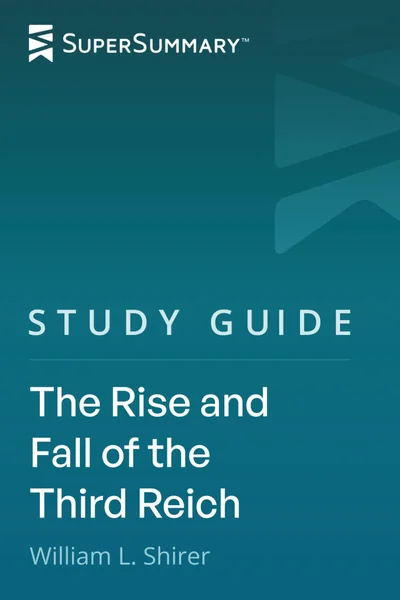
The Rise and Fall of the Third Reich
LuvemBooks Verdict
Best for: General readers seeking a single, comprehensive, deeply primary-sourced narrative of the Nazi era — particularly those coming to the subject without a background in professional historiography.
Worth it? Skip it? Read the full verdict →Ask LuvemBooks
Was this helpful?
- Is it worth reading?
- For anyone seeking a comprehensive single-volume entry point into the Nazi era, The Rise and Fall of the Third Reich remains an essential read — its primary-source foundation, including captured Nazi documents, the Nuremberg trial record, and the diaries of Goebbels and Halder, is extraordinary, and Shirer's six years reporting from Germany give the narrative a specificity and immediacy that purely archival histories can struggle to match. The book rewards serious engagement, but precisely because it requires it: the Sonderweg thesis that structures the entire work is no longer the academic consensus, and specific areas — including the treatment of the Nazi persecution of homosexuals and its framing of Hegelian philosophy — have been identified as inadequate or distorted by critics including LGBT activist Peter Tatchell and philosopher Jon Stewart's anthology The Hegel Myths and Legends. Readers should treat the book as the invaluable gateway it is, while pairing it with more recent scholarship rather than approaching it as the final word on the causes and character of Nazism.
- Similar books
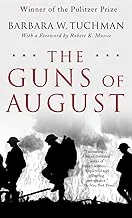
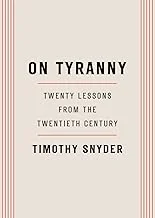
- Readers drawn to The Rise and Fall of the Third Reich will find strong companions in several works. Barbara W. Tuchman's The Guns of August applies a similarly sweeping, narrative-driven approach to the outbreak of World War I, combining rigorous primary-source research with journalistic clarity. Timothy Snyder's On Tyranny: Twenty Lessons from the Twentieth Century offers a concise, analytically sharper framework for understanding how authoritarian regimes rise and consolidate power — a useful corrective to Shirer's Sonderweg lens. Christopher R. Browning's Ordinary Men: Reserve Police Battalion 101 and the Final Solution in Poland provides a more focused, academically current examination of the Holocaust that complements and challenges Shirer's broader account. Shirer's own Berlin Diary, his firsthand correspondent's record from pre-war Germany, is a natural companion volume. Howard Zinn's A People's History of the United States shares Shirer's instinct for popular history written with a strong interpretive thesis — and the same attendant academic debates.
- Who should read this?
- The Rise and Fall of the Third Reich is essential reading for general adult readers seeking a comprehensive, deeply sourced single-volume account of the Nazi era — particularly those who want to engage directly with primary materials like the Nuremberg trial record, the diaries of Goebbels and Halder, and transcripts of secret conferences through a readable narrative synthesis. It is the ideal entry point for readers coming to the subject without a background in professional historiography, and its journalistic prose keeps it accessible despite its scope. Readers who are already well-versed in academic Nazi historiography will find more analytical value in pairing it with — or moving beyond — more recent scholarship that challenges the Sonderweg framework and addresses gaps in coverage, including the Nazi persecution of homosexuals.
- About William L. Shirer
- William Lawrence Shirer was an American journalist, war correspondent, and historian.
- What are the main themes?
- The Rise and Fall of the Third Reich engages several interconnected themes: the nature of totalitarian power and how Hitler consolidated it; the relationship between national history, culture, and political catastrophe (the Sonderweg thesis); the mechanics and ideology of the Holocaust; wartime strategy and the military conduct of World War II; and the role of individual actors — from major figures like Goebbels to lesser-known figures within the regime — in enabling and perpetuating atrocity. A persistent meta-theme is the tension between popular accessibility and scholarly rigour: the book's treatment of Hegelian philosophy has been criticised in Jon Stewart's anthology The Hegel Myths and Legends, and its coverage of the Nazi persecution of homosexuals has been criticised by LGBT activist Peter Tatchell, reminding readers that the book's interpretive framework has real analytical limits.
- Did it win any awards?
- The Rise and Fall of the Third Reich won the National Book Award for non-fiction following its 1960 publication — a recognition that, as Wikipedia notes, was driven substantially by the journalistic community. The book was also a major bestseller in the United States and across Europe; in Germany, editorial attacks on the book paradoxically drove sales. Critical coverage at the time called it 'one of the most important works of history of our time,' and Simon & Schuster has described it as a 'modern classic.' The award and popular success, however, far outpaced the book's standing among professional academic historians, whose reception was decidedly more mixed.
Summarize this book
Follow up
Synthesized from verified book data & published reviews · How we review
Press Enter to ask. Answers come from our editorial Q&A — start typing to see related questions.
Age & Reading Level
Recommended age
Adult
Reading level
Adult
3 content notes · who it suits
Content to know about
Skip if you want a straightforward, academically current account of Nazism without having to critically interrogate the book's central interpretive thesis.
Editorial Review
First published in 1960 by Simon & Schuster, William L. Shirer's The Rise and Fall of the Third Reich remains one of the most widely read single-volume histories of Nazi Germany — a National Book Award winner built on captured Nazi documents, Nuremberg trial testimony, and Shirer's own six years on the ground in Germany as a CBS Radio and UPI correspondent, though its central interpretive thesis has drawn sustained debate from academic historians ever since.
Read the Full ReviewBooks like The Rise and Fall of the Third Reich
Curated picks for readers who enjoyed The Rise and Fall of the Third Reich, with our reasoning for each match.
If you liked The Rise and Fall of the Third Reich