The Guns of August: The Pulitzer Prize-Winning Classic About the Outbreak of World War I
At a glance
The Guns of August
The Pulitzer Prize-Winning Classic About the Outbreak of World War I
LuvemBooks Verdict
Best for: Readers curious about the origins of the First World War who want a single, authoritative volume that combines rigorous military and diplomatic history with vivid character portraiture of the statesmen and commanders who stumbled into catastrophe in August 1914.
Worth it? Skip it? Read the full verdict →Ask LuvemBooks
Was this helpful?
- Is it worth reading?
- For readers interested in World War I, European political history, or military strategy, The Guns of August remains an exceptional entry point — one that does not condescend to its audience while making the Schlieffen Plan, the failures of French Plan XVII, and the personalities of August 1914 genuinely compelling. Its Pulitzer Prize recognition (General Nonfiction, 1963) and six decades in print and in classrooms attest to a durability few works of popular history match. The primary caveat is scope: it covers only the war's first month and focuses primarily on the Western Front and the great powers, so it is a starting point for the full conflict, not a comprehensive account of it.
- Similar books
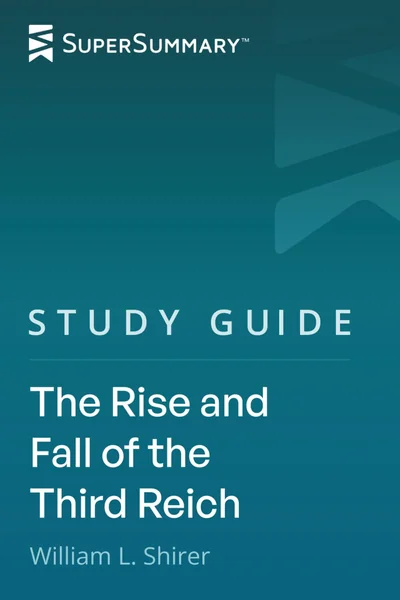
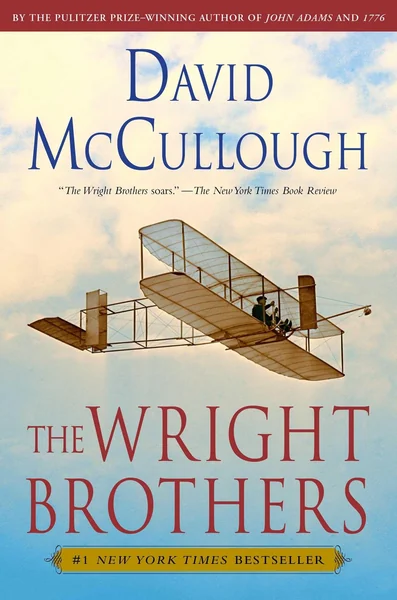
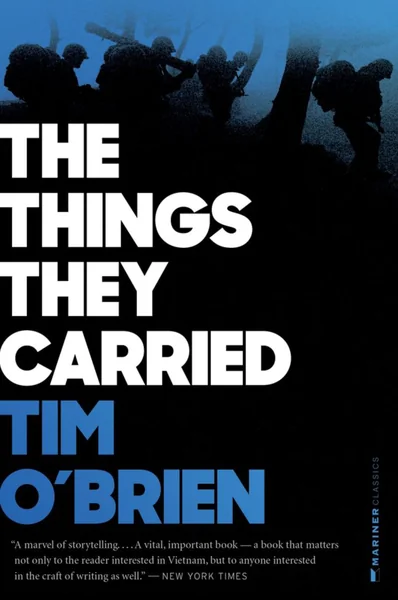
- Readers who respond to Tuchman's approach to narrative history have several strong directions to explore. William L. Shirer's The Rise and Fall of the Third Reich applies a similarly sweeping, character-driven lens to another catastrophic European conflict. Margaret MacMillan's Paris 1919: Six Months That Changed the World picks up where Tuchman leaves off, examining the peace settlement that shaped the postwar world. David McCullough's The Wright Brothers demonstrates a comparable gift for making historical figures and their decisions feel immediate and consequential. For those who want a literary counterpoint, Tim O'Brien's The Things They Carried approaches the experience of war — though a different one — through narrative craft that rivals Tuchman's own. Tuchman's own A Distant Mirror: The Calamitous 14th Century applies her method to medieval history for readers who want more from the same author.
- Who should read this?
- The Guns of August is well suited to general readers with an interest in World War I, European political history, or military strategy who want an accessible entry point that does not condescend to its audience. It is equally rewarding for readers who already have some familiarity with the period and want a single volume that brings the personalities and miscalculations of August 1914 — Kaiser Wilhelm II, Winston Churchill, Helmuth von Moltke the Younger, and many others — into sharp relief. Those who have already read Tuchman's The Proud Tower will find the two books form a coherent and illuminating pair.
- About Barbara W. Tuchman
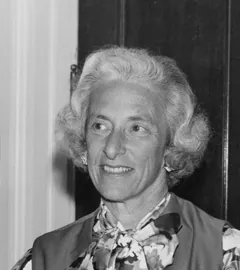
- Barbara Wertheim Tuchman was an American historian, journalist, and author.
- Why did it win General Nonfiction, not History?
- The Pulitzer nomination committee could not award The Guns of August the prize for history because Joseph Pulitzer's will restricted that category to books on American history — and Tuchman's subject is European. The committee honored the book under General Nonfiction for the publication year 1963 instead, a procedural detail that does nothing to diminish the achievement but is worth knowing for readers who encounter references to the prize. The book's cultural reach extended well beyond literary circles, and it has long been cited in discussions of how political and military leaders interpret historical precedent under crisis conditions.
- What is the Schlieffen Plan and why does it matter?
- The Schlieffen Plan was Germany's prewar military strategy designed to avoid a two-front war by rapidly defeating France through Belgium before Russia could fully mobilize on the Eastern Front. Tuchman's 'Plans' section dissects the plan in granular detail — including the modifications introduced by Helmuth von Moltke the Younger that rendered its assumptions dangerously overoptimistic — making it one of the book's central analytical threads. Understanding why the plan failed, and the cascade of decisions that followed, is at the heart of Tuchman's argument about how Europe stumbled into catastrophe.
- What makes Tuchman's writing style distinctive?
- Tuchman's distinguishing method is her insistence on keeping the political and the personal inseparable — strategic and operational history (mobilization timetables, the logic of the Schlieffen Plan, the failures of French Plan XVII) is woven together with vivid character portraiture rather than treated as separate disciplines. Her handling of Kaiser Wilhelm II — whom she characterizes in the source record as the 'possessor of the least inhibited tongue in Europe' — is emblematic of this approach. The result is a book that functions simultaneously as rigorous history and as compelling narrative prose, a dual ambition that distinguished it at publication in 1962 and has sustained its reputation for more than six decades.
Summarize this book
Follow up
Synthesized from verified book data & published reviews · How we review
Press Enter to ask. Answers come from our editorial Q&A — start typing to see related questions.
Age & Reading Level
Recommended age
Adult
Reading level
Adult
2 content notes · who it suits
Content to know about
Skip if you want a comprehensive account of the full 1914–1918 war rather than a focused study of its first month.
Editorial Review
Barbara W. Tuchman's The Guns of August is a Pulitzer Prize-winning work of narrative military history that chronicles the outbreak of World War I — from the prewar mobilization plans of the great powers through the Franco-British offensive that halted the German advance into France — with a scope and vividness that has kept it in print and in classrooms for more than six decades.
Read the Full ReviewBooks like The Guns of August
Curated picks for readers who enjoyed The Guns of August, with our reasoning for each match.
If you liked The Guns of August