

8 min read
4.6
· 225 Amazon ratingsShare This Review
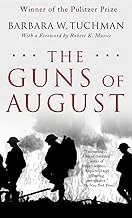
The Guns of August by Barbara W. Tuchman Review: Pulitzer-Winning WWI History, Enduringly Essential
Barbara W. Tuchman's The Guns of August is a Pulitzer Prize-winning work of narrative military history that chronicles the outbreak of World War I — from the prewar mobilization plans of the great powers through the Franco-British offensive that halted the German advance into France — with a scope and vividness that has kept it in print and in classrooms for more than six decades.
LuvemBooks Verdict
Best for
Readers curious about the origins of the First World War who want a single, authoritative volume that combines rigorous military and diplomatic history with vivid character portraiture of the statesmen and commanders who stumbled into catastrophe in August 1914.
Worth it if
You want to understand the strategic miscalculations — from the Schlieffen Plan to France's Plan XVII — and the personalities behind them, rendered in propulsive narrative prose that makes dense operational history accessible without condescending to the reader.
Skip if
You're looking for a comprehensive account of the full 1914–1918 war, or need coverage of the Eastern Front and smaller belligerents in depth, or require historiography informed by post-1962 archival scholarship that has since nuanced some of Tuchman's characterisations of specific commanders and decisions.
What readers & critics say
The book was awarded the Pulitzer Prize for General Nonfiction for the publication year 1963 and proved very popular, according to Wikipedia. Bookish Insights describes it as blending "sharp historical insight with a gripping narrative, making it a standout in modern history writing," while Audible's summary characterises it as a "masterpiece of narrative history" that recounts in vivid detail how the major European powers stumbled into catastrophic war.
Sources: Wikipedia, Bookish Insights, Audible, Five Books, Lady DuskAge & Reading Level
Recommended age
Adult
Reading level
Adult
2 content notes · who it suits
Content to know about
Skip if you want a comprehensive account of the full 1914–1918 war rather than a focused study of its first month.
In This Review
- What Works & What Doesn't
- What the Book Actually Covers
- Significance and Prize History
- Tuchman's Craft as a Narrative Historian
- Genuine Limitations to Consider
- Who This Book Is For
What Works & What Doesn't
What Works
- Awarded the Pulitzer Prize for General Nonfiction (1963), marking it as one of the most recognized works of popular history of its era
- Opens with an ingenious structural device — the 1910 funeral of King Edward VII — that introduces the war's key monarchs and statesmen in a single scene before tracing their decisions into catastrophe
- Covers all major prewar military strategies (Germany's Schlieffen Plan, France's Plan XVII, and more) alongside vivid portraits of named commanders and statesmen on multiple sides
- Praised at publication for making dense military and diplomatic history accessible to general readers, a quality that has sustained its reputation across six decades
- Pairs naturally with Tuchman's companion essay collection The Proud Tower (1966) for readers who want both the social prelude and the military outbreak
What Doesn't
- Deliberately bounded in scope: the narrative ends as the Western Front stabilizes, covering only the war's first month rather than the full 1914–1918 conflict
- Its focus centers on the Western Front and the major powers; the Eastern Front and smaller belligerents receive comparatively less sustained attention
- Written in 1962, the book's interpretive conclusions on specific commanders and decisions predate decades of subsequent archival scholarship that has refined some of those judgments
What the Book Actually Covers
Significance and Prize History
Tuchman's Craft as a Narrative Historian
Genuine Limitations to Consider
Who This Book Is For
Frequently Asked Questions
Sources & Further Reading
The key facts and claims in this review are grounded in the retrieved, verified sources listed below.
- Cited in this review
- 1
fivebooks.com
- 2
- Further reading
- 3
Barbara W. Tuchman, Wikipedia
- 4
en.wikipedia.org
- 5
bookishinsights.com
- 6
- 7
penguinrandomhouse.com
- 8
- 9
Related Reviews
Reviews of books we picked for readers who enjoyed The Guns of August.

Reader Comments
No comments yet
Be the first to share your thoughts!