
10 min read
4.8
· 687 Amazon ratingsShare This Review
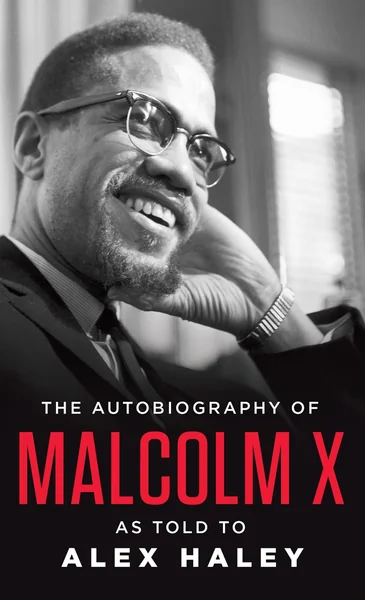
The Autobiography of Malcolm X by Malcolm X and Alex Haley Review: A Timeless, Essential American Classic
The Autobiography of Malcolm X, released posthumously on October 29, 1965, stands as one of the most significant works in American nonfiction — a New York Times bestseller and one of Time's ten most important nonfiction books of the twentieth century. Coauthored by Malcolm X and journalist Alex Haley through a series of in-depth interviews conducted between 1963 and 1965, the book traces Malcolm Little's journey from childhood poverty in Omaha and Lansing through petty crime and imprisonment, to his transformation into Nation of Islam spokesman Malcolm X, and finally to his founding of the Organization of Afro-American Unity. Its power as a religious conversion narrative, a document of Black pride and pan-Africanism, and a portrait of a man whose thinking outran his own life has made it required reading across generations.
LuvemBooks Verdict
Best for
Readers — whether general or students of American history, civil rights, religion, or autobiography as a literary form — who want to encounter Malcolm X's philosophy, his break with the Nation of Islam, and the arc of his thinking in his own constructed voice rather than through a secondary account.
Worth it if
You want a book that functions simultaneously as personal testimony, political philosophy, and historical document — one whose unflinching account of systemic racism, poverty, and incarceration makes demands on the reader that are, by design, the whole point.
Skip if
Readers seeking an externally verified, biographer's-eye account of Malcolm X's life will find this insufficient on its own, since the text is a self-constructed narrative shaped by its subject's priorities and Haley's considerable editorial hand, and should be supplemented with independent scholarly sources.
What readers & critics say
Kirkus Reviews, in its original notice, called it "an important one," tracing the full arc of a man who "never doubted for a minute that he would be assassinated." Britannica records that the book "gained renown as a classic work on the Black American experience," while Penguin Random House's edition identifies it as a New York Times bestseller and one of Time's ten most important nonfiction books of the twentieth century.
“An important one… he never doubted for a minute that he would be assassinated, just as he was.”
— Kirkus ReviewsAge & Reading Level
Recommended age
Ages 16+
Reading level
Adult
4 content notes · who it suits
Content to know about
Best for: Adults / mature 16+ — the book's unflinching account of systemic racism, incarceration, and poverty, combined with its complexity as a constructed confessional narrative, suits mature readers.
Skip if you want a straightforward, externally verified biography rather than a self-constructed narrative shaped by its subject and collaborator.
In This Review
- What Works & What Doesn't
- What the Book Is and What It Contains
- The Collaborative Architecture Behind the Narrative
- Reception and Cultural Standing
- Genuine Strengths: Voice, Stakes, and Scope
- Who This Book Is For and Where It Challenges
What Works & What Doesn't
What Works
- A New York Times bestseller and one of Time's ten most important nonfiction books of the twentieth century, with a critical reception stretching from the New York Times to The Nation that has held for six decades
- Traces Malcolm X's full arc — from childhood poverty in Omaha and Lansing through imprisonment, Nation of Islam leadership, and the founding of the Organization of Afro-American Unity — with scope few single volumes achieve
- Haley's deliberate choice to mute his own authorial voice creates the effect of Malcolm X speaking directly to the reader, giving the narrative unusual immediacy for a coauthored work
- The epilogue, written by Haley after Malcolm X's assassination, adds a layer of documentary transparency about the collaborative process that deepens the book's historical value
- Recognized by scholars including Arnold Rampersad and Michael Eric Dyson as working within the Augustinian confessional tradition, giving it a place in literary history beyond its political significance
What Doesn't
- Because the text was shaped through negotiation between Malcolm X and Haley — including Haley revising material and persuading Malcolm X away from a more polemical approach — readers should engage it as a constructed narrative rather than an unmediated document
- The book's design as a self-constructed, first-person testimony means it prioritizes Malcolm X's own framing of events; readers seeking external verification of specific claims will need to supplement it with independent scholarly sources
What the Book Is and What It Contains
The Collaborative Architecture Behind the Narrative
Reception and Cultural Standing
Genuine Strengths: Voice, Stakes, and Scope
Who This Book Is For and Where It Challenges
Frequently Asked Questions
Sources & Further Reading
The key facts and claims in this review are grounded in the retrieved, verified sources listed below.
- Cited in this review
- 1
en.wikipedia.org
- 2
litlovers.com
- Further reading
- 3
ia600905.us.archive.org
- 4
- 5
- 6
- 7
Related Reviews
Reviews of books we picked for readers who enjoyed The Autobiography of Malcolm X.

Reader Comments
No comments yet
Be the first to share your thoughts!