Explore our curated collection of business & economics book reviews and recommendations.
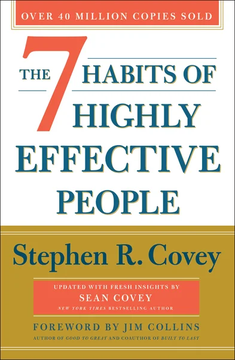
First published in 1989 and reissued in an anniversary edition by Simon & Schuster, Stephen R. Covey's The 7 Habits of Highly Effective People is a foundational business and self-help book that has sold over 40 million copies and was named the #1 Most Influential Business Book of the Twentieth Century — a record that makes it one of the most consequential works in its genre.
Feb 21, 2026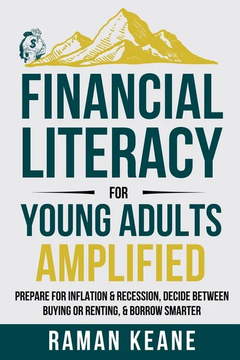
Financial Literacy for Young Adults Amplified, published by Prime Pacifica in July 2024, is a personal finance guide by Raman Keane designed specifically for young adults who want to move past foundational money concepts and into the economic forces — inflation, interest rates, the Federal Reserve — that shape real-world financial outcomes. The second entry in Keane's Financial Literacy for Young Adults series, it positions itself as the companion volume to a first book covering core fundamentals, and directs its energy at the "often-overlooked topics" the author argues most personal finance education neglects.
Feb 18, 2026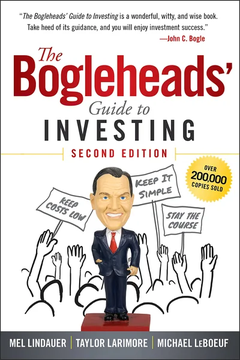
The Bogleheads' Guide to Investing is a practical, DIY personal-finance handbook built on the low-cost, passive-investing philosophy of Vanguard founder John C. Bogle. Co-authored by three community leaders — Taylor Larimore, Mel Lindauer, and Michael LeBoeuf — the second edition (published by Wiley in November 2021) updates foundational Boglehead principles with coverage of backdoor Roth IRAs, ETFs as buy-and-hold vehicles, estate taxes, gifting, and recent changes to retirement-plan law. This review is based on published sources and the book's documented contents, not hands-on application.
Feb 26, 2026
J.L. Collins' revised and expanded edition of The Simple Path to Wealth, published by Authors Equity in May 2025, is an Instant New York Times Bestseller that distills the philosophy of financial independence into a direct, accessible personal finance guide built around a deceptively simple core: spend less than you earn, invest the surplus, and avoid debt. Now updated with new data, an FAQ, a Simple Path to Wealth Punchlist, and a resources section, this edition consolidates Collins' standing as a foundational voice in the financial independence community.
Feb 24, 2026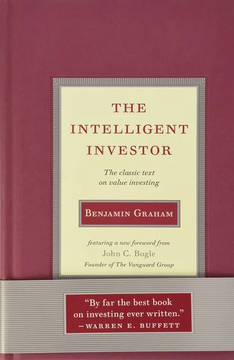
First published in 1949 and revised across multiple editions, Benjamin Graham's The Intelligent Investor remains one of the most historically significant and widely respected books on investing ever written, outlining the principles of value investing for both defensive and enterprising investors — a philosophy that shaped generations of practitioners, most famously Warren Buffett.
Feb 28, 2026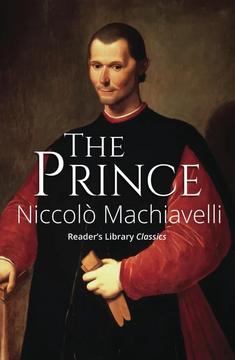
Machiavelli's The Prince is a 16th-century political treatise — composed in 1513 and first published posthumously in 1532 — that has endured for half a millennium as one of the most controversial and consequential works in the history of political thought, offering a bracingly pragmatic guide to acquiring and holding power.
Feb 22, 2026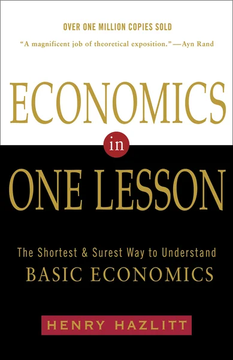
First published in 1946 and reissued in a Crown Currency Kindle edition, Henry Hazlitt's Economics in One Lesson remains one of the most enduring lay introductions to economic reasoning, built on a single, repeatable analytical principle drawn from Frédéric Bastiat and applied across twenty-four chapters to dismantle common economic fallacies — a framework that has earned praise from economists and journalists alike across more than seven decades.
Feb 20, 2026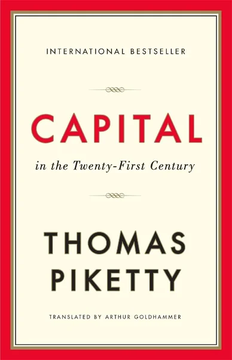
Thomas Piketty's Capital in the Twenty-First Century is a landmark work of economic nonfiction that draws on data from twenty countries spanning the eighteenth century to the present to argue that when the rate of return on capital outpaces economic growth, wealth concentrates among a shrinking minority — and proposes a global progressive wealth tax as the remedy. Originally published in French in 2013, translated into English by Arthur Goldhammer in 2014, and reissued in paperback by Belknap Press/Harvard University Press, the book reached number one on the New York Times Best Seller list for hardcover nonfiction and went on to sell over 2.5 million copies worldwide by the end of 2017, becoming the greatest sales success in Harvard University Press history. It is an essential, if demanding, text for anyone serious about understanding economic inequality.
Feb 26, 2026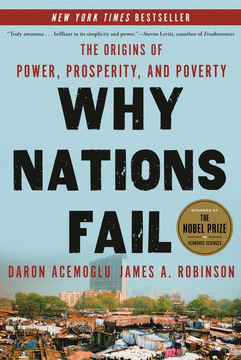
Why Nations Fail: The Origins of Power, Prosperity, and Poverty, first published in 2012 by economists Daron Acemoglu and James A. Robinson, constructs a sweeping institutional theory of why some countries accumulate wealth while others remain trapped in poverty — drawing on fifteen years of original research and historical evidence spanning the Roman Empire, the Mayan city-states, the Soviet Union, North and South Korea, medieval Venice, and Africa. The book argues, against geographic, cultural, and climatic explanations, that man-made political and economic institutions are the decisive factor in national prosperity. A New York Times and Wall Street Journal bestseller, it was named one of the best books of the year by The Washington Post, Financial Times, The Economist, BusinessWeek, Bloomberg, and The Christian Science Monitor. In 2024, Acemoglu and Robinson were awarded the Nobel Memorial Prize in Economic Sciences, partly for the body of scholarship this book represents.
Feb 25, 2026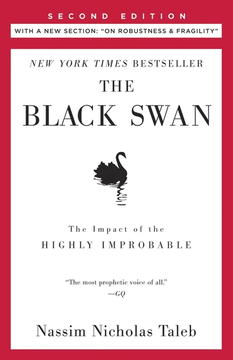
Nassim Nicholas Taleb's The Black Swan is a wide-ranging essay-narrative built around one relentless idea — that rare, unpredictable, high-impact events (Black Swans) drive history far more than conventional models acknowledge, and that human beings are systematically blind to this reality. Originally published in 2007, it spent 36 weeks on the New York Times best-seller list, entered the Incerto as the second of Taleb's five-volume series, and permanently embedded the "Black Swan" concept into the vocabulary of finance, risk management, and popular thought. Its strengths — a genuinely original central argument, a sweeping cross-disciplinary scope, and a bracingly combative voice — are real. So are its weaknesses: the book's reach beyond financial markets into a general theory of history draws pointed criticism, and Taleb's rhetorical style divides readers sharply.
Feb 25, 2026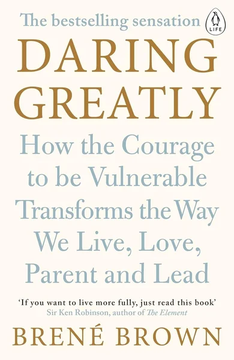
Daring Greatly is a self-help book by Brené Brown, PhD, MSW, rooted in twelve years of research, that argues vulnerability is not weakness but the truest measure of courage — a New York Times bestseller that has sold more than two million copies and shaped how readers across personal, professional, and parenting contexts think about shame, worthiness, and authentic engagement.
Mar 1, 2026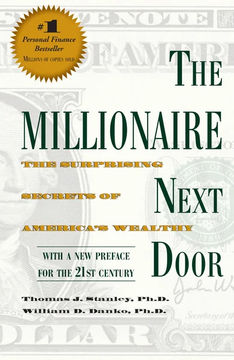
First published in 1996, The Millionaire Next Door by Thomas J. Stanley and William D. Danko is a personal finance nonfiction work grounded in original survey research on American millionaires — and its central finding, that genuine wealth tends to accumulate quietly in middle-class and blue-collar neighborhoods rather than in affluent enclaves, remains one of the most counterintuitive and widely discussed arguments in the genre. The book introduces the now-standard framework of UAWs (Under Accumulators of Wealth) versus PAWs (Prodigious Accumulators of Wealth), and offers a concrete formula for benchmarking net worth against age and income. Its most cited critique — that the research is susceptible to survivorship bias, as raised by Nassim Nicholas Taleb — is a meaningful intellectual limitation readers should weigh.
Feb 15, 2026Search
Rating
Active Filters
Search
Rating
Active Filters
Showing 49 - 60 of 70 reviews
