Explore our curated collection of business & economics book reviews and recommendations.
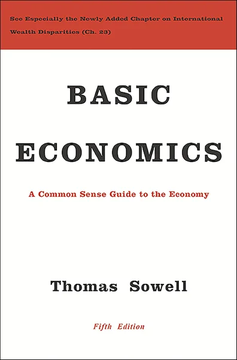
Now in its fifth edition, Thomas Sowell's Basic Economics is a non-fiction economics reference designed to explain the fundamental principles of how economies create prosperity or poverty — written entirely in plain English, without charts, graphs, or equations, for a general audience.
Feb 10, 2026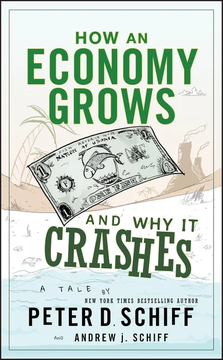
A New York Times bestseller and 2010 getAbstract International Book Award winner, How an Economy Grows and Why It Crashes is an illustrated allegorical book in which Peter D. Schiff and Andrew J. Schiff use humor, cartoons, and fictitious storytelling to explain inflation, deficit spending, central banking, international trade, and the 2008 financial crisis through a distinctly Austrian economics lens — arguing that production and savings, not consumption and inflation, are the true engines of prosperity.
Feb 11, 2026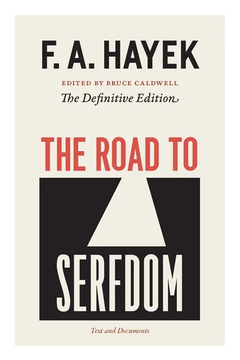
First published in 1944 and now available in a scholarly definitive edition edited by Bruce Caldwell, F. A. Hayek's The Road to Serfdom remains one of the most consequential works in 20th-century political and economic thought — a passionate, rigorous argument that central economic planning, however well-intentioned, leads inevitably toward tyranny rather than the utopia its advocates promise.
Feb 11, 2026
Dating from the late Spring and Autumn period of ancient China (roughly the 5th century BCE), Sun Tzu's The Art of War is a 13-chapter military treatise that Wikipedia describes as one of the most influential works on strategy of all time — a judgment borne out by its continuous use across nearly 2,500 years of military, political, and intellectual history. This Fingerprint reprint edition makes the text newly accessible in hardcover, carrying forward a work whose reach extends far beyond its original battlefield context.
Feb 10, 2026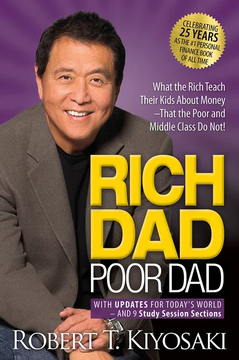
First published in 1997 and now in a 25th Anniversary edition from Plata Publishing, Rich Dad Poor Dad by Robert T. Kiyosaki is one of the most widely read personal finance books ever written, with over 32 million copies sold and more than six years on the New York Times bestsellers list — yet it remains as contested as it is celebrated, praised for shifting readers' mindsets around money and criticized for vague, parable-style advice that critics argue rarely translates into concrete action.
Feb 10, 2026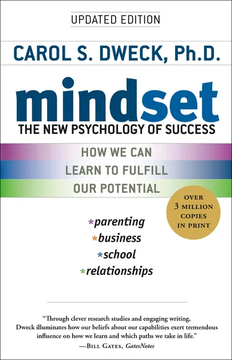
Carol S. Dweck's Mindset: The New Psychology of Success is a landmark work of popular psychology from a Stanford University researcher that has sold over a million copies, introducing a generation of readers to the distinction between fixed and growth mindsets and arguing that how people think about their abilities shapes nearly every domain of their lives — from school and work to sports, leadership, and relationships.
Feb 12, 2026
Eric Ries's business book The Lean Startup introduced a framework — built on rapid prototyping, validated learning, and iterative product releases — that has since sold over one million copies, been translated into more than thirty languages, and become required reading in entrepreneurship programs worldwide. This review covers the book's content and published reception; as a functional methodology guide, its real-world effectiveness is best evaluated through direct application.
Feb 12, 2026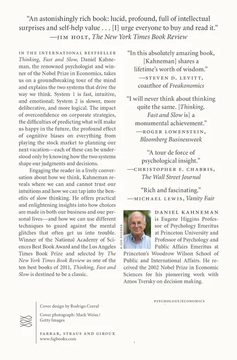
Thinking, Fast and Slow is Daniel Kahneman's landmark popular science book presenting his decades of research on human judgment and decision-making through the lens of two cognitive systems — with more than 2.6 million copies sold and recognition as a New York Times bestseller, it is one of the most influential works of behavioral science written for a general audience, though some of the priming studies it cites have since come under scrutiny during the psychological replication crisis.
Feb 11, 2026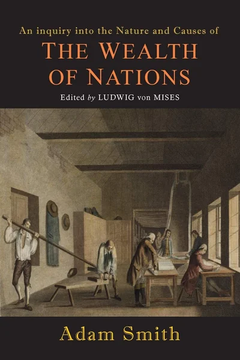
First published on 9 March 1776, Adam Smith's The Wealth of Nations is, as Encyclopaedia Britannica describes it, "the first formulation of a comprehensive system of political economy" — a foundational treatise that redrew the intellectual map of economics, trade, and governance for centuries to come.
Feb 14, 2026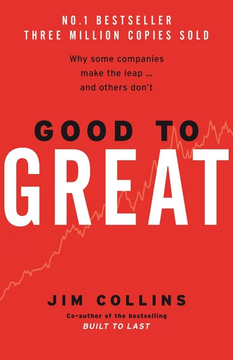
Published on October 16, 2001, Jim Collins' Good to Great: Why Some Companies Make the Leap... And Others Don't is a research-driven management book that sold four million copies and crossed well beyond the traditional business-book audience — a genuine phenomenon that also accumulated a substantial body of serious criticism over the two decades since its release.
Feb 11, 2026Search
Rating
Active Filters
Search
Rating
Active Filters
Showing 61 - 70 of 70 reviews
