9 min read
4.7
· 16,287 Amazon ratingsShare This Review
The Simple Path to Wealth by J.L. Collins Review: A Revised Cornerstone of Financial Independence
J.L. Collins' revised and expanded edition of The Simple Path to Wealth, published by Authors Equity in May 2025, is an Instant New York Times Bestseller that distills the philosophy of financial independence into a direct, accessible personal finance guide built around a deceptively simple core: spend less than you earn, invest the surplus, and avoid debt. Now updated with new data, an FAQ, a Simple Path to Wealth Punchlist, and a resources section, this edition consolidates Collins' standing as a foundational voice in the financial independence community.
LuvemBooks Verdict
Best for
Readers who feel overwhelmed or misled by the financial industry and want a clear, evidence-grounded starting point for building long-term wealth through index fund investing and financial independence principles.
Worth it if
You want a direct, jargon-free philosophy for financial independence — especially in this revised edition, which adds updated data, a practical Punchlist, and a FAQ that makes Collins' framework more actionable than ever.
Skip if
You're based outside the United States or are navigating complex financial circumstances, as the book's investment framework is heavily U.S.-centric and may require substantial local translation; seasoned index-investing veterans will also find much of the foundational content familiar.
What readers & critics say
Financialpipeline.com praises the book as delivering exactly what its title promises — "a roadmap to financial independence and to a rich, free life" — while noting Collins is "very opinionated" and the book "focuses heavily on U.S. Retirement plans." Unsolicitedfeedback.blog finds Collins' three core principles "fundamentally sound," concluding that the book lays out a genuine roadmap to financial independence for those who aspire to it.
Sources: financialpipeline.com, unsolicitedfeedback.blogAsk LuvemBooks
Was this helpful?
- Is it worth reading?
- For readers who feel overwhelmed or misled by the financial industry and want a clear, evidence-grounded counterargument, The Simple Path to Wealth delivers both philosophy and actionable structure in a direct, often irreverent voice that avoids jargon. Morgan Housel, author of the New York Times bestseller The Psychology of Money, has described it as "beautifully written, a simple book that will have a profound impact on your life" — an endorsement that carries genuine weight. Those already well-versed in index investing and FIRE strategy may find the foundational material familiar, though the new FAQ and Punchlist sections offer practical utility even for the experienced. Readers based outside the United States should be aware that the book's investment framework is U.S.-centric and will require meaningful local translation.
- Similar books
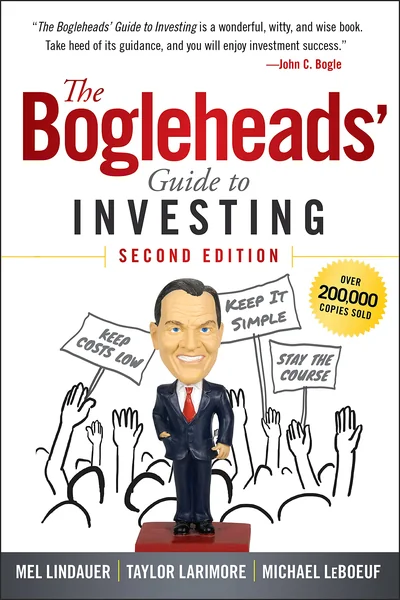
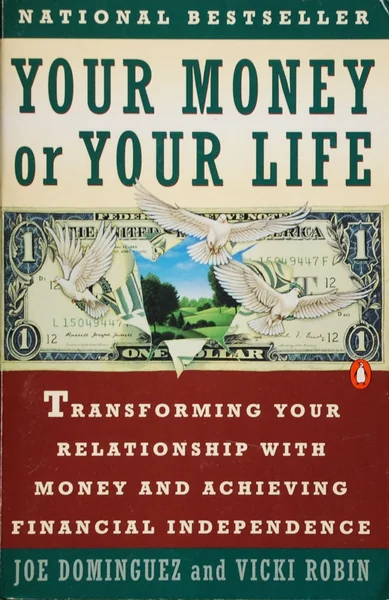
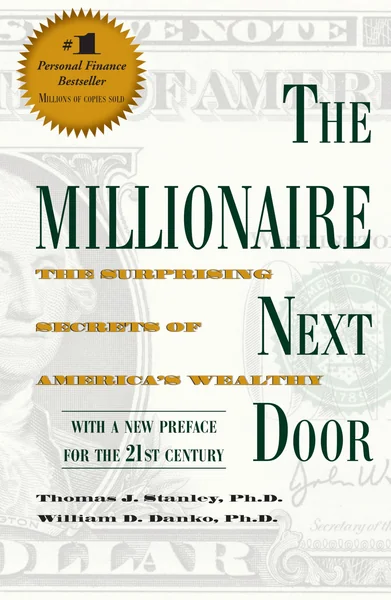
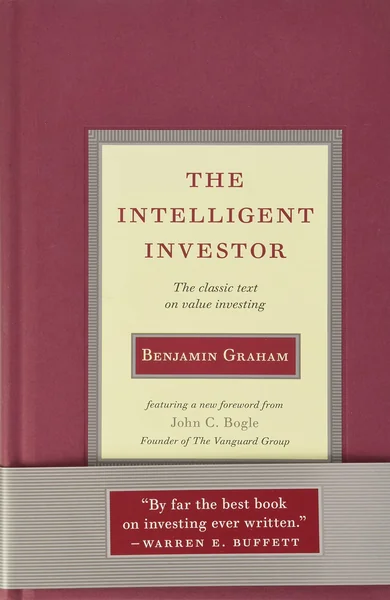
- Readers drawn to The Simple Path to Wealth will find strong common ground with several titles curated alongside it. The Bogleheads' Guide to Investing by Mel Lindauer, Taylor Larimore, and Michael LeBoeuf shares Collins' low-cost index fund philosophy and accessible tone. Your Money or Your Life by Joe Dominguez and Vicki Robin is a foundational FIRE movement text that examines the relationship between money, time, and personal freedom — themes central to Collins' argument. A Random Walk Down Wall Street by Burton G. Malkiel provides a rigorous academic grounding for the passive investing case Collins popularises. For those interested in the behavioural side of wealth-building, The Millionaire Next Door by Thomas J. Stanley and William D. Danko and Thinking, Fast and Slow by Daniel Kahneman each illuminate the habits and psychology that underpin long-term financial outcomes.
- Who should read this?
- The Simple Path to Wealth is most clearly suited to readers who want a clear, principled starting point for building long-term wealth — particularly those who feel overwhelmed or misled by the financial industry and are looking for a counterargument grounded in evidence rather than complexity. Both first-time readers encountering Collins' framework and returning readers seeking an updated, consolidated reference will find value in the 2025 edition, with the new FAQ and Punchlist sections offering practical utility even for the experienced. Readers based outside the United States, or those navigating complex financial situations such as significant debt, irregular income, or employer-specific retirement vehicles, should be prepared for a road map that requires meaningful local translation.
- About J.L. Collins
- JL Collins is the international bestselling author of The Simple Path to Wealth, which has sold over 1.3 million copies and became an instant New York Times Bestseller, and Pathfinders. He launched his blog, jlcollinsnh.com, in June 2011, where he writes about money, life, travel, and business, and is best known for his Stock Series.
- What are the main themes?
- The Simple Path to Wealth is organised around several interlocking themes: the relationship between financial independence and personal freedom ("Money can buy many things, but nothing more valuable than your freedom"), the superiority of simple, low-cost index fund investing over market timing and active management, and a sustained critique of the paid financial advisory industry. Collins also foregrounds the psychological dimension of wealth-building — arguing that conviction and consistency in applying a few principles outperforms mastery of a complex playbook. The 2025 edition adds a practical action layer through the Punchlist and FAQ, reinforcing that the book's intent is not abstract financial theory but a road map to living on one's own terms.
- Where has this book been featured?
- The 2025 revised edition of The Simple Path to Wealth has reached mainstream audiences well beyond the financial independence community, with exposure on high-profile platforms including Hasan Minhaj Doesn't Know and The Diary of a CEO. Morgan Housel, author of the New York Times bestseller The Psychology of Money, has publicly praised the book as "beautifully written, a simple book that will have a profound impact on your life." These signals suggest the book's audience has expanded significantly since its original publication, bringing Collins' framework to readers who may be encountering the financial independence philosophy for the first time.
Summarize this book

Follow up
Synthesized from verified book data & published reviews · How we review
Press Enter to ask. Answers come from our editorial Q&A — start typing to see related questions.
Age & Reading Level
Recommended age
Adult
Reading level
Adult
who it suits
Skip if you're looking for a globally applicable investment guide with strategies tailored to non-U.S. markets or complex financial situations.
Our Review
What the Book Is and What It Argues
Significance and Standing in the Genre
Core Strengths: Clarity and Conviction
What the Revised Edition Adds — and What It Assumes
Who This Book Is For
Sources & Further Reading
The key facts and claims in this review are grounded in the retrieved, verified sources listed below.
- Cited in this review
- 1
- 2
- 3
jlcollinsnh.com
- Further reading
- 4
- 5
Books like The Simple Path to Wealth
Curated picks for readers who enjoyed The Simple Path to Wealth, with our reasoning for each match.
If you liked The Simple Path to Wealth