9 min read
4.5
· 5,744 Amazon ratingsShare This Review
Capital in the Twenty-First Century by Thomas Piketty Review: A Landmark Work on Wealth Inequality
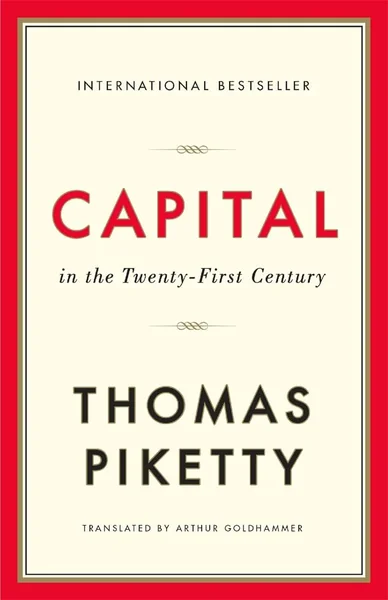
Thomas Piketty's Capital in the Twenty-First Century is a landmark work of economic nonfiction that draws on data from twenty countries spanning the eighteenth century to the present to argue that when the rate of return on capital outpaces economic growth, wealth concentrates among a shrinking minority — and proposes a global progressive wealth tax as the remedy. Originally published in French in 2013, translated into English by Arthur Goldhammer in 2014, and reissued in paperback by Belknap Press/Harvard University Press, the book reached number one on the New York Times Best Seller list for hardcover nonfiction and went on to sell over 2.5 million copies worldwide by the end of 2017, becoming the greatest sales success in Harvard University Press history. It is an essential, if demanding, text for anyone serious about understanding economic inequality.
LuvemBooks Verdict
Best for
Economists, historians, political scientists, policy professionals, and engaged general readers with a genuine tolerance for dense, data-heavy argumentation who want a rigorous, historically grounded account of wealth inequality and capitalism's long-run dynamics.
Worth it if
You're willing to commit to 800-plus pages of quantitative and historical argument in exchange for what Branko Milanović and Paul Krugman have called a watershed, landmark work — one whose empirical architecture and structural framing remain relevant long after its initial splash.
Skip if
You're looking for a concise policy brief or an accessible introduction to inequality — the public debate this book generated famously outpaced actual readership of it, and even a senior UK politician admitted he hadn't made it past the first chapter.
What readers & critics say
The Guardian observed that even economists who resisted Piketty's theoretical conclusions felt compelled to credit the dataset itself, casting fresh light on an area where official statistics had long been notoriously weak. Kirkus Reviews, which named it among the best books of 2014 and a Kirkus Prize finalist, called it "essential reading for citizens of the here and now," while the LSE Review of Books noted that Piketty's thoughts resonated "even at the highest political levels" and expressed hope that his work would influence actual policy adoption. The book's reception has not been without friction: the Mercatus Center summarises significant academic pushback — from the Financial Times's data challenges to Matthew Rognlie's depreciation critique — constituting a live intellectual debate readers should enter aware.
“This is a VIB – very important book. Nearly everyone agrees about that.”
— The Guardian“Essential reading for citizens of the here and now.”
— Kirkus ReviewsAsk LuvemBooks
Was this helpful?
- Is it worth reading?
- For readers willing to invest in over 800 dense pages, Capital in the Twenty-First Century offers a work of rare depth — a structural, historical argument that has retained relevance well beyond its initial publication moment and that no serious conversation about capitalism, inequality, or wealth distribution can ignore. Its empirical architecture alone, covering twenty countries over three centuries, is a contribution that even skeptical economists have acknowledged. That said, the book's central thesis faces live intellectual challenges from the Financial Times, MIT economist Matthew Rognlie, and Piketty himself, who clarified that r > g does not adequately address rising labor-income inequality. The Guardian's coverage noted wryly that the debate the book generated was, for many readers including Ed Miliband, more accessible than the text itself.
- Similar books
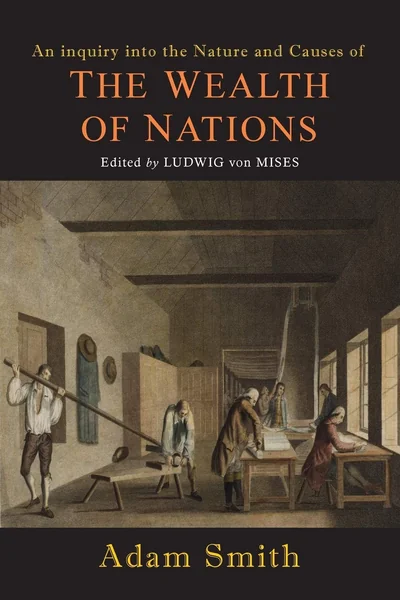
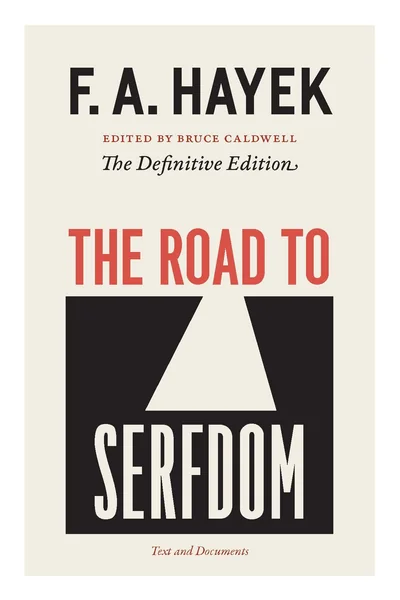
- Readers drawn to Capital in the Twenty-First Century will find rich company in several works displayed below. Adam Smith's The Wealth of Nations is the foundational text of classical economics that Piketty explicitly engages, and F. A. Hayek's The Road to Serfdom offers a counterpoint perspective on state intervention and economic freedom. For readers interested in systems-level thinking about complex economic dynamics, Donella H. Meadows' Thinking in Systems provides an accessible framework. Michael Lewis's The Big Short approaches financial inequality from a narrative journalism angle, examining the 2008 financial crisis and the structural failures that produced it.
- Who should read this?
- Capital in the Twenty-First Century is essential reading for economists, historians, political scientists, policy professionals, and engaged general readers with a genuine tolerance for dense quantitative argumentation. Its structural and historical argument makes it particularly valuable for anyone who wants to understand the long-run dynamics of wealth and income inequality rather than a single news-cycle snapshot. Those seeking a quick policy brief or a narrative-driven read will struggle — The Guardian noted that Ed Miliband famously admitted he had not progressed beyond the first chapter. For readers willing to invest the effort, the book remains an indispensable reference point in any serious conversation about capitalism, inequality, and the distribution of wealth.
- About Thomas Piketty
- Thomas Piketty is a French economist who is a professor of economics at the School for Advanced Studies in the Social Sciences, associate chair at the Paris School of Economics (PSE), and Centennial Professor of Economics in the International Inequalities Institute at the London School of Economics (LSE).
- Tell me about the adaptation
- A feature documentary film based on Capital in the Twenty-First Century was released in 2020, directed by New Zealand filmmaker Justin Pemberton. The film adapts Piketty's sweeping historical argument about wealth concentration and inequality for a general audience, translating his dense quantitative analysis into a visual and narrative format. As is typical of documentary adaptations of academic works, the film is considerably more accessible than the 800-plus page source text.
- What awards has it won?
- Capital in the Twenty-First Century has an exceptional awards record for an academic economics text. It won the Financial Times and McKinsey Business Book of the Year Award and the British Academy Medal, and was a finalist for the National Book Critics Circle Award. The English translation reached number one on the New York Times Best Seller list for hardcover nonfiction on May 18, 2014, and the book became the greatest sales success in the history of Harvard University Press, with over 2.5 million copies sold across French, English, German, Chinese, and Spanish editions by the end of 2017.
- What are the main criticisms?
- The book faces several substantive intellectual challenges. In May 2014, Financial Times economics editor Chris Giles identified what he characterized as unexplained errors in Piketty's underlying data, particularly regarding wealth inequality trends since the 1970s. MIT economist Matthew Rognlie, publishing with the Brookings Institution, argued that Piketty insufficiently accounted for depreciation and that surging house prices — rather than capital accumulation broadly — explained much of the trend he identified. Marxist academic David Harvey credited the book for dismantling the notion that free-market capitalism naturally distributes wealth, but argued Piketty works from a 'mistaken definition of capital.' Piketty himself acknowledged in a 2014 paper that r > g is not a reliable tool for analyzing rising inequality of labor income.
Summarize this book
Follow up
Synthesized from verified book data & published reviews · How we review
Press Enter to ask. Answers come from our editorial Q&A — start typing to see related questions.
Age & Reading Level
Recommended age
Adult
Reading level
Adult
who it suits
Skip if you want accessible narrative nonfiction or a quick policy overview rather than dense quantitative and historical argumentation across 800-plus pages.
Our Review
What the Book Actually Argues
Scale and Significance
What the Data Does Well
Real Criticisms Worth Knowing
Who Will Get the Most From It
Sources & Further Reading
The key facts and claims in this review are grounded in the retrieved, verified sources listed below.
- Cited in this review
- 1
- 2
- 3
- Further reading
- 4
Thomas Piketty, Wikipedia
- 5
en.wikipedia.org
- 6
dowbor.org
- 7
- 8
- 9
Books like Capital in the Twenty-First Century
Curated picks for readers who enjoyed Capital in the Twenty-First Century, with our reasoning for each match.
If you liked Capital in the Twenty-First Century