8 min read
4.6
· 4,925 Amazon ratingsShare This Review
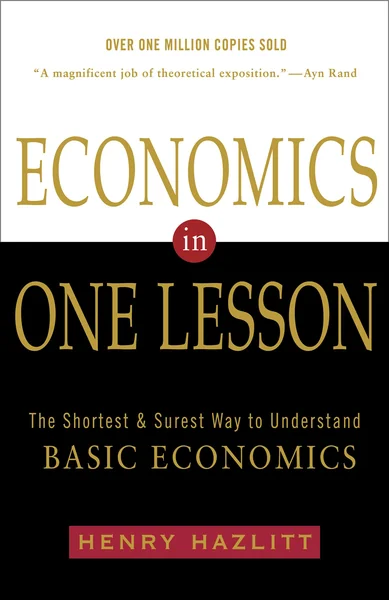
Economics in One Lesson by Henry Hazlitt Review: A Timeless Primer on Economic Thinking
First published in 1946 and reissued in a Crown Currency Kindle edition, Henry Hazlitt's Economics in One Lesson remains one of the most enduring lay introductions to economic reasoning, built on a single, repeatable analytical principle drawn from Frédéric Bastiat and applied across twenty-four chapters to dismantle common economic fallacies — a framework that has earned praise from economists and journalists alike across more than seven decades.
LuvemBooks Verdict
Best for
Curious general readers with no economics background who want a concise, principle-driven introduction to free-market thinking and a reusable framework for evaluating economic policy claims.
Worth it if
Worth reading if you want a single, transferable analytical lens — tracing the full, long-run effects of any policy across all affected groups — applied briskly to perennially live debates like tariffs, minimum wages, and price controls.
Skip if
Skip it if you're looking for a balanced survey of competing economic schools, since the book is structured as a refutation of fallacies from within an Austrian-influenced framework and treats Keynesian counterarguments dismissively rather than dialectically.
What readers & critics say
Wikipedia's reception record notes that economist and former Federal Reserve Bank of Dallas president Bob McTeer called it a "wonderful book" and recommended it as a practical stand-in for readers without time for Bastiat's collected works, while Pulitzer Prize-winning journalist Edwin A. Roberts Jr. Described it as "the clearest introduction" to economics he knew. Reviewer voices retrieved from kriminiltrading.com and thesweetsavorylife.com echo this, praising the book's accessibility and continued relevance while noting its distinctly free-market, Austrian-school orientation.
Sources: Wikipedia – Economics in One Lesson, kriminiltrading.com, thesweetsavorylife.comAsk LuvemBooks
Was this helpful?
- Is it worth reading?
- For readers seeking a compact, accessible entry point into free-market economic reasoning, Economics in One Lesson holds up remarkably well after nearly eight decades. Its structural discipline — anchoring every chapter to the same analytical question — gives readers a transferable critical tool rather than a list of conclusions to memorize, and the policy topics it addresses (tariffs, minimum wages, price controls, public works) remain live debates. The book's limitation is equally important to understand going in: it is a sustained argument within an Austrian-influenced framework, not a balanced survey, and it treats competing positions such as Keynesian economics dismissively rather than engaging them on their strongest terms.
- Similar books
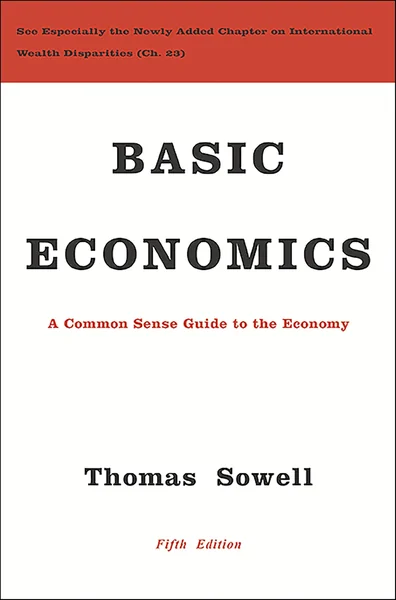
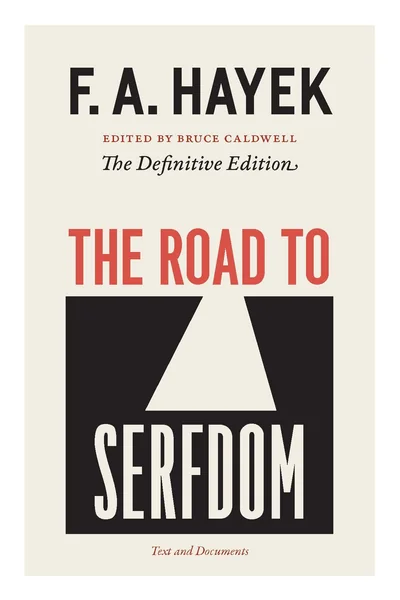
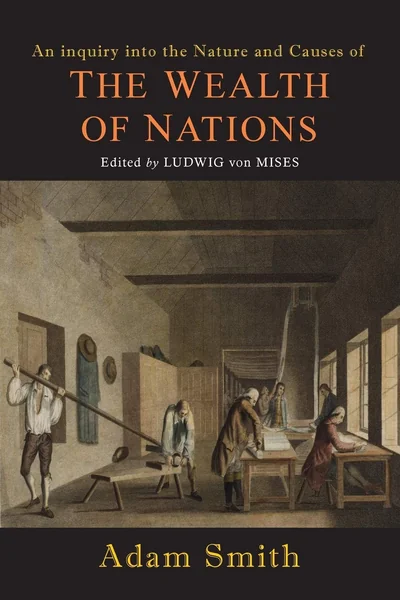
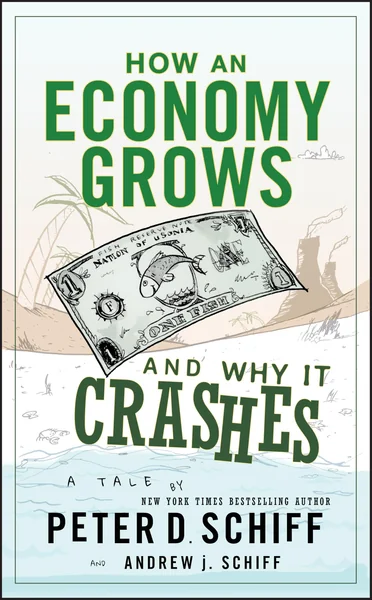
- Readers drawn to Economics in One Lesson will find natural companions in several directions. F. A. Hayek's The Road to Serfdom shares the Austrian-influenced, free-market framework and the same postwar urgency about economic planning. Adam Smith's The Wealth of Nations is the canonical foundation for the classical liberal tradition Hazlitt draws on. Peter D. Schiff and Andrew J. Schiff's How an Economy Grows and Why It Crashes offers a similarly accessible, parable-driven approach to Austrian economic ideas. For readers interested in the broader systems-thinking method Hazlitt applies, Donella H. Meadows' Thinking in Systems approaches the question of hidden, long-run consequences from a different but complementary angle. Thomas Sowell's Basic Economics: A Common Sense Guide to the Economy is also frequently mentioned alongside Hazlitt for readers wanting a more encyclopedic but equally accessible treatment.
- Who should read this?
- Economics in One Lesson is best suited to general adult readers who want a rigorous but jargon-free entry point into free-market economic reasoning and who are willing to engage with an explicitly polemical argument rather than a balanced survey. It is particularly valuable for readers who encounter policy debates about tariffs, minimum wages, price controls, or government spending and want a principled analytical framework for thinking through them. Readers who already work within a broadly free-market or Austrian-influenced framework will find the argument coherent and bracing; those seeking pluralism or sustained engagement with Keynesian or other mainstream positions may finish the book unconvinced that all twenty-four fallacies have been as conclusively dispatched as the text implies.
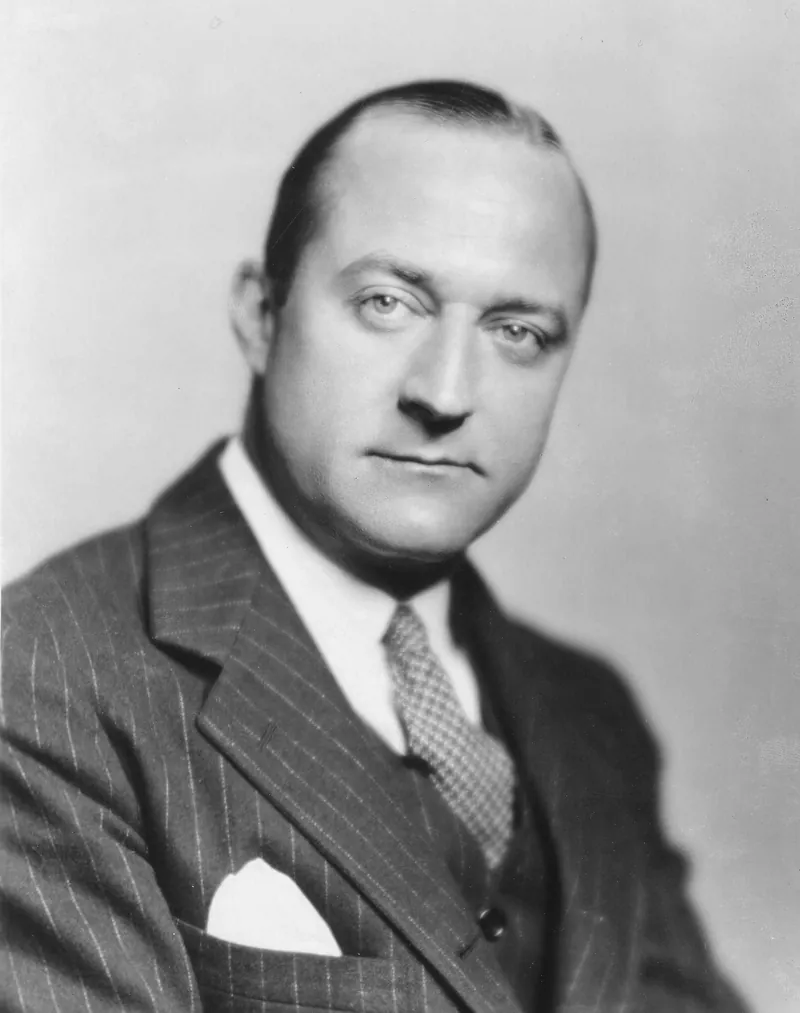
- About Henry Hazlitt
- Henry Stuart Hazlitt was an American journalist, economist, and philosopher known for his advocacy of free markets and classical liberal principles.
- What are the main themes?
- The central theme of Economics in One Lesson is the distinction between visible, immediate effects and invisible, longer-term costs — a framework Hazlitt inherits from Frédéric Bastiat's broken-window parable. Bastiat's insight is that while a broken window creates business for a glazier, it simultaneously destroys the business the shopkeeper would otherwise have given a tailor, leaving the community worse off in aggregate. From this foundation, the book extends its analysis to free trade, price controls, monetary inflation, and stimulative government expenditure, arguing in each case that policies celebrated for their visible, concentrated benefits routinely obscure diffuse, long-run costs borne by groups outside the immediate transaction. A secondary theme is intellectual transparency: Hazlitt consistently names his sources and frames his work as exposition, modeling the same honest accounting he demands of economic policy.
- Who has praised this book?
- The book has accumulated an unusually broad range of admirers across more than seven decades. Bob McTeer, an economist and former president of the Federal Reserve Bank of Dallas, called it a 'wonderful book' and recommended it as a practical stand-in for readers without time for Bastiat's collected works. Pulitzer Prize-winning journalist Edwin A. Roberts Jr., writing on the occasion of the book's fiftieth anniversary, described it as 'the clearest introduction' to economics he knew, crediting Hazlitt's command of both subject and language. Ayn Rand offered a more pointed endorsement, calling it 'a magnificent job of theoretical exposition.'
Summarize this book
Follow up
Synthesized from verified book data & published reviews · How we review
Press Enter to ask. Answers come from our editorial Q&A — start typing to see related questions.
Age & Reading Level
Recommended age
Adult
Reading level
Adult
who it suits
Skip if you want a balanced, pluralistic survey of competing schools of economic thought rather than a rigorous argument for one side.
Our Review
What the Book Actually Is and Does
The Central Argument: One Lesson, Many Applications
Significance and Reception
Genuine Strengths
Limitations and Who May Find It Frustrating
Sources & Further Reading
The key facts and claims in this review are grounded in the retrieved, verified sources listed below.
- Cited in this review
- 1
- 2
- Further reading
- 3
Henry Hazlitt, Wikipedia
- 4
en.wikipedia.org
- 5
hacer.org
- 6
- 7
- 8
kriminiltrading.com
- 9
volumesofvalue.com
- 10
liberalstudies.ca
Books like Economics in One Lesson
Curated picks for readers who enjoyed Economics in One Lesson, with our reasoning for each match.
If you liked Economics in One Lesson