

8 min read
4.4
· 8,181 Amazon ratingsShare This Review
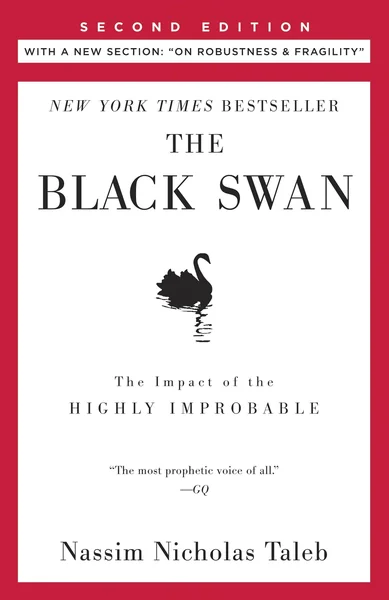
The Black Swan: The Impact of the Highly Improbable by Nassim Nicholas Taleb Review: Provocative, Uneven, and Genuinely Important
Nassim Nicholas Taleb's The Black Swan is a wide-ranging essay-narrative built around one relentless idea — that rare, unpredictable, high-impact events (Black Swans) drive history far more than conventional models acknowledge, and that human beings are systematically blind to this reality. Originally published in 2007, it spent 36 weeks on the New York Times best-seller list, entered the Incerto as the second of Taleb's five-volume series, and permanently embedded the "Black Swan" concept into the vocabulary of finance, risk management, and popular thought. Its strengths — a genuinely original central argument, a sweeping cross-disciplinary scope, and a bracingly combative voice — are real. So are its weaknesses: the book's reach beyond financial markets into a general theory of history draws pointed criticism, and Taleb's rhetorical style divides readers sharply.
 Tap to enlarge
LuvemBooks Verdict
Best for
Readers in finance, risk management, or policy who want a rigorous yet readable challenge to conventional prediction-based thinking and expert overconfidence.
Worth it if
You're willing to engage with a combative, essayistic voice and read critically — especially the tighter financial and philosophical sections — rather than expecting uniform evidential rigour throughout.
Skip if
You need systematically evidenced, academically rigorous argument from start to finish, or you're looking for a concrete checklist or detailed strategy rather than a conceptual framework.
What readers & critics say
Wikipedia documents the book's outsized cultural reach — 36 weeks on the New York Times best-seller list and a central role in Taleb's five-volume Incerto series — while the New York Times' own review (by Gregg Easterbrook, retrieved from nytimes.com) engaged with the book's argument about humanity's persistent failure to predict the not-predicted, and David Aldous's academic review (retrieved from stat.berkeley.edu) offered the sharpest critical distinction: persuasive on financial markets and general philosophical thought, but prone to exaggeration when the thesis is extended beyond that domain.
“The hubris of predictions — and our perpetual surprise when the not-predicted happens — are themes of this engaging new book.”
— nytimes.comAsk LuvemBooks
Was this helpful?
- Is it worth reading?
- For readers with an interest in finance, risk, probability, or the philosophy of knowledge, The Black Swan is genuinely essential — the central argument that human institutions dangerously underweight catastrophic outliers remains highly relevant, and Taleb's professional background as an options trader gives the financial critique real authority. The book's cultural reach is undeniable: it spent 36 weeks on the New York Times best-seller list and the term 'Black Swan' is now standard vocabulary in finance and policy. The key caveat is that the argument is strongest within financial markets and grows thinner when extended to broader history, and Taleb's aggressively combative rhetorical style divides readers sharply. Those willing to read critically, rather than accept every extension of the thesis at face value, will get the most from it.
- Similar books
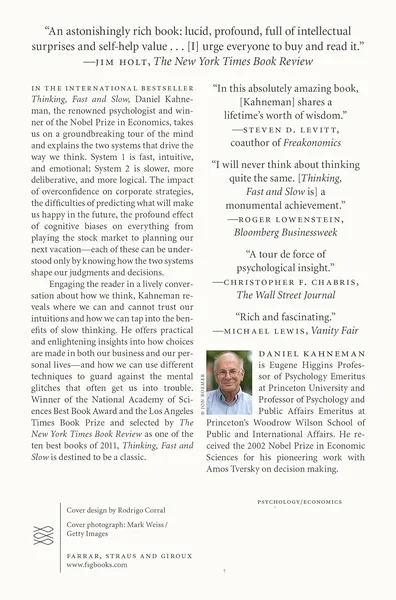
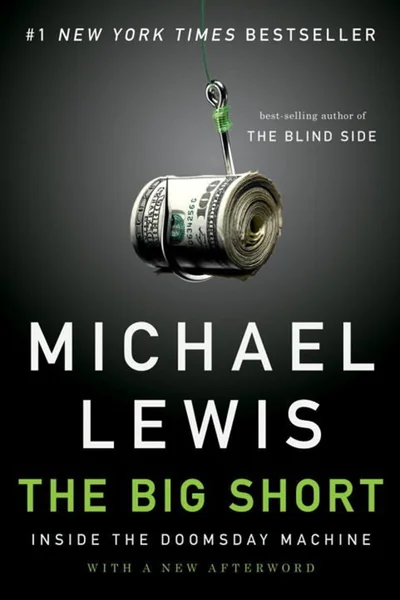
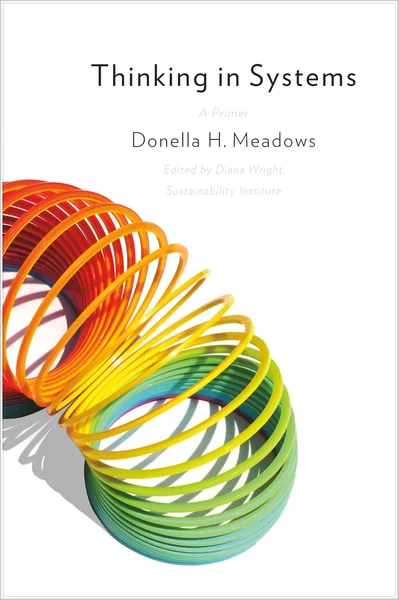
- Readers drawn to The Black Swan's exploration of human cognitive blind spots will find a natural companion in Daniel Kahneman's Thinking, Fast and Slow, which provides the deep psychological architecture underlying many of Taleb's claims about narrative bias and overconfidence. Michael Lewis's The Big Short covers the 2008 financial crisis as a narrative, making it an ideal real-world case study for Taleb's thesis about dangerously fragile financial models. Donella H. Meadows' Thinking in Systems approaches complexity and unpredictability from a systems-theory angle, complementing Taleb's philosophical framework. Burton G. Malkiel's A Random Walk Down Wall Street offers a more conventionally evidence-based take on market unpredictability, useful for readers who want a counterpoint or complement to Taleb's more polemical style.
- Who should read this?
- The Black Swan is most rewarding for readers engaged with finance, risk management, probability, and the philosophy of knowledge — these are the domains where Taleb's argument is tightest and most evidenced. Policy thinkers, economists, and anyone whose professional decisions involve forecasting or risk modeling will find the core prescription — build robustness against negative Black Swans rather than trying to predict them — directly applicable. Intellectually curious general readers who enjoy combative, cross-disciplinary essayists and are willing to engage critically rather than accept every claim at face value will also find it stimulating. Readers who prefer systematic, evidence-dense argument throughout, or who are put off by polemical rhetoric, are likely to find the book's unevenness frustrating.
- About Nassim Nicholas Taleb
- Born in Lebanon and raised between cultures, Nassim Nicholas Taleb brings a uniquely global perspective to his groundbreaking work on uncertainty and risk.
- Why is this book trending?
- With global markets rattled by tariff disputes, trade war escalations, and economic unpredictability in 2025–2026, readers are rediscovering Taleb's core argument that rare, catastrophic events are far more common than experts admit — and that most risk models are dangerously blind to them. The current wave of market chaos makes The Black Swan's central prescription — build robustness against negative Black Swans rather than trying to predict them — feel urgently practical rather than theoretical. It is a pattern consistent with the book's post-2008 surge: real-world financial turbulence repeatedly sends readers back to Taleb's framework.
- What are the main themes?
- The book's dominant theme is epistemic overconfidence — the systematic human tendency to construct false narratives of predictability and to drastically underestimate the role of rare, extreme events in shaping history. Closely related is the fragility of expert prediction: Taleb argues that banks, financial models, and forecasters in general are structurally blind to the tail risks that matter most. A third thread is the psychology of hindsight, where after a Black Swan occurs it is confidently explained as though it were foreseeable all along — what Taleb calls narrative fallacy. Across all four parts, the book returns to a practical philosophy of robustness: rather than trying to predict the unpredictable, individuals and institutions should structure themselves to survive negative Black Swans and benefit from positive ones.
- Where should I start with the Incerto?
- The Black Swan is the most natural entry point into Taleb's five-volume Incerto series — it is the most widely read volume, spent 36 weeks on the New York Times best-seller list, and presents the series' central ideas about uncertainty and epistemic overconfidence in their most accessible and culturally embedded form. Fooled by Randomness, the first volume, is the conceptual precursor and pairs naturally with The Black Swan for readers who want the full arc of Taleb's thinking on probability and human error. Antifragile, the fourth volume, is the recommended next step for readers who want to move from Taleb's diagnosis of fragility to his positive philosophy of benefiting from disorder.
Summarize this book
Follow up
Synthesized from verified book data & published reviews · How we review
Press Enter to ask. Answers come from our editorial Q&A — start typing to see related questions.
Age & Reading Level
Recommended age
Adult
Reading level
Adult
who it suits
Skip if you want a rigorously evidenced, systematic academic argument throughout rather than a polemical, essayistic one
Our Review
What the Book Actually Argues
Structure and Scope
Significance and Cultural Impact
Where the Argument Holds and Where It Strains
Who This Book Is For
Sources & Further Reading
The key facts and claims in this review are grounded in the retrieved, verified sources listed below.
- Cited in this review
- 1
- 2
- 3
- Further reading
- 4
Nassim Nicholas Taleb, Wikipedia
- 5
en.wikipedia.org
- 6
- 7
- 8
app.thestorygraph.com
- 9
- 10
talk.collegeconfidential.com
Books like The Black Swan
Curated picks for readers who enjoyed The Black Swan, with our reasoning for each match.
If you liked The Black Swan
Why It’s Trending
BookTok Is Putting The Black Swan Back in the Conversation
TikTok creators are circulating explainers and summaries of Taleb's The Black Swan right now, bringing a new wave of readers to a book that's been quietly essential for nearly two decades. If you've been seeing 'Black Swan' pop up in your feed lately, this is why.