BOOKS
Published

Read Time

7 min read

Reader rating

4.8

· 96 Amazon ratings
reader ratings, not a LuvemBooks score
Curated & edited by

LuvemBooks Editorial

How we create our reviews →
Share This Review

Financial Literacy for Young Adults Amplified by Raman Keane Review: A Beyond-the-Basics Personal Finance Guide

Financial Literacy for Young Adults Amplified, published by Prime Pacifica in July 2024, is a personal finance guide by Raman Keane designed specifically for young adults who want to move past foundational money concepts and into the economic forces — inflation, interest rates, the Federal Reserve — that shape real-world financial outcomes. The second entry in Keane's Financial Literacy for Young Adults series, it positions itself as the companion volume to a first book covering core fundamentals, and directs its energy at the "often-overlooked topics" the author argues most personal finance education neglects.
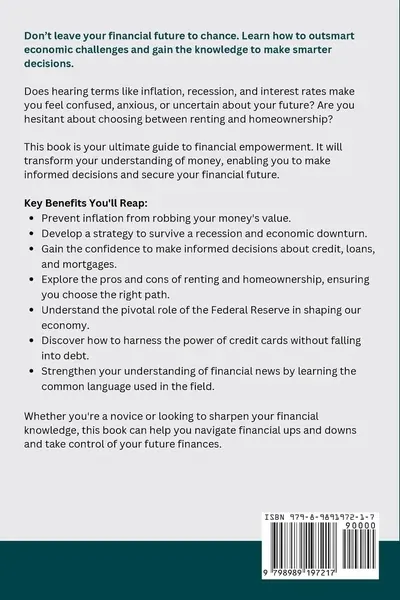
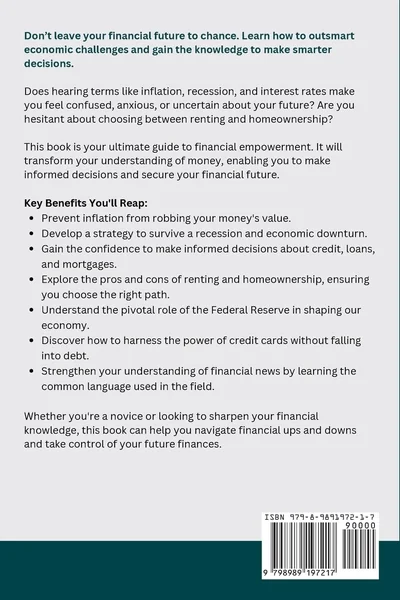
Back cover with synopsis, key benefits list, and barcode.Tap to enlarge

LuvemBooks Verdict

Best for

Young adults who already have a working grasp of budgeting, saving, and investing — via the first volume or equivalent — and want a structured, accessible guide to the macroeconomic forces (inflation, interest rates, the Federal Reserve) that shape their everyday financial decisions.

Worth it if

You've absorbed the personal finance fundamentals and are ready to understand the broader economic environment those habits operate within — particularly how Fed policy, inflation, and interest rate movements can quietly erode or amplify your financial choices.

Skip if

You're approaching personal finance entirely from scratch, or you want a single comprehensive reference that covers both basics and macro context — for either need, starting with (or pairing in) the first volume, Financial Literacy for Young Adults Simplified, is the more practical route.

Shortform's summary of the book highlights that Keane equips readers with "pragmatic advice and methods to analyze financial reports objectively," framing the guide as a tool for navigating one's fiscal landscape with confidence. The author's own site (ramankeane.com) positions the volume around "often-overlooked topics that can transform your financial future," explicitly situating it as a step beyond the standard personal finance fundamentals of budgeting, saving, investing, and retirement planning.

Sources: Shortform, RamanKeane.com
4.8from 96 Amazon ratings— reader ratings, not a LuvemBooks score
In This Review
  • What Works & What Doesn't
  • What This Book Actually Is and Contains
  • The Book's Central Argument and Stakes
  • What the Book Does Well
  • Genuine Limitations to Consider
  • Who This Book Is Genuinely For

What Works & What Doesn't

What Works
  • Focuses specifically on macroeconomic topics — inflation, interest rates, the Federal Reserve — that most entry-level personal finance guides for young adults neglect
  • Clear series architecture allows the two volumes to build logically on one another, with fundamentals in the first book and advanced economic context in this one
  • Framed around practical application, with the goal of helping readers analyze financial information and make confident decisions in varying economic conditions
  • Concise and targeted in scope, giving the book a coherent identity rather than attempting to cover all of personal finance in one volume
What Doesn't
  • Structurally dependent on the first volume in the series — readers who skip Simplified may lack the foundational context the book assumes
  • Does not function as a standalone comprehensive personal finance reference; readers wanting full coverage must treat both volumes as a set
A purpose-built sequel that deliberately picks up where standard financial literacy curricula leave off, targeting the economic forces most young adults encounter without formal preparation.

What This Book Actually Is and Contains

Back cover with synopsis, key benefits list, and barcode.
Financial Literacy for Young Adults Amplified is a personal finance guide, not a memoir or workbook, authored by Raman Keane and published by Prime Pacifica in July 2024. It is the second volume in the Financial Literacy for Young Adults series, with Keane's first book — Financial Literacy for Young Adults Simplified — having established the genre staples of budgeting, saving, investing, and retirement planning. This volume is explicitly designed to build on that foundation. As the author's own description frames it, the series acknowledges that fundamentals are crucial but that "we often neglect other significant factors that greatly affect our financial well-being." The Amplified installment turns its attention to macroeconomic realities: inflation and its erosive effect on purchasing power, interest rates, and the structure and role of the Federal Reserve, among other topics the book characterizes as frequently bypassed in conventional personal finance conversations.
we often neglect other significant factors that greatly affect our financial well-being.

The Book's Central Argument and Stakes

Keane's organizing premise is that economic literacy — understanding the systems surrounding individual financial decisions — is just as consequential as the personal habits those decisions reflect. A passage highlighted in the Shortform summary captures this concisely: the book illustrates how a savings account earning 1% interest loses real value when inflation runs at 2%, a scenario Keane uses to underscore why choosing financial strategies without understanding macroeconomic context can undermine even disciplined savers. The Federal Reserve receives dedicated attention, with Keane examining its structure and the downstream effects its policy decisions have on everyday financial health. This macro-first orientation distinguishes the volume from the crowded shelf of entry-level money guides aimed at young adults and positions it as a bridge between personal budgeting and a genuine understanding of how the broader economy operates.

What the Book Does Well

The book's clearest strength is its scope of ambition within a compact format. By confining its focus to the "often-overlooked topics" — the forces that affect everyone yet are rarely taught — Keane gives the volume a coherent identity distinct from generic personal finance titles. According to the Shortform summary of the book, Keane pairs this thematic focus with pragmatic advice and methods for analyzing financial information objectively, equipping readers with tools to navigate their financial landscape with greater confidence. The framing is consistently empowerment-oriented: the publisher's description positions the book as a resource to help readers "thrive in any economic climate," emphasizing that financial jargon and uncertainty need not be barriers to sound decision-making. For readers who have already absorbed the basics and are asking what comes next, that focused promise carries real relevance.

Genuine Limitations to Consider

The book's deliberate positioning as a sequel creates a structural dependency worth noting. Keane himself acknowledges in his series framing that the fundamentals — budgeting, saving, investing, retirement planning — are covered in the prior volume, not this one. Readers who pick up Amplified without having worked through Simplified first may find the macro-level content more challenging to contextualize without that foundational scaffolding. Additionally, the book's scope, while purposefully narrow, means readers seeking a single comprehensive personal finance reference will need to treat the two volumes as a set rather than relying on this one alone. Neither point diminishes the book's value on its own terms, but both are practical considerations for anyone deciding where to begin in the series.

Who This Book Is Genuinely For

Financial Literacy for Young Adults Amplified is designed for young adults who already have a working grasp of basic personal finance concepts and want to understand the larger economic environment those concepts operate within. It is well-suited to readers who feel comfortable with a budget but remain uncertain about how Federal Reserve decisions, inflation trends, or interest rate movements affect their savings, debt, or investment choices. Readers approaching personal finance entirely from scratch will find more natural entry points in the first volume of the series. For those ready to move beyond the basics, however, this guide offers a structured, accessible treatment of topics that most comparable titles in the genre either gloss over or ignore entirely.

Sources & Further Reading

The key facts and claims in this review are grounded in the retrieved, verified sources listed below.

  1. 1
  2. 2
  3. 3