8 min read
4.6
· 52,177 Amazon ratingsShare This Review
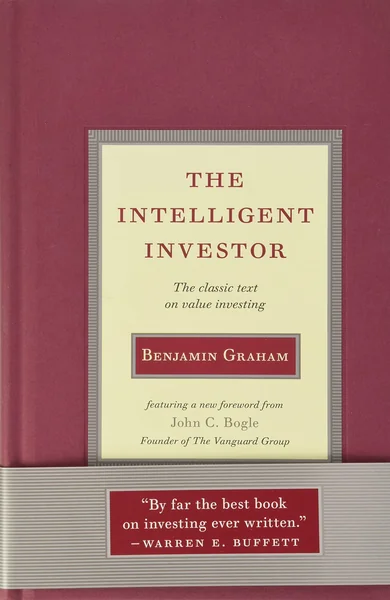
The Intelligent Investor by Benjamin Graham Review: The Foundational Classic of Value Investing
First published in 1949 and revised across multiple editions, Benjamin Graham's The Intelligent Investor remains one of the most historically significant and widely respected books on investing ever written, outlining the principles of value investing for both defensive and enterprising investors — a philosophy that shaped generations of practitioners, most famously Warren Buffett.
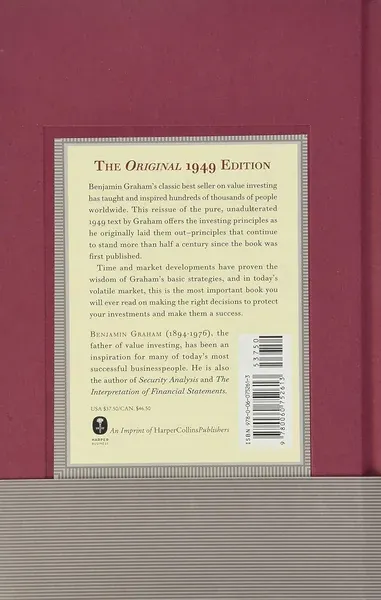 Tap to enlarge
LuvemBooks Verdict
Best for
Individual investors who want a principled, long-horizon framework for selecting undervalued stocks and are willing to engage with financial metrics like earnings ratios, dividend criteria, and asset values — particularly those drawn to the philosophical foundation of value investing rather than tactical, short-term trading guidance.
Worth it if
Worth reading if you're committed to understanding the enduring principles of value investing and want a framework — tested across Graham's own career and validated by disciples including Warren Buffett — that distinguishes between defensive and enterprising investor strategies.
Skip if
Skip it if you're looking for tactical advice on contemporary asset classes, derivatives, or short-term trading strategies, or if mid-twentieth-century market examples are likely to frustrate rather than inform your reading.
What readers & critics say
Kirkus Reviews, in its original appraisal, praised the book as an "intelligent, informed appraisal" aimed at investors who wish to conserve capital and obtain a reasonable return rather than speculate. Investopedia identifies Graham as "the father of value investing" and describes The Intelligent Investor as a practical text that teaches readers to apply Graham's principles, while vocal.media calls it "widely regarded as one of the most important books ever written on investing."
“An intelligent, informed appraisal for the investor who wishes to conserve capital, obtain a reasonable return, and protect against inflation.”
— Kirkus ReviewsAsk LuvemBooks
Was this helpful?
- Is it worth reading?
- For readers committed to understanding the philosophical foundations of long-term, value-oriented investing, The Intelligent Investor carries a historical stature that few books in the genre can claim — its influence spans over seventy years and its framework has been validated by practitioners including Warren Buffett, Irving Kahn, and Walter Schloss. The book's principles-first approach is concrete and testable, grounded in earnings ratios, dividend criteria, and asset value criteria that readers who enjoy quantitative reasoning will find actionable. The key caveat is that its specific examples and market references reflect mid-twentieth-century conditions, so readers focused on contemporary market structures will need to do some contextualisation themselves.
- Similar books
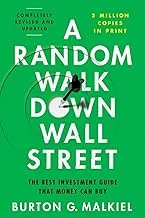
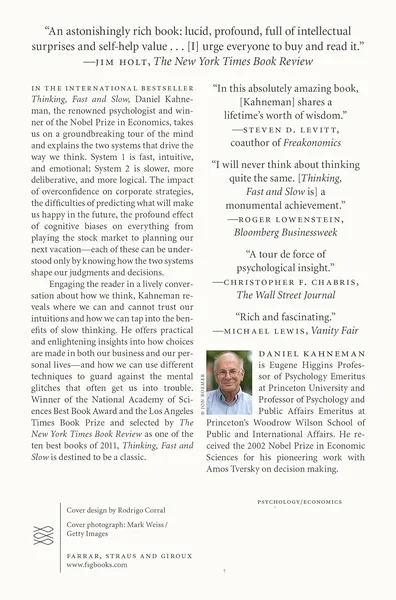
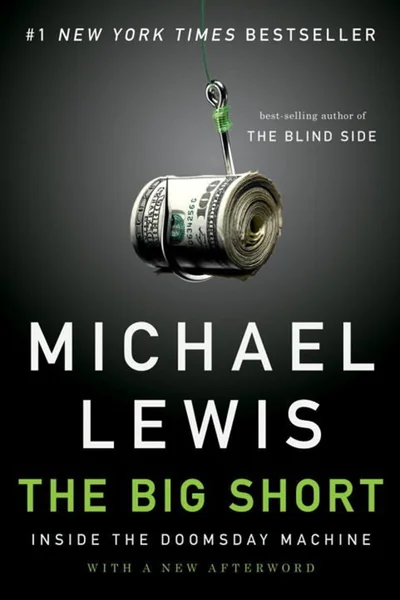
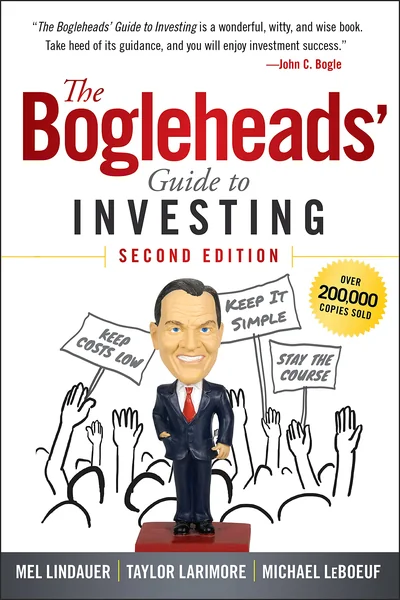
- Readers who appreciate The Intelligent Investor's rational, long-term approach to markets may find Burton G. Malkiel's A Random Walk Down Wall Street a useful companion — it examines market efficiency from a complementary angle. For the psychological dimension of financial decision-making that underpins Graham's investor-temperament framework, Daniel Kahneman's Thinking, Fast and Slow is essential reading. The Bogleheads' Guide to Investing by Mel Lindauer, Taylor Larimore, and Michael LeBoeuf offers a similarly principles-driven, long-horizon approach oriented toward index investing. Nassim Nicholas Taleb's The Black Swan challenges assumptions about market predictability in ways that productively stress-test Graham's framework, and Michael Lewis's The Big Short provides a vivid real-world account of how market mispricing — central to Graham's thesis — can manifest at catastrophic scale.
- Who should read this?
- The Intelligent Investor is designed for individual investors who want a principled, long-horizon framework for selecting stocks — whether they identify as defensive investors prioritising simplicity and safety, or enterprising investors willing to do active research for better returns. Readers who enjoy quantitative reasoning and are comfortable engaging with financial metrics such as earnings ratios, dividend criteria, and asset value criteria will find the methodology concrete and testable. It is not a fit for those seeking short-term trading tactics, guidance on derivatives, or strategies tailored to modern asset classes.
- About Benjamin Graham
- Benjamin Graham was an English-American financial analyst, economist, accountant, investor, and professor. He is widely regarded as the father of value investing, and The Intelligent Investor stands as the definitive expression of the investment philosophy he developed and taught over decades.
- What are the key concepts?
- The two pillars of The Intelligent Investor are the distinction between the defensive investor and the enterprising investor, and the group approach to value investing — applying simple earnings, dividend, and asset value criteria to buy baskets of undervalued stocks rather than analysing individual companies in exhaustive detail. Graham's foundational conviction is that the market overreacts to price events, creating opportunities for the patient investor who focuses on intrinsic worth rather than momentary trading price. He described testing this approach over fifty years and finding that it outperformed the Dow Jones by a factor of two.
- Which edition is best?
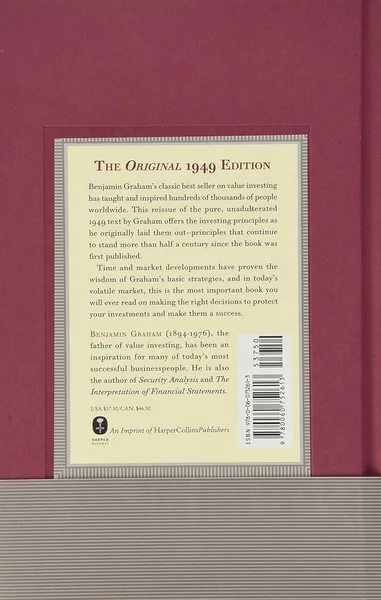
- The book has been revised and reissued through editions in 1954, 1959, 1965, and 1973, with a notable 2003 edition that added commentaries and new footnotes by financial journalist Jason Zweig. Warren Buffett contributed a preface and appendices to an earlier hardcover edition. Because the 'third edition' label has been applied to different configurations over the years, buyers should verify exactly which editorial apparatus — Zweig commentary, Buffett preface, or Graham-only text — a given copy contains before purchasing.
Summarize this book

Follow up
Synthesized from verified book data & published reviews · How we review
Press Enter to ask. Answers come from our editorial Q&A — start typing to see related questions.
Age & Reading Level
Recommended age
Adult
Reading level
Adult
who it suits
Skip if you are looking for short-term trading tactics, guidance on modern asset classes, or a fast-paced get-rich-quick system.
Our Review
What the Book Is and What It Argues
Its Place in Investing History
The Buffett Connection and Real-World Validation
Edition History and What This Edition Contains
Who This Book Is For — and Where It Asks the Most of Its Reader
Sources & Further Reading
The key facts and claims in this review are grounded in the retrieved, verified sources listed below.
- Cited in this review
- 1
en.wikipedia.org
- 2
irp-cdn.multiscreensite.com
- Further reading
- 3
Benjamin Graham, Wikipedia
- 4
investopedia.com
- 5
- 6
Books like The Intelligent Investor
Curated picks for readers who enjoyed The Intelligent Investor, with our reasoning for each match.
If you liked The Intelligent Investor