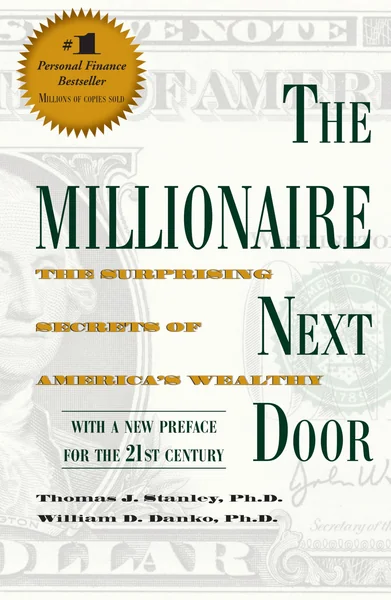
The Millionaire Next Door: The Surprising Secrets of America's Wealthy
by Thomas J. Stanley and William D. Danko
At a glance
About the Author
Thomas J. Stanley and William D. Danko1 book reviewed
The Millionaire Next Door
The Surprising Secrets of America's Wealthy
by Thomas J. Stanley and William D. Danko
LuvemBooks Verdict
Best for: Readers new to personal finance who want to engage with the foundational, research-backed text behind the "live below your means" argument — rather than one of its many derivative summaries — and who are ready to apply the PAW/UAW self-diagnostic framework to their own financial situation.
Worth it? Skip it? Read the full verdict →Ask LuvemBooks
Was this helpful?
- Is it worth reading?
- For readers new to personal finance, The Millionaire Next Door remains a worthwhile read as the original, research-backed articulation of ideas that have since been summarized and adapted across dozens of derivative works — reading the source gives those ideas their proper weight. Readers already well-versed in behavioral economics or financial planning may find the methodology dated and the conclusions familiar, given that the data reflects 1990s American economic conditions. The serious caveat to hold in mind is Nassim Nicholas Taleb's survivorship-bias critique: the study profiles accumulators who succeeded but does not account for those who adopted similar frugal habits and still failed, and the research was conducted against the backdrop of an exceptional bull market.
- Similar books
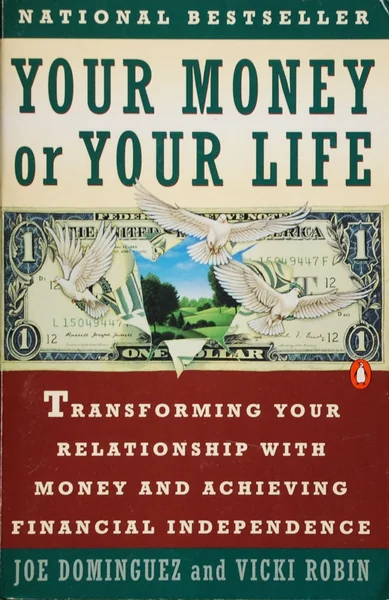
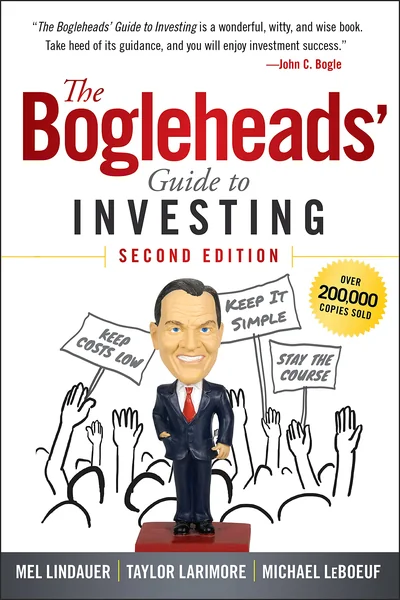
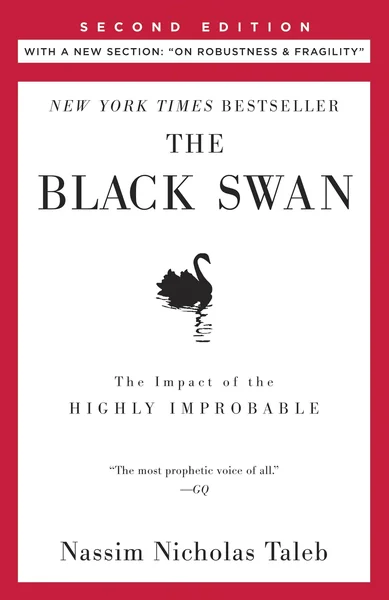
- Readers drawn to The Millionaire Next Door's research-grounded approach to personal finance will find strong complements in several related works. Your Money or Your Life by Joe Dominguez and Vicki Robin similarly challenges mainstream assumptions about income and consumption. J.L. Collins's The Simple Path to Wealth builds on many of the same frugality-and-index-investing principles in a more contemporary register. The Bogleheads' Guide to Investing by Mel Lindauer, Taylor Larimore, and Michael LeBoeuf offers a methodical framework for the savings and investment habits Stanley and Danko's millionaires exemplified. For readers who want to interrogate the book's methodology more deeply, Nassim Nicholas Taleb's The Black Swan — whose author raised the survivorship-bias critique of this very book — provides essential context on how hidden failures distort our models of success.
- Who should read this?
- The book is best suited to readers new to personal finance who want an empirically grounded introduction to the distinction between income and wealth, and who will benefit most from the PAW/UAW framework and net-worth benchmark formula as immediate self-diagnostic tools. It is also valuable for anyone seeking to understand the foundational texts that shaped modern personal finance thinking — the book is the original source of arguments that have since been summarized and adapted almost everywhere, making the primary text a worthwhile reference. Readers already well-versed in behavioral economics or financial planning may find the 1996 research methodology dated and the conclusions familiar.
- How was the research conducted?
- Thomas J. Stanley — a researcher and lecturer who had studied the affluent since 1973 — and William D. Danko, then an associate professor of marketing at the University at Albany, State University of New York, compiled survey and interview data on American millionaire households and organized their findings into a coherent argument about how wealth is actually built. The empirical approach was notably uncommon in the personal finance genre at the time of the book's 1996 publication, giving its arguments a persuasive force that more anecdote-driven self-help books lacked. The primary methodological challenge, as raised by Nassim Nicholas Taleb, is that the study profiles accumulators who succeeded without accounting for those who adopted similar habits and failed — a classic survivorship-bias problem compounded by the fact that the research was conducted during one of the greatest U.S. bull markets in history.
- What are the main themes?
- The book's central theme is the gap between income and wealth — specifically, that high-earning professionals who spend heavily on status goods (cars, watches, clothing) often accumulate far less net worth than lower-profile households that prioritize saving and investment over visible consumption. A second major theme is the counterintuitive geography of wealth: Stanley and Danko's data shows millionaires are disproportionately clustered in middle-class and blue-collar neighborhoods, not in the affluent enclaves where most people expect to find them. The book also engages implicitly with the behavioral economics of social signaling, documenting how the pressure to display wealth actively undermines the accumulation of it.
- How influential has this book been?
- The book became a staple of American personal finance reading after its 1996 publication and introduced vocabulary — UAW, PAW — that persists in financial literacy discussions decades later. The PAW/UAW framework is referenced routinely in financial planning contexts, and the net-worth benchmark formula has been reproduced and debated across the personal finance genre. For readers encountering the material for the first time, the book represents the primary source of an argument that has since been summarized, simplified, and adapted in dozens of derivative works — making it a direct and well-documented reference point for understanding where modern personal finance thinking originated.
Summarize this book
Follow up
Synthesized from verified book data & published reviews · How we review
Press Enter to ask. Answers come from our editorial Q&A — start typing to see related questions.
Age & Reading Level
Recommended age
Adult
Reading level
Adult
who it suits
Skip if you're looking for actionable step-by-step investment mechanics rather than research-based behavioral analysis
Editorial Review
First published in 1996, The Millionaire Next Door by Thomas J. Stanley and William D.…
Read the Full ReviewBooks like The Millionaire Next Door
Curated picks for readers who enjoyed The Millionaire Next Door, with our reasoning for each match.
If you liked The Millionaire Next Door