Explore our curated collection of history book reviews and recommendations.
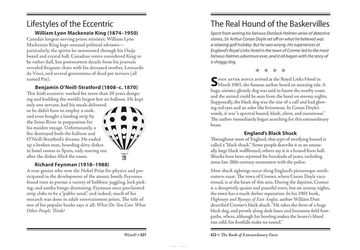
Publications International Ltd.'s The Book of Extraordinary Facts is a wide-ranging, 704-page hardcover trivia compendium published in 2012, covering pop culture, history, nature, technology, food, sports, art, religion, crime, and the outright weird — designed to engage curious adults and trivia enthusiasts for hours of browsing.
Apr 2, 2026
A New York Times bestseller that sold more than two million copies in the United States, Upstairs at the White House is the memoir of J. B. West, who served as Chief Usher of the White House for nearly three decades, offering a behind-the-scenes account of life at 1600 Pennsylvania Avenue across five first families — from Eleanor Roosevelt to Pat Nixon — and illuminating the unelected, unpaid, but consequential roles the First Ladies played in shaping the presidency itself.
Apr 1, 2026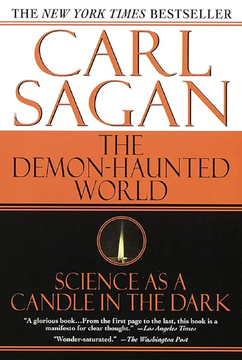
Carl Sagan's The Demon-Haunted World: Science as a Candle in the Dark is a landmark work of science communication, originally published in 1995, in which the Pulitzer Prize–winning astronomer makes the case that critical thinking and the scientific method are indispensable not just to knowledge, but to democracy itself. A New York Times bestseller and winner of the Los Angeles Times Book Prize, the book remains a touchstone for the contemporary skeptical movement and a forceful rebuttal to pseudoscience, superstition, and credulity.
Mar 16, 2026
First published in 1886, Friedrich Nietzsche's Beyond Good and Evil remains one of philosophy's most searching and polemical challenges to conventional morality, now available in a hardcover Fingerprint! Classics edition — making a foundational text accessible to a new generation of readers.
Mar 23, 2026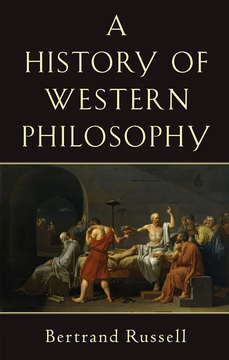
First published in 1945 in the United States, Bertrand Russell's A History of Western Philosophy is a sweeping survey of Western thought from the pre-Socratic philosophers through the early twentieth century — a work cited by the Nobel Committee when Russell was awarded the Nobel Prize in Literature in 1950, and one that has remained continuously in print ever since. Its strengths as an accessible, historically contextualised overview are real and well-documented; its acknowledged weaknesses — overgeneralisations and omissions, particularly in the post-Cartesian period — are equally part of its record. Both deserve honest attention.
Mar 23, 2026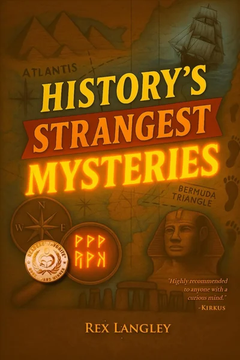
Rex Langley's History's Strangest Mysteries: An Investigation For Young Readers delivers an episodic, investigation-themed journey through some of history's most enduring unsolved puzzles — from the Bermuda Triangle and the Wow! Signal to the Ghost Ship Octavius and the Money Pit of Oak Island — structured as fast-paced chapter-length case files designed to develop critical thinking in readers aged nine and up.
Mar 19, 2026
Sonia Purnell's A Woman of No Importance rescues Virginia Hall — one of the most consequential Allied spies of World War II — from undeserved obscurity, building a richly detailed biography around meticulous research and a subject whose true-life exploits rival anything in fiction.
Mar 16, 2026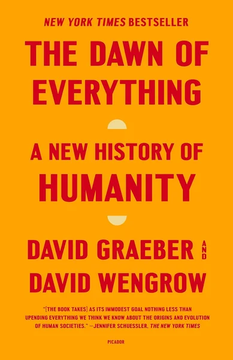
A New York Times bestseller co-authored by anthropologist David Graeber and archaeologist David Wengrow, The Dawn of Everything is a sweeping, award-winning reexamination of human prehistory that dismantles centuries-old assumptions about social evolution, the origins of agriculture, cities, democracy, and inequality — and argues that the human past holds far more possibility than conventional wisdom allows.
Mar 15, 2026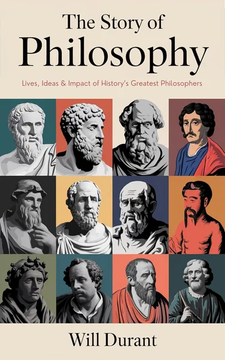
Will Durant's The Story of Philosophy, first published in 1926 and revised in 1933, remains one of the most enduring popular introductions to Western philosophy, profiling thinkers from Plato and Aristotle through Nietzsche, Bergson, Russell, and Dewey — tracing not just their ideas but the lives and historical conditions that shaped them. The edition under review (ASIN B0CLL5XDCR) is a Kindle release published by Grapevine in October 2023, co-credited to the Original Thinkers Institute. Critical coverage called the work "a delight," and its place as a foundational text of accessible philosophy writing is well established — though its exclusive focus on Western, predominantly European and American thinkers is a documented limitation Durant himself acknowledged.
Mar 20, 2026
Jackson Ridge's The Ultimate Guide to Rebuilding a Civilization is a wide-ranging reference guide structured around ten chapters that move from immediate survival priorities to long-term social reconstruction, covering renewable energy, sustainable agriculture, ethical governance, and community building — marketed equally to sustainability enthusiasts and gift-givers seeking an accessible, visually polished introduction to civilizational resilience.
Apr 2, 2026
Are Women People? A Book of Rhymes for Suffrage Times is Alice Duer Miller's landmark collection of satirical poetry and prose, originally serialized in the New York Tribune, that skewered anti-suffragist arguments with wit, rhyme, and pointed irony. This Essential Novelists edition, curated by August Nemo, brings Miller's five-section collection to modern readers in Kindle format, preserving a work the New York Times recognized on its list of important new books upon the collection's original publication.
Mar 31, 2026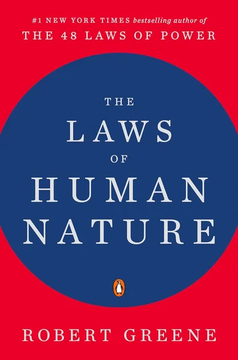
Robert Greene's The Laws of Human Nature is an ambitious, encyclopedic nonfiction work structured around 18 laws of human psychology and behavior, drawing on historical figures and philosophical traditions to argue that understanding — and mastering — the hidden forces driving human action is essential to navigating life, relationships, and power. It is a serious undertaking for patient, analytically inclined readers, though its neo-Machiavellian worldview and considerable length have drawn pointed criticism alongside a broad international following.
Mar 15, 2026Search
Rating
Active Filters
Search
Rating
Active Filters
Showing 37 - 48 of 81 reviews
