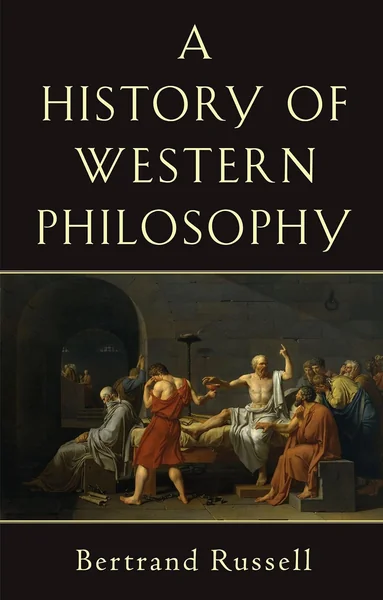
At a glance
The History of Western Philosophy
LuvemBooks Verdict
Best for: Educated non-specialists — history enthusiasts, curious general readers, or undergraduates — who want a single, readable volume that traces Western philosophy from the Pre-Socratics to the early twentieth century, with each thinker placed in their political and historical context.
Worth it? Skip it? Read the full verdict →Ask LuvemBooks
Was this helpful?
- Is it worth reading?
- For readers approaching Western philosophy for the first time — or seeking a single-volume orientation before pursuing specialist texts — A History of Western Philosophy is designed precisely for that purpose, and its unbroken record in print since 1945 reflects genuine sustained usefulness. The Observer described it as 'lucid and magisterial,' and Frederick Copleston, writing his own rival multivolume survey, called it 'unusually lively and entertaining' — high praise from a direct competitor. The honest caveat is that Copleston also documented inadequate and misleading treatment of a number of important philosophers, and known factual errors — including a wrong birth year for Spinoza — persist in American printings. As an entry point and broad orientation it is exceptional; as a reliable scholarly reference for modern philosophy from Descartes onward, it has documented limits.
- Similar books
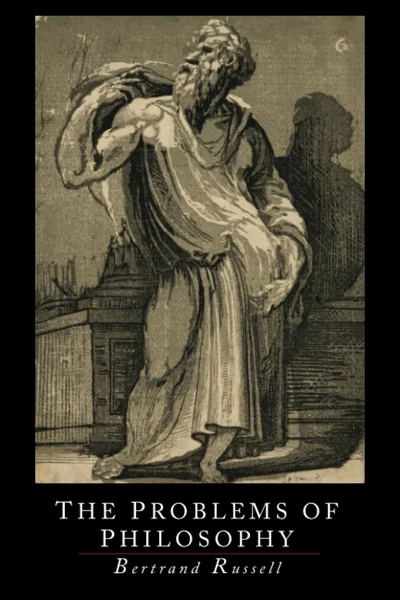
- Readers who enjoy A History of Western Philosophy often turn to other accessible philosophy surveys and classic texts. Russell's own shorter work The Problems of Philosophy (also in catalogue) offers a sharper, more focused introduction to core philosophical questions from the same authoritative voice. Simon Blackburn's Think: A Compelling Introduction to Philosophy is a more concise contemporary alternative for non-specialists. Jostein Gaarder's Sophie's World presents the history of philosophy as a narrative novel — an unusually engaging entry point for those who find the survey format daunting. For primary sources, Plato's The Republic allows readers to encounter ancient philosophy directly rather than through Russell's interpretation. Alain de Botton's The Consolations of Philosophy offers a lighter, more anecdotal take on how philosophical ideas apply to everyday life.
- Who should read this?
- A History of Western Philosophy is designed for educated non-specialists — readers approaching Western philosophy for the first time or looking for a single-volume orientation before pursuing more specialist reading. Its combination of philosophical exposition and political-historical context gives it a breadth that more technically focused surveys do not attempt, and its chapter-by-chapter structure allows readers to move through the tradition at their own pace. Those already grounded in the field, or with a particular investment in modern philosophy from Descartes onward, may find the book's acknowledged gaps — thinning coverage and contested interpretations in the post-Cartesian sections — more limiting than rewarding.
- Why does historical context matter in this book?
- One of the defining structural choices in A History of Western Philosophy is Russell's insistence on prefacing each major section with an account of the historical and political background he considered necessary to understand the philosophical developments it describes. This distinguishes the book from a purely doctrinal catalogue and reflects Russell's view that philosophical ideas do not arise in a vacuum — they respond to the social and political conditions of their time. The book was itself written during the Second World War, a context that lends particular weight to its project of tracing how Western thought arrived at the twentieth century.
- What is the book's connection to the Nobel Prize?
- When the Swedish Academy awarded Bertrand Russell the Nobel Prize in Literature in 1950, A History of Western Philosophy was named among the works cited as earning him the honour — a distinction that places it in rare company among philosophy texts. The book's commercial success was also substantial enough to provide Russell with financial security for the final decades of his life. Simon & Schuster, its current publisher, characterises it as 'one of the most important philosophical works of all time,' a claim that the Nobel citation lends unusual institutional weight to.
- What are the main criticisms of the book?
- The book's documented weaknesses are as much a part of its record as its strengths. Frederick Copleston — a fellow philosopher writing his own multivolume rival survey — praised the book's readability but added that Russell's treatment of a number of important philosophers is both inadequate and misleading, with the post-Cartesian modern period drawing particular scholarly objection. Known factual errors, including a wrong birth year for Spinoza, were corrected in British printings and the 1961 reset edition but were never transferred to American printings — a longstanding editorial shortcoming. The book's origins in a lecture series, rather than primary scholarly research (much of the historical research was carried out by Russell's third wife Patricia), partly explain this unevenness.
Summarize this book
Follow up
Synthesized from verified book data & published reviews · How we review
Press Enter to ask. Answers come from our editorial Q&A — start typing to see related questions.
Age & Reading Level
Recommended age
Adult
Reading level
Adult
who it suits
Skip if you want rigorous, scholarly coverage of modern philosophy from Descartes onward and will not tolerate documented overgeneralisations or uncorrected factual errors.
Editorial Review
First published in 1945 in the United States, Bertrand Russell's A History of Western Philosophy is a sweeping survey of Western thought from the pre-Socratic philosophers through the early twentieth century — a work cited by the Nobel Committee when Russell was awarded the Nobel Prize in Literature in 1950, and one that has remained continuously in print ever since. Its strengths as an accessible, historically contextualised overview are real and well-documented; its acknowledged weaknesses — overgeneralisations and omissions, particularly in the post-Cartesian period — are equally part of its record.…
Read the Full ReviewBooks like The History of Western Philosophy
Curated picks for readers who enjoyed The History of Western Philosophy, with our reasoning for each match.
If you liked The History of Western Philosophy