
9 min read
4.6
· 2,066 Amazon ratingsShare This Review
A History of Western Philosophy by Bertrand Russell Review: A Nobel-Cited Survey That Endures
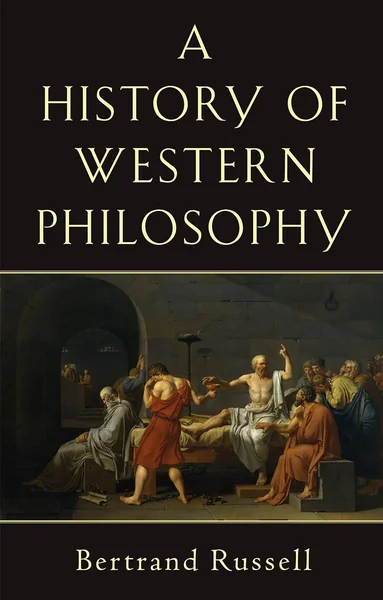
First published in 1945 in the United States, Bertrand Russell's A History of Western Philosophy is a sweeping survey of Western thought from the pre-Socratic philosophers through the early twentieth century — a work cited by the Nobel Committee when Russell was awarded the Nobel Prize in Literature in 1950, and one that has remained continuously in print ever since. Its strengths as an accessible, historically contextualised overview are real and well-documented; its acknowledged weaknesses — overgeneralisations and omissions, particularly in the post-Cartesian period — are equally part of its record. Both deserve honest attention.
LuvemBooks Verdict
Best for
Educated non-specialists — history enthusiasts, curious general readers, or undergraduates — who want a single, readable volume that traces Western philosophy from the Pre-Socratics to the early twentieth century, with each thinker placed in their political and historical context.
Worth it if
You want the broadest possible orientation to the Western philosophical tradition in one opinionated, continuously readable survey before committing to more specialised works.
Skip if
Specialists in post-Cartesian modern philosophy, or readers who need scholarly precision throughout, are likely to find the coverage of that period too thin, too contested, and marred by uncorrected factual errors in American printings.
What readers & critics say
Wikipedia records that the book was criticised for overgeneralisations and omissions — particularly from the post-Cartesian period — while also becoming a popular and commercial success that has remained in print since its first publication, and was cited by the Nobel Committee when Russell was awarded the Nobel Prize in Literature in 1950. Routledge describes it as "the best-selling philosophy book of the twentieth century" and "unchallenged to this day as the ultimate introduction to Western philosophy."
Sources: Wikipedia – A History of Western Philosophy, RoutledgeAge & Reading Level
Recommended age
Adult
Reading level
Adult
who it suits
Skip if you want rigorous, scholarly coverage of modern philosophy from Descartes onward and will not tolerate documented overgeneralisations or uncorrected factual errors.
In This Review
- What Works & What Doesn't
- What the Book Is and How It Is Structured
- Significance and Place in the Canon
- Russell's Distinctive Voice and Perspective
- Acknowledged Limitations and Scholarly Criticism
- Who This Book Is For Today
What Works & What Doesn't
What Works
- Cited by the Nobel Committee as one of the works that earned Russell the Nobel Prize in Literature in 1950
- Continuously in print since its 1945 US publication — a record of sustained relevance unmatched among single-volume philosophy surveys
- Described by Frederick Copleston as 'unusually lively and entertaining', reflecting Russell's distinctive, opinionated voice
- Each major section is prefaced by historical and political context, giving readers the background needed to understand philosophical developments
- Accessible chapter-by-chapter structure, with each chapter focused on a single philosopher, school, or era, suited to non-specialist readers
What Doesn't
- Criticised by scholars, including philosopher Frederick Copleston, for overgeneralisations and for treatment of certain philosophers that is inadequate and misleading
- Coverage is notably thinner and more contested in the post-Cartesian modern period than in the ancient and medieval sections
- Known factual errors in American printings — including Spinoza's birth year — were never corrected, a longstanding editorial shortcoming
What the Book Is and How It Is Structured
Significance and Place in the Canon
Russell's Distinctive Voice and Perspective
Acknowledged Limitations and Scholarly Criticism
Who This Book Is For Today
Frequently Asked Questions
Sources & Further Reading
The key facts and claims in this review are grounded in the retrieved, verified sources listed below.
- Cited in this review
- 1
- 2
en.wikipedia.org
- 3
- Further reading
- 4
- 5
- 6
newbookrecommendation.com
- 7
Related Reviews
Reviews of books we picked for readers who enjoyed The History of Western Philosophy.

Reader Comments
No comments yet
Be the first to share your thoughts!