Explore our curated collection of history book reviews and recommendations.
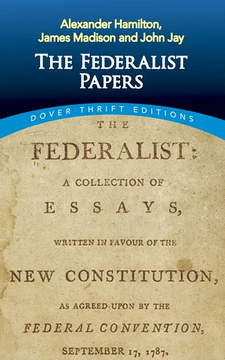
The Federalist Papers is a collection of 85 essays written between October 1787 and May 1788 by Alexander Hamilton, James Madison, and John Jay — published under the pseudonym "Publius" — to persuade New Yorkers to ratify the proposed United States Constitution. Originally serialized in New York newspapers, the essays remain an authoritative analysis of constitutional government and an enduring landmark of political philosophy, consulted by courts and scholars alike when interpreting the framers' intent.
Feb 10, 2026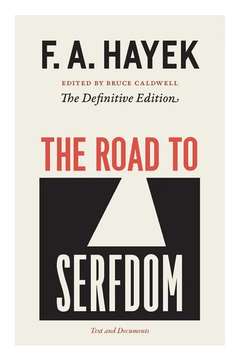
First published in 1944 and now available in a scholarly definitive edition edited by Bruce Caldwell, F. A. Hayek's The Road to Serfdom remains one of the most consequential works in 20th-century political and economic thought — a passionate, rigorous argument that central economic planning, however well-intentioned, leads inevitably toward tyranny rather than the utopia its advocates promise.
Feb 11, 2026
Dating from the late Spring and Autumn period of ancient China (roughly the 5th century BCE), Sun Tzu's The Art of War is a 13-chapter military treatise that Wikipedia describes as one of the most influential works on strategy of all time — a judgment borne out by its continuous use across nearly 2,500 years of military, political, and intellectual history. This Fingerprint reprint edition makes the text newly accessible in hardcover, carrying forward a work whose reach extends far beyond its original battlefield context.
Feb 10, 2026
Yuval Noah Harari's Sapiens: A Brief History of Humankind is a macro-history that traces Homo sapiens from the Stone Age to the 21st century across four defining revolutions — Cognitive, Agricultural, the Unification of Humankind, and Scientific — arguing that humanity's singular ability to believe in shared fictions is the engine behind all large-scale cooperation. Originally published in Hebrew in 2011 and in English in 2014, it is a genuinely ambitious work of popular non-fiction that integrates natural and social science, and has drawn both wide acclaim and substantive scholarly criticism for its breadth and interpretive boldness.
Feb 10, 2026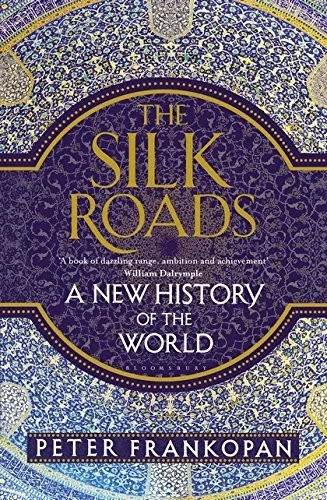
Peter Frankopan's The Silk Roads: A New History of the World is an international bestseller that mounts a sweeping, 25-chapter challenge to the Eurocentric narrative of civilisation, reorienting the story of humanity along the trade arteries connecting the Mediterranean to the Himalayas — a project that has earned wide critical praise alongside some pointed reservations about selective coverage and factual precision.
Feb 12, 2026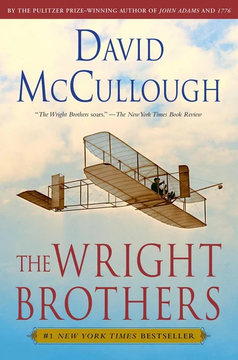
David McCullough's The Wright Brothers is a narrative non-fiction account of Orville and Wilbur Wright — the bicycle mechanics from Dayton, Ohio, who changed history on a winter day in 1903 at the Outer Banks of North Carolina — written by a two-time Pulitzer Prize winner and praised by major literary critics, though some reviewers note that the book's admiring portrait of its subjects leaves certain dimensions of their inner lives unexplored.
Feb 11, 2026
Jared Diamond's Guns, Germs, and Steel: The Fates of Human Societies is a transdisciplinary nonfiction work that set out to answer one of history's most charged questions — why did some civilizations come to dominate others? — and won the Pulitzer Prize for general nonfiction in 1998 doing it. Grounding its argument firmly in environmental and geographical factors rather than race or innate human capacity, the book synthesises biology, geography, anthropology, and history into a single ambitious thesis, making it essential reading for anyone curious about the deep roots of the modern world. It is not without its critics, and its prose has drawn qualified praise rather than outright admiration, but as a work of popular scholarship it remains a landmark.
Feb 9, 2026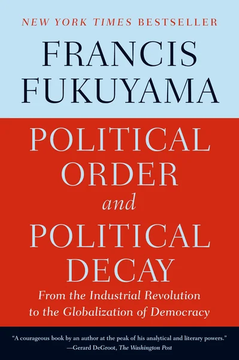
Francis Fukuyama's work Political Order and Political Decay is the second volume in his landmark series on the history of the modern state, picking up where The Origins of Political Order left off and tracing how state institutions developed — and began to erode — from the French Revolution to the present. Ambitious in geographical scope and deeply grounded in comparative political history, it is essential reading for anyone seeking to understand why liberal democracy succeeds in some settings and stagnates in others.
Feb 14, 2026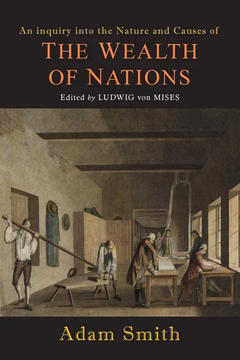
First published on 9 March 1776, Adam Smith's The Wealth of Nations is, as Encyclopaedia Britannica describes it, "the first formulation of a comprehensive system of political economy" — a foundational treatise that redrew the intellectual map of economics, trade, and governance for centuries to come.
Feb 14, 2026Search
Rating
Active Filters
Search
Rating
Active Filters
Showing 73 - 81 of 81 reviews
