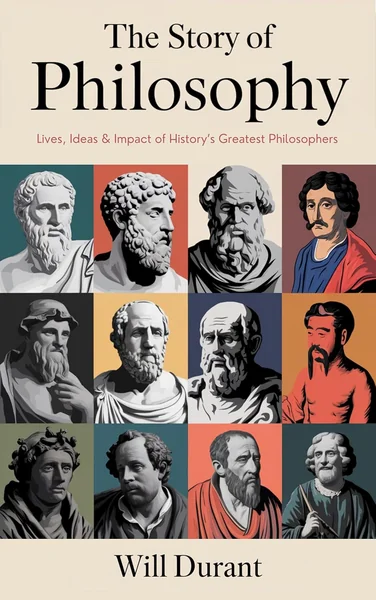
The Story of Philosophy: Lives, Ideas
by Will Durant, Original Thinkers Institute
At a glance
About the Author
Will Durant, Original Thinkers Institute1 book reviewed
The Story of Philosophy
Lives, Ideas
by Will Durant, Original Thinkers Institute
LuvemBooks Verdict
Best for: General readers who want a single-volume, narrative introduction to the Western philosophical tradition — covering Plato through Dewey — before tackling primary texts, or anyone drawn to intellectual biography that shows how each thinker's ideas grew from those before them.
Worth it? Skip it? Read the full verdict →Ask LuvemBooks
Was this helpful?
- Is it worth reading?
- For anyone seeking an accessible, single-volume entry point into Western philosophy, The Story of Philosophy is the text most frequently recommended for that purpose — a work Simon & Schuster's own catalogue describes as "one of the most important books of our time," and critical coverage has called "a delight." Durant's narrative approach, which traces how each philosopher's work informed the next, makes it genuinely useful as a history of ideas rather than a mere reference list. The core caveat is temporal: the text dates to 1926 (revised 1933), so its treatment of early twentieth-century philosophers reflects the cutting edge of that era, not of contemporary philosophy. Readers who want a global survey including non-Western traditions will need to supplement it, as Durant himself acknowledged the absence of Confucius, Buddha, and Adi Shankara as a real gap.
- Similar books
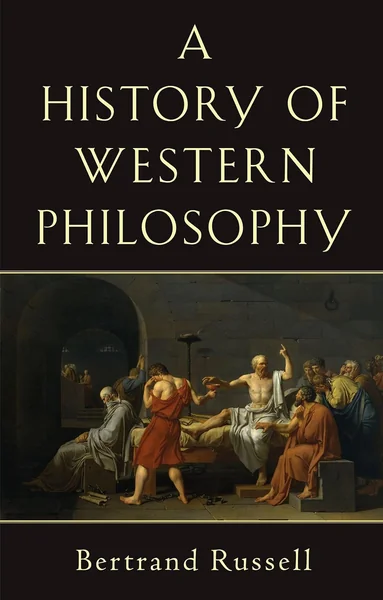
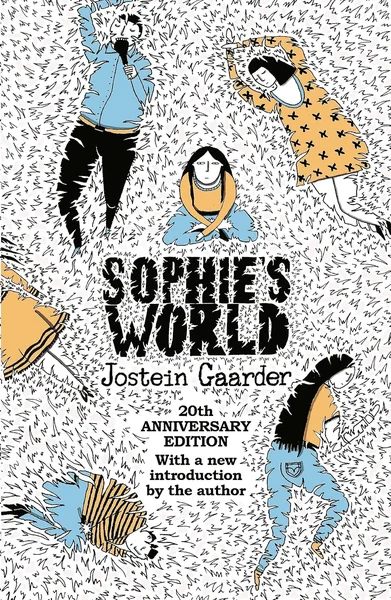
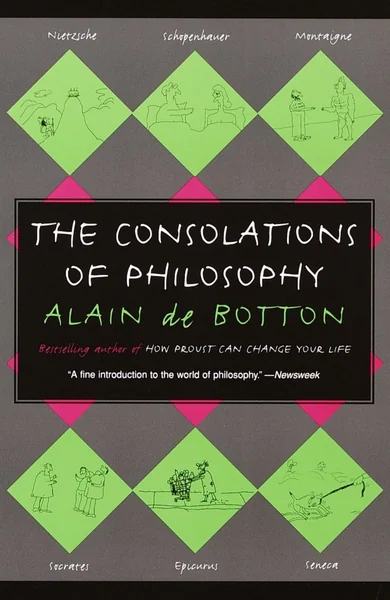
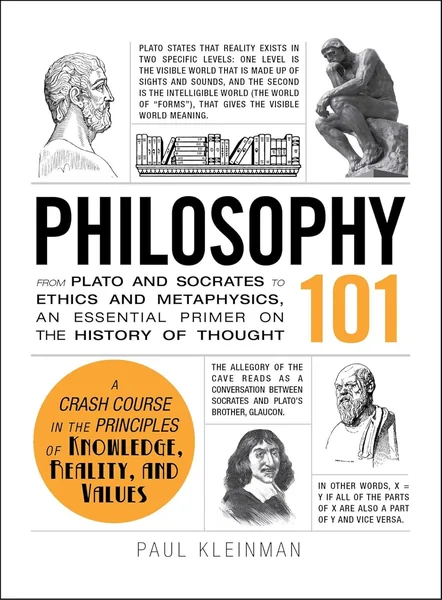
- Readers who enjoy The Story of Philosophy have several strong companions to consider. Bertrand Russell's The History of Western Philosophy covers much of the same terrain from the perspective of a practising philosopher, making it a natural next step. Jostein Gaarder's Sophie's World offers a narrative introduction to philosophy aimed at younger readers but beloved across ages. For those drawn to Durant's accessible, humanistic register, Alain de Botton's The Consolations of Philosophy applies philosophical ideas to everyday life in a similarly approachable style. Plato's own The Republic is the obvious primary text to reach for after reading Durant's account of Plato and Socrates, and Paul Kleinman's Philosophy 101 provides a compact contemporary overview for readers who want an even more concise survey.
- Who should read this?
- The book is designed for general readers approaching philosophy without specialist training — anyone who wants a guided tour of the Western philosophical tradition without having to work through primary texts first. It is particularly well suited to readers who enjoy intellectual biography alongside the history of ideas: Durant's method is to show how each philosopher's life, historical moment, and intellectual environment shaped their thought. Those wanting a single-volume orientation before tackling figures like Plato, Kant, or Nietzsche directly will find The Story of Philosophy the text most recommended for that purpose. It is not the right choice for readers seeking coverage of non-Western traditions, or for those wanting a cutting-edge account of contemporary philosophy.
- What's the famous Aristotle misquote connection?
- The Story of Philosophy carries an unusual footnote in popular culture: it is the verified origin of one of the most widely circulated misattributions in the philosophical world. As Wikipedia's entry on the work documents, the oft-quoted line "We are what we repeatedly do. Excellence, then, is not an act, but a habit" was not written by Aristotle — it was written by Durant while discussing Aristotle's ideas, and has been misattributed to Aristotle ever since. This detail speaks to Durant's broader influence: his synthesis was compelling enough to be mistaken for the source itself, a somewhat ironic testament to how successfully he channelled the spirit of his subjects.
- How does the 2023 Kindle edition differ from earlier editions?
- The Kindle edition under review is published by Grapevine (October 23, 2023) and carries a co-authorship credit for the Original Thinkers Institute alongside Durant's name. The core text is Durant's, originating in 1926 and revised in 1933; the 2023 release is a modern reissue, not a new or updated work. The Kindle format offers enhanced typesetting and screen-reader support, making it accessible across devices. Prospective buyers comparing editions should note that earlier print editions — including the 1967 Touchstone paperback and various Simon & Schuster reprints — contain the same foundational text.
- What are the main themes?
- The central organising theme of The Story of Philosophy is intellectual continuity: Durant's explicit aim is to show how each philosopher's work informed the next, threading Plato, Aristotle, Spinoza, Kant, Schopenhauer, and Nietzsche into a continuous conversation rather than treating them as isolated monuments. A secondary theme is the relationship between biography and ideas — Durant insists that philosophy cannot be separated from the economic conditions, historical moment, and personal character of the thinker who produced it. The Simon & Schuster synopsis notes that Durant traces 'every school of social thought' back to its roots in the ancient Greek tradition, giving the book an arc that moves from Socrates and Plato outward through the centuries to early twentieth-century American pragmatism.
Summarize this book
Follow up
Synthesized from verified book data & published reviews · How we review
Press Enter to ask. Answers come from our editorial Q&A — start typing to see related questions.
Age & Reading Level
Recommended age
Adult
Reading level
Adult
who it suits
Skip if you're looking for coverage of non-Western philosophical traditions, including Confucian, Buddhist, or Hindu philosophy.
Editorial Review
Will Durant's The Story of Philosophy, first published in 1926 and revised in 1933, remains one of the most enduring popular introductions to Western philosophy, profiling thinkers from Plato and Aristotle through Nietzsche, Bergson, Russell, and Dewey — tracing not just their ideas but the lives and historical conditions that shaped them. The edition under review (ASIN B0CLL5XDCR) is a Kindle release published by Grapevine in October 2023, co-credited to the Original Thinkers Institute.…
Read the Full ReviewBooks like The Story of Philosophy
Curated picks for readers who enjoyed The Story of Philosophy, with our reasoning for each match.
If you liked The Story of Philosophy