
9 min read
4.7
· 7,669 Amazon ratingsShare This Review
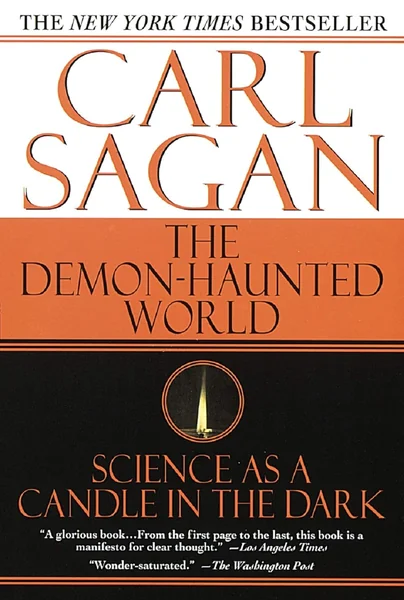
The Demon-Haunted World: Science as a Candle in the Dark by Carl Sagan Review: A Essential Defense of Reason and Science
Carl Sagan's The Demon-Haunted World: Science as a Candle in the Dark is a landmark work of science communication, originally published in 1995, in which the Pulitzer Prize–winning astronomer makes the case that critical thinking and the scientific method are indispensable not just to knowledge, but to democracy itself. A New York Times bestseller and winner of the Los Angeles Times Book Prize, the book remains a touchstone for the contemporary skeptical movement and a forceful rebuttal to pseudoscience, superstition, and credulity.
LuvemBooks Verdict
Best for
General readers — especially those without a scientific background — who want a clear, story-driven explanation of how science works and why skeptical thinking matters for everyday civic life.
Worth it if
You're alarmed by the spread of misinformation and pseudoscience and want both a practical toolkit for evaluating dubious claims and a passionate, historically grounded case for evidence-based reasoning.
Skip if
You're seeking a neutral, multi-perspective, or comprehensively updated academic survey of fringe topics such as UFO research or parapsychology — Sagan's unapologetically advocacy-driven tone and selective use of evidence will frustrate rather than satisfy you.
What readers & critics say
Kirkus Reviews describes the book as a rallying of "the forces of reason and scientific literacy" by a leading science writer alarmed by the rise of superstition and pseudoscience. The Los Angeles Times called it "a paean to knowledge and clear thought" and "a spirited defense of science and the scientific method against all comers," while the Penguin Random House page records blurbs characterising it as "Glorious… a manifesto for clear thought" (Los Angeles Times) and "a powerful [and] stirring defense of informed rationality" (critical coverage Book World); according to Wikipedia's reception summary, the book has also drawn criticism in both Smithsonian magazine and The New York Times for not incorporating all relevant information on the specific subjects it discusses.
“Alarmed by the rise of superstition and pseudoscience, a leading science writer rallies the forces of reason and scientific literacy.”
— Kirkus Reviews“A paean to knowledge and clear thought — a spirited defense of science and the scientific method against all comers.”
— Los Angeles TimesAge & Reading Level
Recommended age
Adult
Reading level
Adult
who it suits
Skip if you want a neutral, multi-perspective survey of fringe phenomena such as UFO research or parapsychology rather than an openly advocacy-driven argument for scientific skepticism.
In This Review
- What Works & What Doesn't
- What the Book Actually Is and Argues
- The Specific Targets: Pseudoscience, Fallacies, and the "Baloney Detection Kit"
- Significance and Reception
- Genuine Limitations and Points of Criticism
- Who This Book Is For
What Works & What Doesn't
What Works
- A New York Times bestseller and Los Angeles Times Book Prize winner with strong praise from major outlets including The Washington Post Book World and The Los Angeles Times
- Accessible to general readers: explains the scientific method and skeptical thinking through concrete storytelling and memorable examples, such as the 'invisible dragon' parable
- Broad in scope, addressing a wide range of specific pseudosciences — from UFOs and faith healing to witchcraft and alien abduction narratives — with named real-world cases
- Co-authored in part by Ann Druyan, extending Sagan's well-established tradition of collaborative science communication
- Regarded by the contemporary skeptical movement as a foundational and important text whose core arguments have proven durable across decades
What Doesn't
- Criticized in both Smithsonian magazine and The New York Times for not incorporating all relevant information on the specific subjects discussed, reflecting the book's polemical rather than comprehensive scholarly approach
- Its unambiguously advocacy-driven tone may frustrate readers seeking a neutral or multi-perspective survey of fringe phenomena
- Some cultural references and media examples are rooted in the mid-1990s context in which the book was written
What the Book Actually Is and Argues
The Specific Targets: Pseudoscience, Fallacies, and the "Baloney Detection Kit"
Significance and Reception
Genuine Limitations and Points of Criticism
Who This Book Is For
Frequently Asked Questions
Sources & Further Reading
The key facts and claims in this review are grounded in the retrieved, verified sources listed below.
- Cited in this review
- 1
en.wikipedia.org
- 2
- 3
- Further reading
- 4
- 5
ia600701.us.archive.org
- 6
- 7
- 8
Related Reviews
Reviews of books we picked for readers who enjoyed The Demon-Haunted World.

Reader Comments
No comments yet
Be the first to share your thoughts!