7 min read
4.6
· 265 Amazon ratingsShare This Review
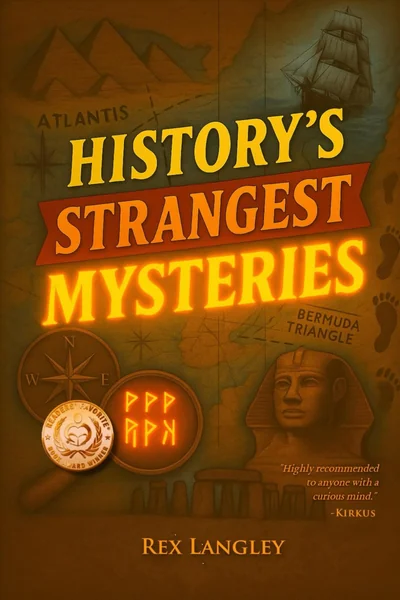
History's Strangest Mysteries by Rex Langley Review: A Case-File Adventure for Curious Kids
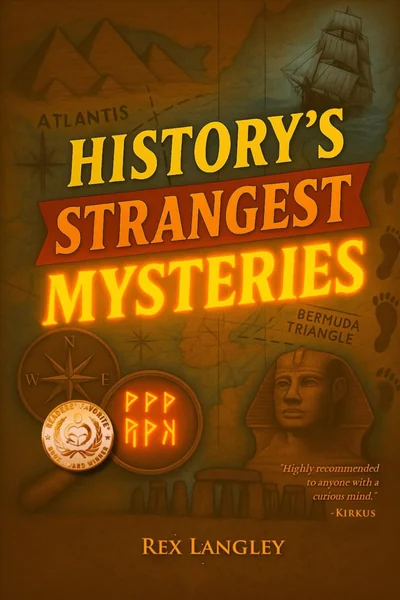
Rex Langley's History's Strangest Mysteries: An Investigation For Young Readers delivers an episodic, investigation-themed journey through some of history's most enduring unsolved puzzles — from the Bermuda Triangle and the Wow! Signal to the Ghost Ship Octavius and the Money Pit of Oak Island — structured as fast-paced chapter-length case files designed to develop critical thinking in readers aged nine and up.
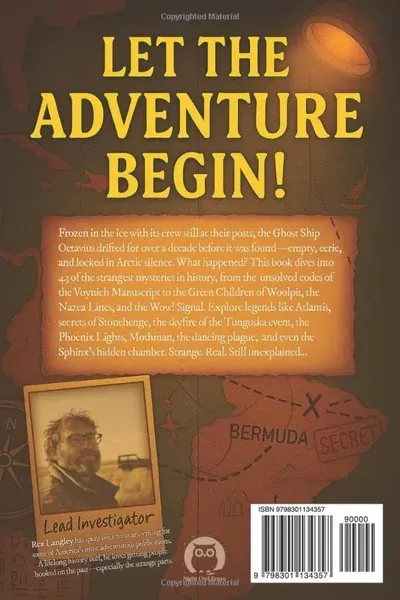 Tap to enlarge
LuvemBooks Verdict
Best for
Curious readers aged nine and up who find conventional history lessons dry and enjoy active, "what if?" thinking — particularly those who already burn through Weird But True! or Ripley's Believe It or Not! volumes and are ready for material that asks them to weigh evidence rather than simply marvel.
Worth it if
The reader wants a wide-ranging, case-file-style introduction to history's most enduring enigmas — from the Wow! Signal and Area 51 to Atlantis and the Knights Templar — that prioritises curiosity-building and critical thinking over deep dives into any single topic.
Skip if
Readers who already have a strong interest in one particular mystery and are hoping for extended, dedicated coverage of that subject will likely find the anthology's chapter-length format too brief to satisfy.
What readers & critics say
Reader commentary retrieved from Amazon's German storefront (amazon.de) describes the storytelling as "engaging, clear, and age appropriate," noting that it feels like an adventure rather than a history lesson, while also flagging that some mysteries are presented more as summaries than detailed explorations.
Sources: Amazon.deAsk LuvemBooks
Was this helpful?
- Is it worth reading?
- For the intended audience — curious nine-and-up readers who find conventional history lessons too dry — History's Strangest Mysteries delivers genuine value. Reader commentary describes the language as accessible and the storytelling as feeling 'like an adventure rather than a history lesson,' and the case-file structure actively builds critical thinking rather than simply presenting facts. The one consistent caveat from reader commentary is that certain mysteries receive summary-level treatment rather than deep exploration, so inquisitive readers hoping for an extended investigation into, say, the Knights Templar or Atlantis specifically may find the chapter-length format a constraint. As a broad introduction and springboard — and especially as a gift for kids who burn through Ripley's Believe It or Not! volumes — it is well-suited to its purpose.
- Similar books
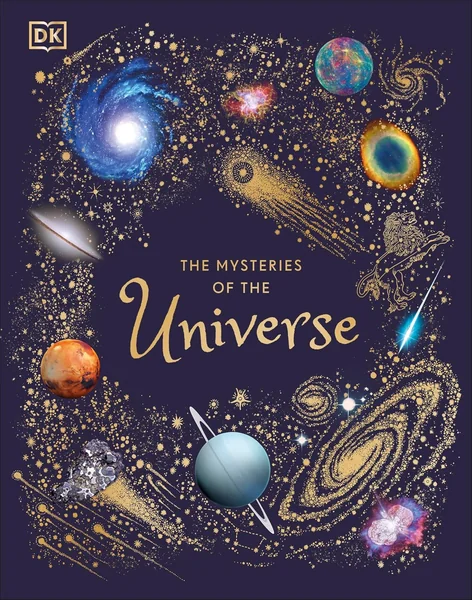
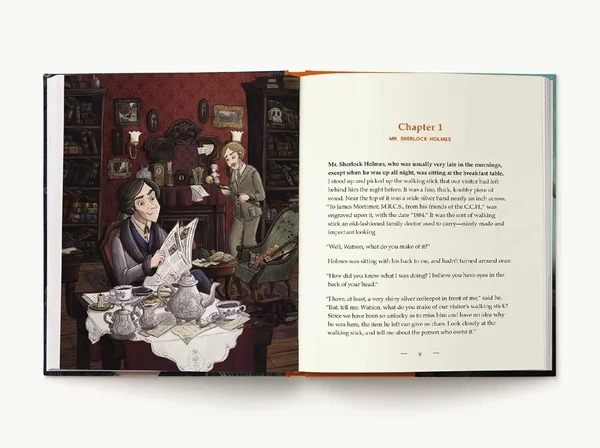
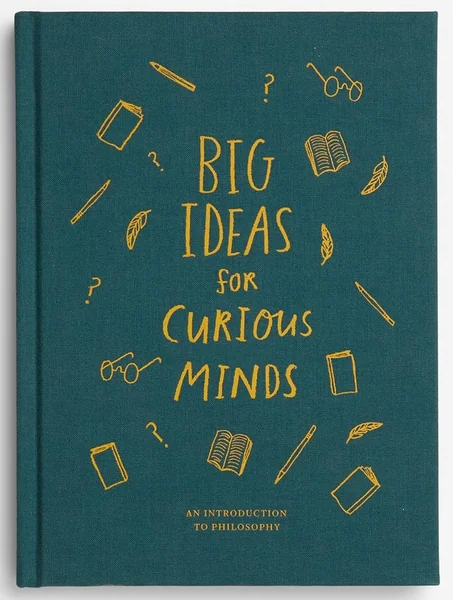
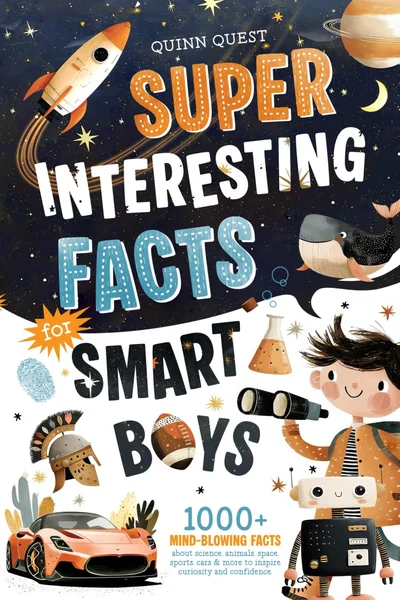
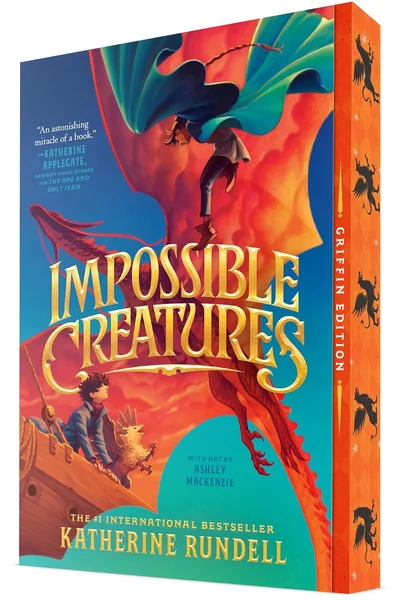
- Readers drawn to History's Strangest Mysteries will find strong companions in the curated titles below. The Mysteries of the Universe by Will Gater offers similarly wide-ranging wonder for curious young minds, while Big Ideas for Curious Minds: An Introduction to Philosophy by The School of Life shares the book's emphasis on open questions and evidence-weighing over settled answers. For readers who love the investigative angle, the Kid Classics edition of Sherlock Holmes (The Hound of the Baskervilles) by Arthur Conan Doyle channels that same detective-mode energy. Super Interesting Facts For Smart Boys by Quinn Quest sits in a similar high-curiosity middle-grade nonfiction lane, and Katherine Rundell's Impossible Creatures is an excellent pick for readers who enjoy the blend of history, legend, and the fantastically unexplained.
- Who should read this?
- History's Strangest Mysteries is squarely aimed at the nine-and-up crowd who gravitates toward 'what if?' questions and finds conventional history lessons too dry. It is a particularly strong match for young readers who already burn through Ripley's Believe It or Not! volumes or Explorer Academy installments and are ready for material that asks them to think critically rather than simply marvel. Parents, teachers, and gift-buyers looking for nonfiction that actively builds investigative thinking — rather than delivering trivia — will find this a well-targeted pick. Readers hoping for exhaustive, deep-dive coverage of any single mystery, however, should be aware the anthology format means each subject gets chapter-length rather than book-length treatment.
- What age is it for?
- Best for ages 9 and up. The book is specifically engineered for the nine-and-up age group, with accessible language, a fast-paced case-file structure, and illustrations and sidebars that support comprehension. The mix of modern scientific enigmas and ancient legends is calibrated to hold the attention of confident middle-grade readers who are ready to weigh evidence and form their own conclusions rather than simply absorb facts.
- About Rex Langley
- Rex Langley has spent over 20 years writing for some of America's most adventurous publications. A lifelong history buff, he is passionate about getting readers hooked on the past — especially its stranger aspects.
- Does it actually build critical thinking?
- The book's case-file structure is specifically engineered around a pedagogical goal: rather than presenting historical information as settled fact, each chapter frames its mystery as an open investigation, presenting known facts and competing theories before explicitly inviting readers to weigh the evidence and draw their own conclusions. The publisher describes this format as 'perfect training for your future Indiana Jones,' and it distinguishes the book from straightforward trivia collections by asking readers to actively engage with the material. This approach makes it a stronger educational pick than its entertainment-forward cover might suggest.
- Is the anthology format a weakness?
- The anthology format is both the book's greatest strength and its most noted limitation. Covering a wide roster of mysteries — from the Wow! Signal and Area 51 to Atlantis and the Knights Templar — within a single volume gives the collection strong variety and multiple entry points for readers with different interests. However, some reader commentary notes that certain mysteries receive summary-level treatment rather than deep exploration, and no single subject receives the extended, dedicated coverage a full-length book on that topic would offer. The book is best understood as a broad introduction and springboard — ideal for readers discovering these mysteries for the first time, less so for those seeking exhaustive investigation.
Summarize this book
Follow up
Synthesized from verified book data & published reviews · How we review
Press Enter to ask. Answers come from our editorial Q&A — start typing to see related questions.
Age & Reading Level
Recommended age
Ages 8–12
Reading level
Middle grade
who it suits
Best for: Ages 9+ — the case-file format, evidence-weighing structure, and chapter length are calibrated for confident middle-grade readers.
Skip if you want an exhaustive, deep-dive investigation into any single mystery rather than a broad anthology introduction.
Our Review
What the Book Is and What It Covers

Structure and Design Intent
Strengths: Accessibility and Engagement
A Genuine Limitation: Depth Versus Breadth
Who This Book Is For
Sources & Further Reading
The key facts and claims in this review are grounded in the retrieved, verified sources listed below.
- Cited in this review
- 1
- 2
- Further reading
- 3
americanbookwarehouse.com
Books like History's Strangest Mysteries
Curated picks for readers who enjoyed History's Strangest Mysteries, with our reasoning for each match.
If you liked History's Strangest Mysteries