

8 min read
Share This Review
The Laws of Human Nature by Robert Greene Review: A Dense, Divisive Guide to Human Behavior
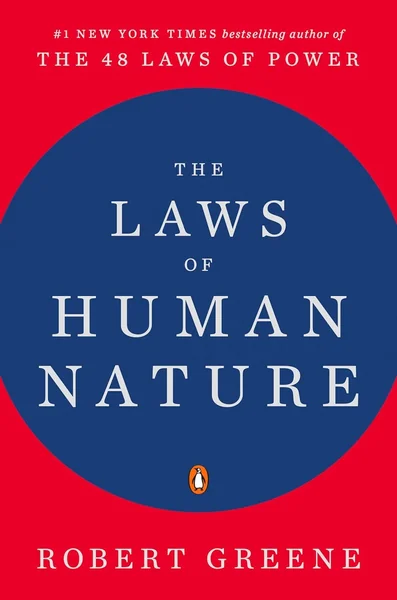
Robert Greene's The Laws of Human Nature is an ambitious, encyclopedic nonfiction work structured around 18 laws of human psychology and behavior, drawing on historical figures and philosophical traditions to argue that understanding — and mastering — the hidden forces driving human action is essential to navigating life, relationships, and power. It is a serious undertaking for patient, analytically inclined readers, though its neo-Machiavellian worldview and considerable length have drawn pointed criticism alongside a broad international following.
LuvemBooks Verdict
Best for
Adults navigating complex professional and social environments who want a modular, historically grounded framework for understanding colleagues, rivals, and their own psychological blind spots — especially those already engaged with Greene's earlier works like The 48 Laws of Power.
Worth it if
You're drawn to the intersection of history, biography, and behavioral psychology, are comfortable dipping in and out of a large compendium rather than reading cover-to-cover, and can engage with a broadly Machiavellian lens on human motivation without finding it reductive.
Skip if
You want tightly argued, empirically rigorous psychology, find adversarial framings of human nature alienating, or balk at committing 580-plus pages to a repetitive chapter formula that Kirkus Reviews argues rarely delivers insight beyond the self-evident.
What readers & critics say
Kirkus Reviews found the book undermined by a rigid formula — state a law, elaborate with truisms, spin out a lengthy historical yarn — and objected to what it called Greene's "neo-Machiavellian program of self-validation and eventual strategic supremacy," suggesting the Stoic Enchiridion covers the same ground far more efficiently. Reader-facing review sites such as readbycritics.com and fourminutebooks.com are more positive, characterising the 18-law structure as an ambitious, historically rich synthesis that functions well as a compendium to be consulted selectively rather than read straight through.
“The Stoics did much better with the much shorter Enchiridion — human behavior is mostly rotten, fitting Greene's neo-Machiavellian program of self-validation and strategic supremacy.”
— Kirkus ReviewsAge & Reading Level
Recommended age
Adult
Reading level
Adult
1 content note · who it suits
Content to know about
Skip if you find a cynical, neo-Machiavellian worldview reductive or are looking for an empirically grounded, academically rigorous treatment of psychology.
In This Review
- What Works & What Doesn't
- What the Book Actually Is and Does
- Significance and Place in Greene's Body of Work
- Genuine Strengths
- Where Critics Push Back
- Who This Book Is For
What Works & What Doesn't
What Works
- Organized around 18 clearly defined laws of human behavior, giving the book a modular, reference-friendly structure
- Historical case studies featuring major figures — Pericles, Stalin, Rockefeller — make abstract psychological principles concrete and narrative-driven
- Publisher and retailer editorial materials credit Greene with making large, complex subjects genuinely approachable for a general adult audience
- Covers a wide range of psychological terrain, including emotional mastery, narcissism, envy, aggression, and nonverbal communication, in a single volume
What Doesn't
- Kirkus Reviews criticizes the book's formula — law, truism, lengthy historical yarn — as producing insights that can read as self-evident rather than genuinely illuminating
- At more than 580 pages, the compendium format and repetitive chapter structure demand considerable patience, which Kirkus suggests is not always rewarded in proportion
- The book's neo-Machiavellian framing — premised on a largely adversarial view of human motivation — will alienate readers who find that worldview reductive
What the Book Actually Is and Does
Significance and Place in Greene's Body of Work
Genuine Strengths
Where Critics Push Back
Who This Book Is For
Frequently Asked Questions
Sources & Further Reading
The key facts and claims in this review are grounded in the retrieved, verified sources listed below.
- Cited in this review
- 1
- 2
barnesandnoble.com
- 3
- Further reading
- 4
Robert Greene, Wikipedia
- 5
kirkusreviews.com
- 6
fourminutebooks.com
- 7
profilebooks.com
- 8
wordandsorcery.com
- 9
- 10
Related Reviews
Reviews of books we picked for readers who enjoyed The Laws of Human Nature – International Bestseller on Psychology, Behavior & Human Nature.


Reader Comments
No comments yet
Be the first to share your thoughts!