
7 min read
3.9
· 180 Amazon ratingsShare This Review
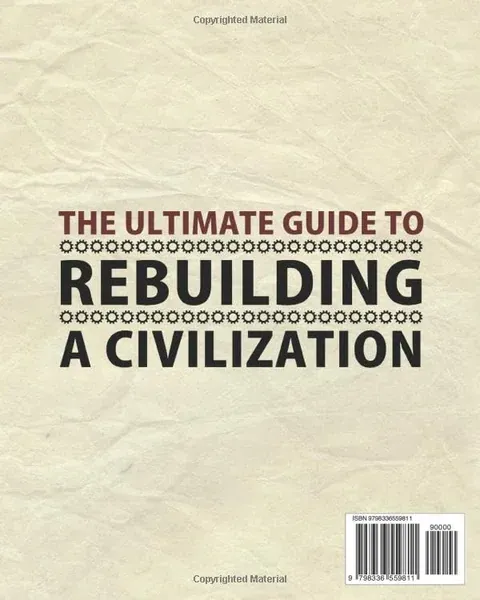
The Ultimate Guide to Rebuilding a Civilization by Jackson Ridge Review: Ambitious Sustainability Blueprint for Curious Readers
Jackson Ridge's The Ultimate Guide to Rebuilding a Civilization is a wide-ranging reference guide structured around ten chapters that move from immediate survival priorities to long-term social reconstruction, covering renewable energy, sustainable agriculture, ethical governance, and community building — marketed equally to sustainability enthusiasts and gift-givers seeking an accessible, visually polished introduction to civilizational resilience.
 Tap to enlarge
LuvemBooks Verdict
Best for
Curious non-specialists — particularly those drawn to the collapse-and-recovery historical lens — who want a single, accessible, progressively structured introduction to the interconnected pillars of civilisational resilience: renewable energy, sustainable agriculture, ethical governance, and community building.
Worth it if
You are newer to the intersection of sustainability and societal systems and want a broad, readable orientation that moves coherently from immediate survival needs through to long-term social reconstruction, and would value it equally as a thoughtful gift or a starting point for deeper study.
Skip if
You arrive expecting engineering specifications, peer-reviewed agricultural data, or detailed policy frameworks — the independently published format and lack of documented expert contributors or cited academic sources mean each subject receives introductory rather than deep-dive treatment, and readers already versed in climate policy, permaculture, or governance theory are likely to find the ground familiar.
What readers & critics say
Retailer descriptions on Barnes & Noble and Books-A-Million characterise it as a "comprehensive and elegantly structured guide" covering renewable energy, sustainable agriculture, ethical governance, and community building, framing it as ideal for anyone passionate about sustainability. Everand's catalogue record highlights that each chapter is written with "clear, engaging text" and that the book is designed to double as a sophisticated coffee-table volume.
Sources: Barnes & Noble, Books-A-Million, EverandIn This Review
- What Works & What Doesn't
- What the Book Is and What It Sets Out to Do
- The Historical Framework at Its Core
- Accessibility as a Design Priority
- Scope and the Limits of a Short Guide
- Audience and Occasion
What Works & What Doesn't
What Works
- Covers a genuinely broad curriculum — renewable energy, sustainable agriculture, ethical governance, and community building — within a single, step-by-step framework
- Ten-chapter structure is explicitly designed to guide readers progressively from immediate survival needs through to long-term social reconstruction
- The publisher describes each chapter as written with clear, engaging text aimed at making complex concepts accessible
- Positioned to function both as a substantive reference and as a coffee-table-style book, giving it crossover appeal as a gift title
- Draws on historical examples of societal collapse and recovery to ground its forward-looking framework in documented precedent
What Doesn't
- As a short independently published guide, the breadth of topics covered means individual subjects — renewable energy systems, governance models, agricultural practice — receive introductory rather than deep-dive treatment
- No named expert contributors, peer-review credentials, or cited academic sources are documented in the available record, which readers seeking rigorously sourced reference material may find limiting
- The dual positioning as both a practical how-to guide and a coffee-table book creates a tension: readers wanting dense technical instruction and readers wanting casual browsing may each find the book only partially satisfies their need
What the Book Is and What It Sets Out to Do
The Historical Framework at Its Core
Accessibility as a Design Priority
Scope and the Limits of a Short Guide
Audience and Occasion
Frequently Asked Questions
Sources & Further Reading
The key facts and claims in this review are grounded in the retrieved, verified sources listed below.
- Cited in this review
- 1
- 2
- Further reading
- 3
- 4
- 5
Related Reviews
Reviews of books we picked for readers who enjoyed The Ultimate Guide to Rebuilding a Civilization.
Reader Comments
No comments yet
Be the first to share your thoughts!