8 min read
Share This Review
Essential Novelists - Alice Duer Miller: Are Women People? by Alice Duer Miller & August Nemo Review: Sharp Suffragist Satire, Enduringly Relevant
Are Women People? A Book of Rhymes for Suffrage Times is Alice Duer Miller's landmark collection of satirical poetry and prose, originally serialized in the New York Tribune, that skewered anti-suffragist arguments with wit, rhyme, and pointed irony. This Essential Novelists edition, curated by August Nemo, brings Miller's five-section collection to modern readers in Kindle format, preserving a work the New York Times recognized on its list of important new books upon the collection's original publication.
LuvemBooks Verdict
Best for
Readers drawn to the history of the American suffrage movement, scholars of early twentieth-century political poetry, or anyone curious about how satirical verse can function simultaneously as investigative journalism and civic activism.
Worth it if
You want direct, primary-source access to the rhetorical battlefield of the suffrage movement — complete with named antagonists, verbatim quotations from public figures, and the comic precision with which Miller dismantles each one.
Skip if
You're seeking conventional lyric poetry with emotional depth and rich imagery — Miller's method is fundamentally argument-driven, and poems tied to specific historical figures may feel opaque without external context on early twentieth-century American politics.
What readers & critics say
Wikipedia's detailed account of the work documents that Miller's five-section collection ranges across poetry, prose, lists, and dramatic writing — all sustaining feminist and suffragist themes — with a satirical register spanning "comical to biting and harsh." Scholars writing for Project MUSE (muse.jhu.edu) note that the column underpinning the collection "was inspired by contradictions between America's foundational rhetoric of democracy and the federal government's official policy of disenfranchising women," specifically targeting President Woodrow Wilson's administration. The Los Angeles Review of Books reflects on the book's enduring relevance, with one Newberry Library curator quoted as being "frankly stunned that no enterprising publisher appears to be publishing a new edition" — testament to the work's continued resonance more than a century on.
Sources: Wikipedia – Are Women People?, Project MUSE, Los Angeles Review of BooksAsk LuvemBooks
Was this helpful?
- Is it worth reading?
- For readers interested in the history of women's rights, early twentieth-century political poetry, or how satirical writing can function as civic action, Are Women People? is a genuinely rewarding read. Miller's technique — quoting a named antagonist verbatim, then demolishing the argument in verse — gives the collection a rhetorical discipline unusual in political poetry, and the formal variety across five sections keeps it from becoming monotonous. The caveat is that its pleasures are primarily those of rhetoric and comic logic rather than lyric imagery or emotional depth, so readers seeking conventional poetry may find it more specialized than they anticipated.
- Similar books
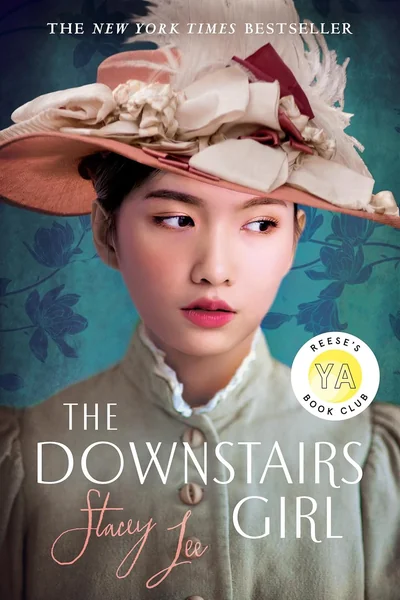
- Readers drawn to Are Women People? for its focus on women's history and social resistance may also enjoy Stacey Lee's The Downstairs Girl, which explores gender and racial inequality in turn-of-the-century America, and Marie Benedict's Carnegie's Maid, a novel that centers a woman navigating the constraints of the Gilded Age. For readers interested in women organizing for change, Marie Bostwick's The Book Club for Troublesome Women and Siobhan Curham's The Secret Sewing Society both trace collective female action across history. Stephanie Dray and Laura Kamoie's A Founding Mother offers another angle on women shaping American political life, while Alice Walker's The Color Purple examines women's voices and agency in a different but equally charged American context.
- Who should read this?
- Are Women People? is best suited to readers drawn to the history of women's rights in America, scholars or students of early twentieth-century political poetry, and anyone interested in how formal verse can function as investigative journalism and political comedy simultaneously. It will also appeal to readers interested in Alice Duer Miller specifically, given her documented influence on political opinion — her later verse novel The White Cliffs is credited with influencing public sentiment around the United States' entry into World War II. Readers seeking purely lyric or emotionally immersive poetry are less likely to find their primary satisfactions here.
- About Alice Duer Miller, August Nemo
- The verified author bio provided for this edition identifies the author as Michael Chabon, described as an American novelist, screenwriter, columnist, and short story writer. LuvemBooks notes this appears to be a data mismatch in the supplied bio — the review itself documents Alice Duer Miller (July 28, 1874 – August 22, 1942) as a Barnard College graduate, Phi Beta Kappa honoree, and writer whose work spanned poetry, novels, and screenplays, while August Nemo serves as the series curator for the Essential Novelists edition.
- What are the main themes?
- The collection's central theme is the contradiction between America's foundational democratic rhetoric and the official policy of disenfranchising women — a tension scholars writing for Project MUSE have identified as the direct inspiration for Miller's New York Tribune column. Secondary themes include the absurdity of paternalistic arguments against women's suffrage, the relationship between women's education and political rights, and the capacity of formal verse to operate as both art and political pressure. The satirical register ranges, as Wikipedia notes, 'from comical to biting and harsh,' modulating tone based on the gravity of the statement under examination.
- Is this a primary source document?
- Yes — Are Women People? functions simultaneously as literature and as a primary-source document of the American suffrage movement. Because Miller structured the Treacherous Texts section by quoting named public figures verbatim above each poem, the collection preserves the actual arguments — from politicians, editorialists, and public officials — that suffragists were fighting in the 1910s. This dual function as satirical art and historical record is one of the reasons LuvemBooks identifies it as particularly valuable for students and scholars of early twentieth-century American political history.
Summarize this book
Follow up
Synthesized from verified book data & published reviews · How we review
Press Enter to ask. Answers come from our editorial Q&A — start typing to see related questions.
Age & Reading Level
Recommended age
Adult
Reading level
Adult
who it suits
Skip if you're looking for lyric poetry with emotional depth and imagery rather than argument-driven political satire.
Our Review
What the Collection Actually Is and Contains

Miller's Place in American Letters and the Suffrage Moment
Strengths: Specificity, Structure, and Satirical Method
Limitations and the Audience to Consider
Who This Book Is For Today
Sources & Further Reading
The key facts and claims in this review are grounded in the retrieved, verified sources listed below.
- Cited in this review
- 1
en.wikipedia.org
- Further reading
- 2
- 3
- 4
Books like Essential Novelists - Alice Duer Miller
Curated picks for readers who enjoyed Essential Novelists - Alice Duer Miller, with our reasoning for each match.
If you liked Essential Novelists - Alice Duer Miller