

9 min read
4.5
· 14,564 Amazon ratingsShare This Review
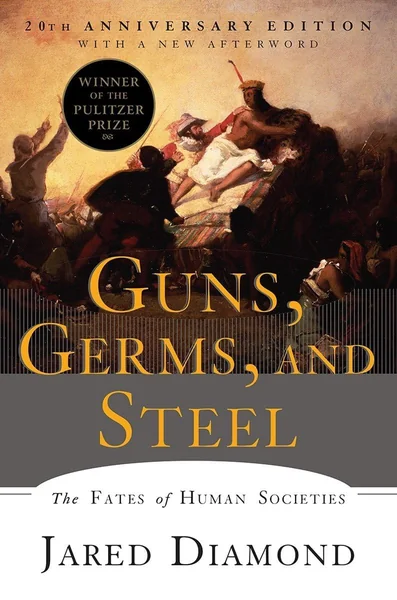
Guns, Germs, and Steel by Jared Diamond Review: A Pulitzer-Winning Sweep of Human History
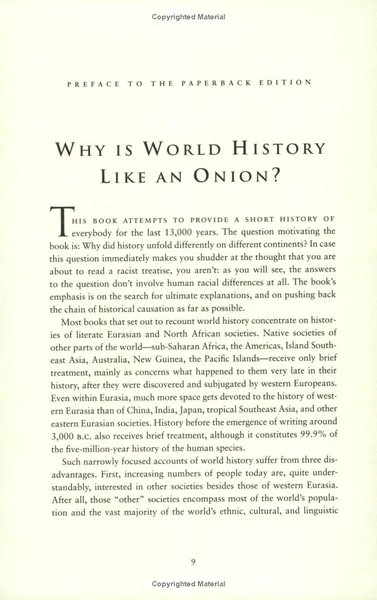
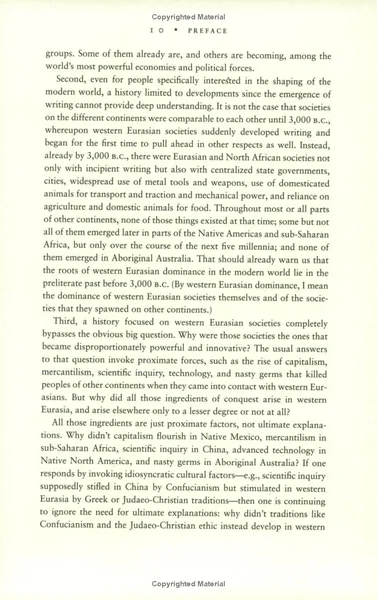
Jared Diamond's Guns, Germs, and Steel: The Fates of Human Societies is a transdisciplinary nonfiction work that set out to answer one of history's most charged questions — why did some civilizations come to dominate others? — and won the Pulitzer Prize for general nonfiction in 1998 doing it. Grounding its argument firmly in environmental and geographical factors rather than race or innate human capacity, the book synthesises biology, geography, anthropology, and history into a single ambitious thesis, making it essential reading for anyone curious about the deep roots of the modern world. It is not without its critics, and its prose has drawn qualified praise rather than outright admiration, but as a work of popular scholarship it remains a landmark.
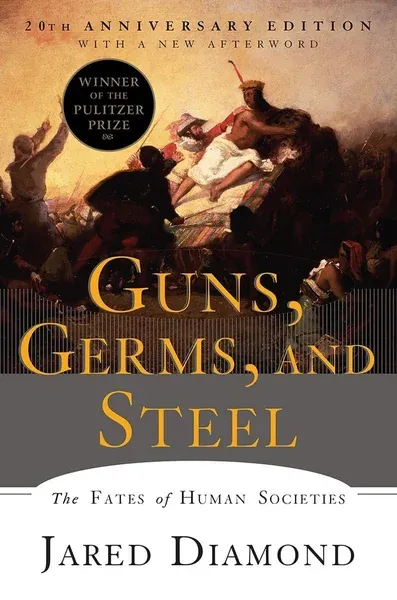
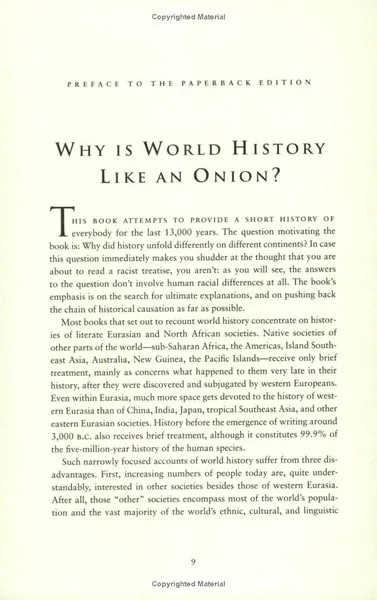
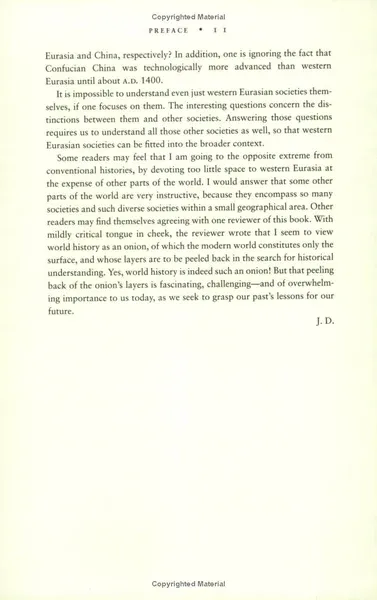 Tap to enlarge
LuvemBooks Verdict
Best for
General educated readers drawn to big-history thinking who want a single, environmentally grounded explanation for global inequality — and who are willing to pursue the scholarly counter-literature alongside it.
Worth it if
You want a foundational, prize-winning synthesis that dismantles racial hierarchy as a historical explanation and replaces it with a coherent biogeographical argument spanning 13,000 years.
Skip if
You need nuanced accounts of human agency, internal cultural dynamics, or the lived experiences of colonised peoples — the book's analytical unit is the society-level environmental condition, not the human decision.
What readers & critics say
Kirkus Reviews called the book "an impressive achievement" in synthesising wide-ranging scholarly groundwork, while noting that the prose "is not brilliant," with redundancies that weaken the reading experience. Wikipedia's reception summary records sustained scholarly pushback: anthropologist Jason Antrosio argued the framework leaves "almost no role for human agency," geographer James Morris Blaut criticised it for reviving environmental determinism, and economist Joel Mokyr found its treatment of genetic and economic factors unpersuasive — critiques that constitute a substantial multi-disciplinary counter-literature.
“On the whole this is an impressive achievement — the prose is not brilliant, with apologies and redundancies we could do without.”
— Kirkus Reviews“Dense, agriculture-based populations bred chiefs, kings and bureaucratic kleptocracies — Diamond identifies food production as a key to glaring inequalities of wealth and power.”
— Publishers WeeklyAge & Reading Level
Recommended age
Adult
Reading level
Adult
who it suits
Skip if you want a history that foregrounds human agency, individual decisions, or the lived experiences of colonised peoples.
In This Review
- What Works & What Doesn't
- What the Book Actually Argues
- Significance and Recognition
- What the Book Does Well
- Genuine Limitations and Ongoing Scholarly Debate
- Who This Book Is For
What Works & What Doesn't
What Works
- Won the 1998 Pulitzer Prize for general nonfiction and the Aventis Prize for Best Science Book — major recognition for both its reach and its rigour
- Marshals biology, geography, anthropology, and history into a single, coherent environmental argument against racial explanations for civilisational dominance
- Kirkus Reviews called it 'an impressive achievement' in synthesising wide-ranging scholarly groundwork into an accessible through-line
- Anchored in a vivid, concrete origin question — Yali's challenge to Diamond in New Guinea — that gives the entire argument human stakes
- Durable enough to warrant a 20th Anniversary Edition from W. W. Norton, reflecting its continued relevance in education and public discourse
What Doesn't
- Kirkus Reviews noted the prose 'is not brilliant,' with redundancies and authorial apologies that slow the reading experience
- Scholars including anthropologist Jason Antrosio and geographer James Morris Blaut have argued that the environmental-determinist framework leaves almost no room for human agency, inadvertently flattening the role of colonised peoples to passive subjects of geography
- Critics such as Joel Mokyr have found aspects of Diamond's biogeographical theory unpersuasive, particularly its treatment of characteristics governed by complex genetic and economic factors
What the Book Actually Argues
Significance and Recognition
What the Book Does Well
Genuine Limitations and Ongoing Scholarly Debate
Who This Book Is For
Frequently Asked Questions
Sources & Further Reading
The key facts and claims in this review are grounded in the retrieved, verified sources listed below.
- Cited in this review
- 1
- 2
- Further reading
- 3
Jared Diamond, Wikipedia
- 4
en.wikipedia.org
- 5
- 6
kirkusreviews.com
- 7
publishersweekly.com
- 8
naturestore.maineaudubon.org
- 9
- 10
h-net.org
- 11
byfaithweunderstand.com
- 12
- 13
Related Reviews
Reviews of books we picked for readers who enjoyed Guns, Germs, and Steel.

Reader Comments
No comments yet
Be the first to share your thoughts!