At a glance
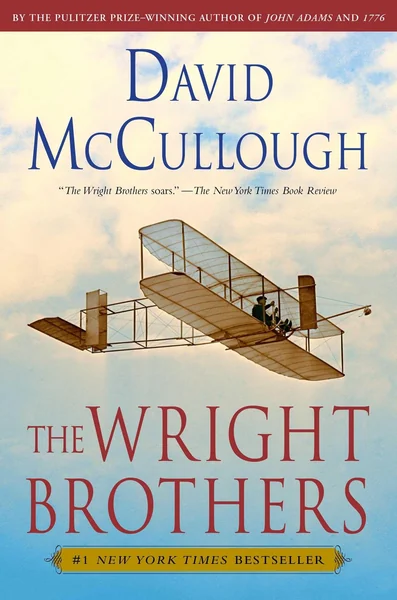
The Wright Brothers
LuvemBooks Verdict
Best for: General readers drawn to American history and innovation who want a rigorously researched but accessible narrative — particularly those coming to the Wright brothers' story for the first time and who appreciate McCullough's humanising, family-centred approach to popular history.
Worth it? Skip it? Read the full verdict →Ask LuvemBooks
Was this helpful?
- Is it worth reading?
- For general readers with an interest in American history, the history of aviation, or McCullough's brand of humanizing popular history, The Wright Brothers makes a strong case for its place on the shelf. Janet Maslin praised it as presenting material 'with dignified panache, and with detail so granular you may wonder how it was all collected,' and The Economist characterized it as an 'enjoyable, fast-paced tale.' The one substantive caveat is that readers already well-versed in Wright brothers history, or those seeking psychological complexity and scholarly argument, may find the book's admiring, celebratory tone somewhat limiting — Bob Hoover of the Star Tribune observed that 'something's lacking — interesting characters.'
- Similar books
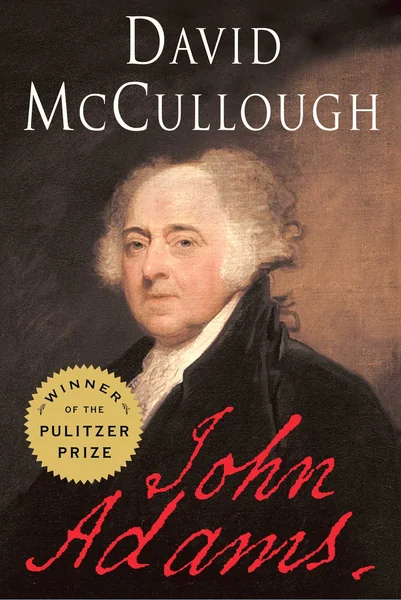
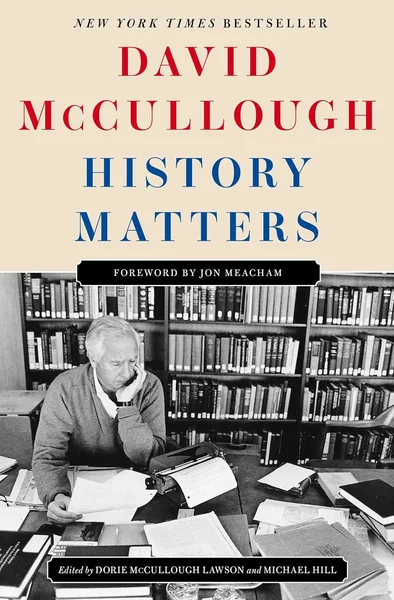
- Readers who enjoy The Wright Brothers will find much to appreciate in McCullough's other works available on LuvemBooks: John Adams, his Pulitzer Prize-winning portrait of the second U.S. president, and History Matters, which showcases his broader reflections on American history. For rigorously sourced narrative history with a similar propulsive quality, Barbara W. Tuchman's The Guns of August — a landmark account of the outbreak of World War I — is a natural companion. Beyond the catalogue, Robert Kurson's Rocket Men, Winston Groom's The Aviators, and Erik Larson's Thunderstruck offer comparable blends of archival depth and accessible storytelling in the American adventure-history vein.
- Who should read this?
- The Wright Brothers is written for the broad audience of general readers who want authoritative, deeply researched narrative history delivered without academic density — McCullough himself has said he began the project knowing little about the brothers beyond their Ohio origins, and the book is structured to bring an engaged, curious reader along on a journey of discovery. It is especially well-suited to readers drawn to American ingenuity, the history of aviation, or McCullough's particular brand of humanizing popular history that places inventors and leaders within the context of family and community. Readers seeking a psychologically probing biography or a revisionary scholarly argument may find it less satisfying, as Bob Hoover and Janet Maslin both note that the admiring tone leaves limited room for inner complexity or contradiction.
- About David McCullough
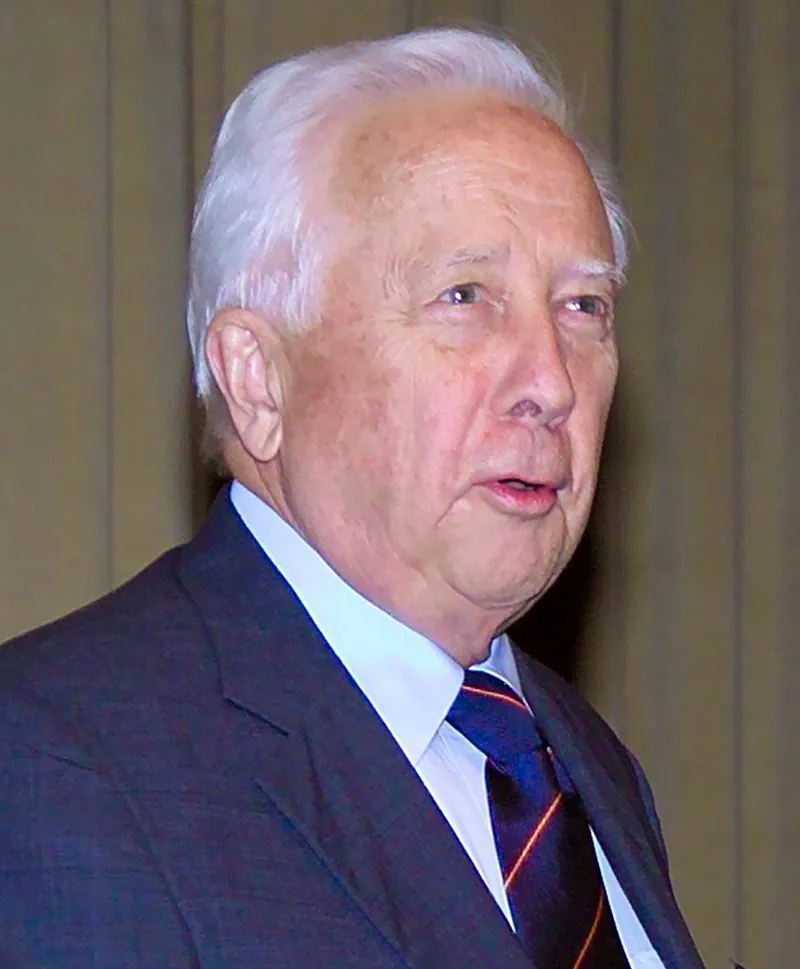
- Born in 1933 and educated at Yale, David McCullough transformed American popular history by bringing the past to vivid life through masterful storytelling.
- Where should I start with McCullough?
- For readers new to David McCullough, The Wright Brothers is often cited as an ideal entry point: it is concise by his standards, fast-paced, and covers a subject — the invention of powered flight — with immediate popular appeal. Those drawn to presidential biography might instead begin with John Adams, which earned McCullough one of his two Pulitzer Prizes and is considered among his most fully realized works. LuvemBooks has reviewed both, along with History Matters, which offers a broader window into his thinking about American history.
- What are the main themes?
- At its core, The Wright Brothers is a study of American ingenuity — the idea that two self-taught bicycle mechanics from Dayton, Ohio, operating without institutional backing, could achieve what trained scientists and engineers had not. McCullough also develops themes of family as the foundation of creative endeavor, weaving in the roles of their father Bishop Milton Wright and sister Katharine throughout. A subtler theme is the transatlantic dimension of the story: Wilbur's celebrated flights in France and his unexpected engagement with the Louvre and Gothic architecture challenge the purely American myth of the invention, situating it within a broader cultural world.
Summarize this book
Follow up
Synthesized from verified book data & published reviews · How we review
Press Enter to ask. Answers come from our editorial Q&A — start typing to see related questions.
Age & Reading Level
Recommended age
Adult
Reading level
Adult
who it suits
Skip if you're looking for a psychologically probing biography that interrogates its subjects' inner conflicts and contradictions rather than celebrating their achievements.
Editorial Review
David McCullough's The Wright Brothers is a narrative non-fiction account of Orville and Wilbur Wright — the bicycle mechanics from Dayton, Ohio, who changed history on a winter day in 1903 at the Outer Banks of North Carolina — written by a two-time Pulitzer Prize winner and praised by major literary critics, though some reviewers note that the book's admiring portrait of its subjects leaves certain dimensions of their inner lives unexplored.
Read the Full ReviewBooks like The Wright Brothers
Curated picks for readers who enjoyed The Wright Brothers, with our reasoning for each match.
More by David McCullough
If you liked The Wright Brothers