
At a glance

LuvemBooks Verdict
Best for: Intellectually curious general readers who want a single, coherent framework for understanding how Homo sapiens came to dominate the planet — from prehistoric origins through empire, capitalism, and the threshold of a post-human future — and who bring no prior background in history, biology, or economics.
Worth it? Skip it? Read the full verdict →Preview the book
Ask LuvemBooks
Was this helpful?
- Is it worth reading?
- For readers drawn to big-picture thinking about human history, culture, and civilisation, Sapiens offers a genuinely compelling single framework that connects prehistoric human behaviour to contemporary institutions — all without requiring prior background in history, biology, or economics. Its counterintuitive readings, such as the argument that the Agricultural Revolution made daily life materially worse for most individual humans even as it drove population growth, give the book real intellectual charge. The key caveat is precision: specialists have contested specific interpretations, a 2022 Current Affairs article by neuroscientist Darshana Narayanan raised fact-checking concerns, and those who prioritise exhaustive academic sourcing on any particular period may find the book's ambition outpacing its rigour.
- Similar books
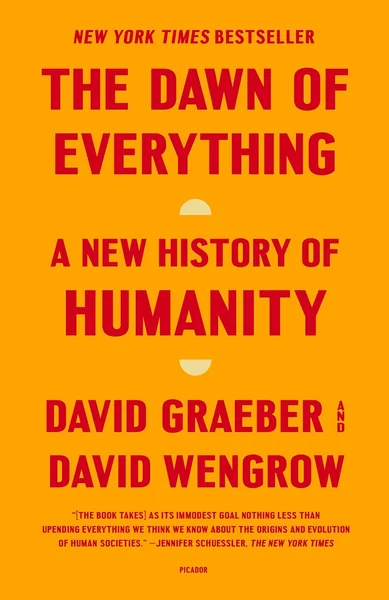
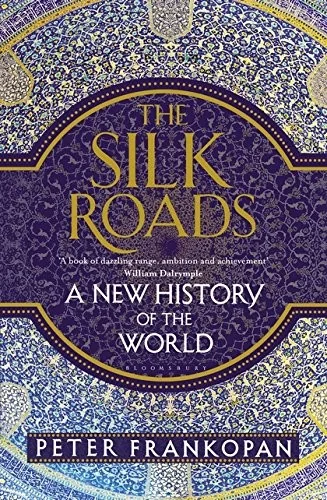
- Readers who respond to Sapiens' macro-historical ambition will find much to engage with in the curated selections below. Jared Diamond's Guns, Germs, and Steel: The Fates of Human Societies offers a similarly sweeping account of why some civilisations came to dominate others, while The Dawn of Everything: A New History of Humanity by David Graeber directly challenges many of Harari's assumptions about early human societies and the Agricultural Revolution. Peter Frankopan's The Silk Roads: A New History of the World reframes world history through Central Asia's trade networks, and Jonathan Haidt's The Righteous Mind: Why Good People Are Divided by Politics and Religion complements Sapiens' analysis of how shared moral frameworks hold societies together.
- Who should read this?
- Sapiens is designed for general adult readers drawn to big-picture thinking about human history, culture, and the forces that shaped modern civilisation — and it requires no prior background in history, biology, or economics. The ideal reader is someone who finds value in a single, integrated framework for understanding why human societies look the way they do, and who is willing to engage critically with bold interpretive claims rather than treating them as settled fact. Those who prioritise exhaustive academic sourcing or granular depth on any single historical period — the Roman Empire, the Scientific Revolution, early agriculture — may find the book's panoramic ambition a limitation.
- About Yuval Noah Harari
- Yuval Noah Harari is an Israeli medievalist, military historian, public intellectual, and popular science writer.
- What are the main themes?
- The book's dominant theme is that all large-scale human cooperation — from religions and empires to trade networks and legal institutions — is built on a shared capacity to believe in imagined realities: things like money, nations, gods, and human rights that exist purely in the imagination. A second persistent theme is the question of progress and human happiness: Harari asks not only what changed across history but whether those changes made human lives — and the lives of animals caught up in human systems — actually better. The treatment of the Agricultural Revolution is emblematic, arguing that while farming drove population growth, it made daily life materially worse for most individual humans compared to hunter-gatherer conditions.
- How does this compare to Homo Deus?
- Sapiens and Homo Deus: A Brief History of Tomorrow together form the two halves of Harari's macro-historical project — Sapiens looks backward across 70,000+ years to explain how Homo sapiens came to dominate the planet, while Homo Deus looks forward to ask what humanity might become next. The foundational argument of Sapiens — that shared belief in imagined realities enables all large-scale cooperation — is the analytical platform on which Homo Deus is built, which is why Sapiens is widely recommended as the essential first read. Readers who want Harari's full vision of humanity's trajectory, from prehistoric origins to a potential post-human future, will want both books.
Summarize this book
Follow up
Synthesized from verified book data & published reviews · How we review
Press Enter to ask. Answers come from our editorial Q&A — start typing to see related questions.
Age & Reading Level
Recommended age
Adult
Reading level
Adult
who it suits
Skip if you want rigorous, peer-reviewed depth on any single historical period or civilisation.
Editorial Review
Yuval Noah Harari's Sapiens: A Brief History of Humankind is a macro-history that traces Homo sapiens from the Stone Age to the 21st century across four defining revolutions — Cognitive, Agricultural, the Unification of Humankind, and Scientific — arguing that humanity's singular ability to believe in shared fictions is the engine behind all large-scale cooperation. Originally published in Hebrew in 2011 and in English in 2014, it is a genuinely ambitious work of popular non-fiction that integrates natural and social science, and has drawn both wide acclaim and substantive scholarly criticism for its breadth and interpretive boldness.
Read the Full ReviewBooks like Sapiens
Curated picks for readers who enjoyed Sapiens, with our reasoning for each match.
If you liked Sapiens

Why It’s Trending
Sapiens Gets a Tenth Anniversary Edition — and a Fresh Round of Buzz
A tenth anniversary edition of Sapiens hit shelves in 2025, and book clubs are picking it back up. The Dothan Houston County Library System just featured it as their September 2026 Chapter Chat pick, putting it in front of a new wave of readers.