8 min read
4.7
· 3,084 Amazon ratingsShare This Review
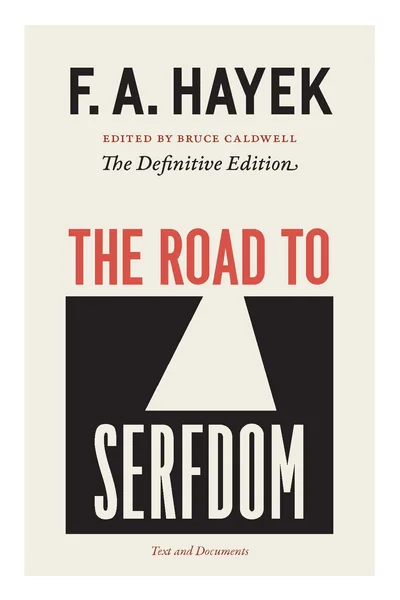
The Road to Serfdom by F. A. Hayek Review: A Landmark Defense of Individual Liberty
First published in 1944 and now available in a scholarly definitive edition edited by Bruce Caldwell, F. A. Hayek's The Road to Serfdom remains one of the most consequential works in 20th-century political and economic thought — a passionate, rigorous argument that central economic planning, however well-intentioned, leads inevitably toward tyranny rather than the utopia its advocates promise.
LuvemBooks Verdict
Best for
Readers drawn to the history of economic ideas, political philosophy, or the intellectual battles of the mid-20th century who want to understand how one of the century's most important economists linked central planning to the erosion of individual liberty.
Worth it if
Worth engaging with if you want a foundational, historically significant argument — bolstered by Bruce Caldwell's scholarly editorial apparatus in this Collected Works edition — that continues to unsettle assumptions across the political spectrum.
Skip if
Skip it if you're looking for a comprehensive, positive blueprint for free-market capitalism or a practical policy manual — the book is a polemical critique deeply rooted in wartime Britain's ideological debates, and its ambivalence toward laissez-faire as a program has frustrated even sympathetic readers on the free-market right.
What readers & critics say
Kirkus Reviews, in its original notice, described the book as presenting "a case not argued before" and a forceful rebuttal of socialised planning, noting its strong British press reception. The University of Chicago Press acknowledges that the book has "inspired and infuriated politicians, scholars, and general readers for half a century," a characterisation echoed by Mises.org, which calls the Caldwell edition "the definitive edition" of "a spell-binding classic in the history of liberal ideas."
“Presents a case not argued before — a warning that economic control prepares the way for totalitarianism.”
— Kirkus ReviewsAsk LuvemBooks
Was this helpful?
- Is it worth reading?
- For readers interested in the history of economic ideas, political philosophy, or the intellectual battles of the mid-20th century, The Road to Serfdom is considered essential. Its argument was heretical when published, and it has since sold over two million copies, been translated into more than 20 languages, and remained a perennial bestseller — testament to its enduring capacity to unsettle settled assumptions. The Bruce Caldwell–edited Collected Works edition, which includes an introduction and foreword placing the text within Hayek's broader intellectual development, offers considerably more scaffolding than a bare reprint and is the recommended version for anyone engaging seriously with the text.
- Similar books
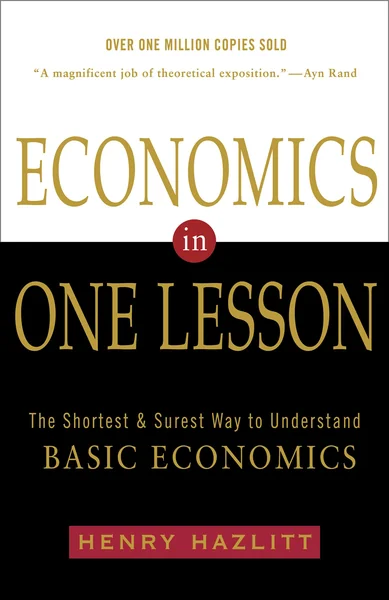
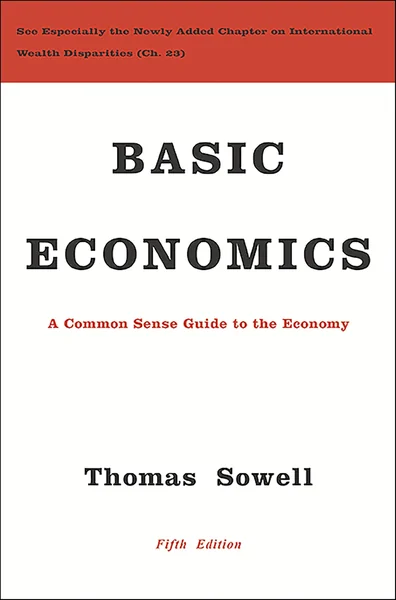
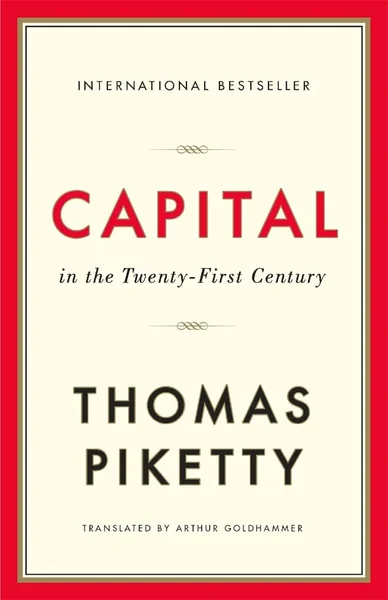
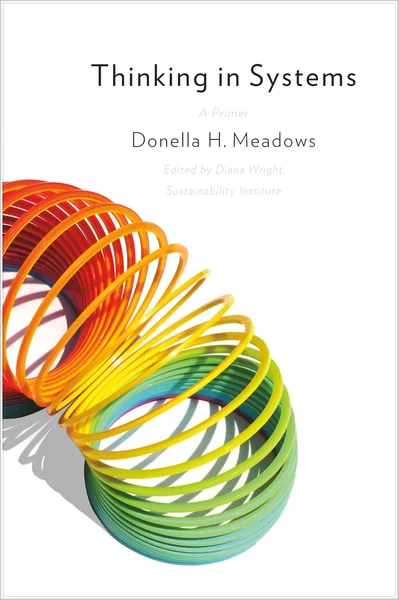
- Readers who find The Road to Serfdom essential will likely want to explore the curated companion titles displayed below. Henry Hazlitt's Economics in One Lesson offers a similarly accessible classical liberal case for free markets. Thomas Sowell's Basic Economics provides a rigorous, non-technical grounding in market principles that complements Hayek's political argument. For a contrasting perspective from the left, Thomas Piketty's Capital in the Twenty-First Century engages with inequality and state intervention from the opposite ideological vantage point. Nassim Nicholas Taleb's The Black Swan and Donella H. Meadows' Thinking in Systems both address the complexity and unintended consequences of large-scale systems — themes that resonate strongly with Hayek's critique of central planning's epistemic limits.
- Who should read this?
- The Road to Serfdom is best suited to readers drawn to the history of economic ideas, political philosophy, or the intellectual battles of the mid-20th century. It is particularly valuable for students of economics, political philosophy, or intellectual history — especially in the Bruce Caldwell–edited Collected Works edition, which provides scholarly scaffolding for engaging with the text as both argument and historical document. Readers across the political spectrum have found it provocative and significant, though those seeking a comprehensive free-market policy program rather than a sustained critique of central planning may share the mild dissatisfaction noted by Walter Block.
- About F. A. Hayek
- Friedrich Hayek was an Austrian school economist and philosopher. The Road to Serfdom is one entry in a chronological body of work that spans economics and philosophy.
- What is the book's publishing history?
- The Road to Serfdom was first published by Routledge in Britain in March 1944, during World War II, when wartime paper rationing made physical copies scarce — Hayek himself called it 'that unobtainable book.' The University of Chicago Press published the American edition in September 1944; its first printing of 2,000 copies sold out instantly, and more than 30,000 copies had been sold within six months. An abridged version published in Reader's Digest in April 1945, arranged by editor Max Eastman, brought Hayek's ideas to a vast non-academic audience. As of 2010, the book had sold over two million copies and been translated into more than 20 languages, with 400,000 copies sold in the University of Chicago Press edition alone.
- What are the main themes?
- The central theme of The Road to Serfdom is the inherent tension between centralized economic planning and individual political freedom — Hayek's argument that the two cannot coexist over time. A closely related theme is his provocative claim that fascism, Nazism, and state-socialism share common intellectual roots in their reliance on centralized economic power, directly challenging the then-dominant view that these were opposing forces. The book also engages with the epistemological limits of central planning, the historical tradition of classical liberalism stretching back through Alexis de Tocqueville, and the danger of well-intentioned state intervention producing authoritarian outcomes.
- What was its intellectual impact?
- The Road to Serfdom has had an extraordinary and well-documented impact on American conservative and libertarian political and economic debate. The University of Chicago Press has acknowledged that it 'inspired and infuriated politicians, scholars, and general readers for half a century,' and its influence is reflected in sales of over two million copies and translations into more than 20 languages as of 2010. Published at a moment when Eleanor Roosevelt supported Stalinist efforts and Albert Einstein subscribed to the socialist program, Hayek's argument was genuinely heretical — and its durability across eight decades speaks to its capacity to keep unsettling settled assumptions.
Summarize this book
Follow up
Synthesized from verified book data & published reviews · How we review
Press Enter to ask. Answers come from our editorial Q&A — start typing to see related questions.
Age & Reading Level
Recommended age
Adult
Reading level
Adult
who it suits
Skip if you want a comprehensive positive blueprint for free-market capitalism rather than a sustained historical critique of central planning.
Our Review
What the Book Actually Argues
Historical Context and Significance
The Definitive Edition's Scholarly Value
Reception and Enduring Controversy
Who This Book Is For — and Where It Challenges
Sources & Further Reading
The key facts and claims in this review are grounded in the retrieved, verified sources listed below.
- Cited in this review
- 1
en.wikipedia.org
- 2
- Further reading
- 3
F. A. Hayek, Wikipedia
- 4
- 5
newbookrecommendation.com
- 6
- 7
fivebooks.com
- 8
burnsiderarebooks.com
- 9
Books like The Road to Serfdom
Curated picks for readers who enjoyed The Road to Serfdom, with our reasoning for each match.
If you liked The Road to Serfdom