BOOKS
Published

Read Time

3 min read

Curated & edited by

LuvemBooks Editorial

How we create our reviews →
Share This Review

The Wealth of Nations by Adam Smith Review: The Treatise That Defined Modern Economics

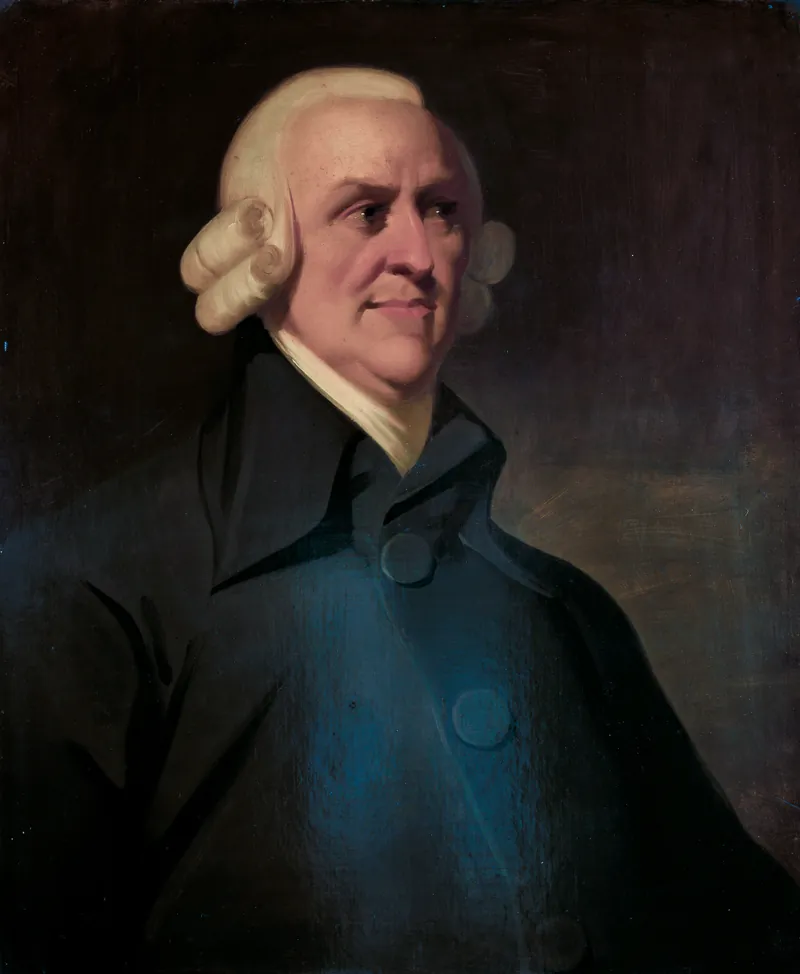
First published on 9 March 1776, Adam Smith's The Wealth of Nations is, as Encyclopaedia Britannica describes it, "the first formulation of a comprehensive system of political economy" — a foundational treatise that reshaped how governments, philosophers, and economists understand trade, labour, and the nature of national prosperity.

LuvemBooks Verdict

Best for

Readers seriously engaged with the history of economic thought, political philosophy, or the intellectual origins of liberal capitalism who want to encounter the foundational arguments — the division of labour, the invisible hand, the critique of mercantilism — in Smith's own words.

Worth it if

Worth the considerable effort if you approach it as a historical document of the Scottish Enlightenment written at the precise dawn of the Industrial Revolution, and choose a well-annotated modern edition to supply the philosophical and political context the text assumes.

Skip if

Skip it — or at least defer it — if you are a general reader hoping for a concise, practical economics primer; the eighteenth-century discursive prose is dense and expansive, and Robert Southey's 1812 verdict of "tedious and hard-hearted" remains a fair warning about the demands the text places on patience.

What readers & critics say

Wikipedia credits the work with having "fundamentally shaped the field of economics and provided a theoretical foundation for free market capitalism," while LitCharts describes it as "often considered the foundational text of modern economics." NPR, citing P.J. O'Rourke, characterises it as "the foundation of economics, the origin of econometrics, the intellectual cradle of capitalism — and sheer torture for generations of students and scholars," neatly capturing both its canonical status and its notorious difficulty.

The foundation of economics, the intellectual cradle of capitalism, and sheer torture for generations of students and scholars.

NPR (on P.J. O'Rourke's reading)

An extensive science in a single book, and the most profound ideas expressed in the most perspicuous language.

Wikipedia (Annual Register, attr. Edmund Burke)

Often considered the foundational text of modern economics — a massive 1776 treatise addressing labour, trade, and good government.

LitCharts

Restrictions on international trade inevitably make both sides poorer — legislators think too much of themselves when they believe they can direct production better than the market.

The Adam Smith Institute
Sources: Wikipedia, NPR, LitCharts, The Adam Smith Institute
In This Review
  • What Works & What Doesn't
  • What the Book Is and What It Argues
  • Historical Significance and Place in the Field
  • Core Intellectual Contributions
  • Genuine Limitations and Critical Reception
  • Who This Book Is For

What Works & What Doesn't

What Works
  • Described by Encyclopaedia Britannica as 'the first formulation of a comprehensive system of political economy,' establishing its unrivalled importance in the history of economics
  • Introduces landmark concepts — the division of labour, the 'invisible hand,' and the role of supply and demand — that remain central to economic thought today
  • Covers an unusually broad range of economic questions, from price determination and the accumulation of stock to taxation, monopolies, and the slave trade
  • Revised and expanded by Smith during his own lifetime, with the 1784 third edition adding substantial new material and an index, giving the text ongoing intellectual depth
What Doesn't
  • The eighteenth-century discursive prose style is dense and expansive, demanding sustained effort from readers unfamiliar with the period's philosophical writing
  • Robert Southey's 1812 characterisation of the book as 'tedious and hard-hearted' in the Quarterly Review reflects a criticism — that the primacy given to self-interest and markets leaves social welfare concerns underserved — that has persisted in critical discourse ever since
Few books have done more to alter the intellectual landscape of their era than this one — and fewer still continue to occupy such a central position in an academic field more than two centuries after publication.

What the Book Is and What It Argues

The full title — An Inquiry into the Nature and Causes of the Wealth of Nations — signals Smith's ambition precisely. Published in two volumes on 9 March 1776, the work sets out to explain what actually generates a nation's wealth, a question that placed it in direct confrontation with the dominant mercantilist doctrine of the day. Smith, a Scottish economist and philosopher writing at the dawn of the Industrial Revolution and out of the intellectual tradition of the Scottish Enlightenment, proposes that self-interest and the forces of supply and demand — rather than state regulation or the accumulation of bullion — should determine economic activity. The treatise is structured across five books, covering topics including the division of labour, the accumulation of stock, price determination, and the flow of labour, capital, and rent, before turning in Books IV and V to a sweeping critique of mercantilist policy and an analysis of government revenue and expenditure.

Historical Significance and Place in the Field

Wikipedia describes the work as offering "one of the first accounts of what builds nations' wealth" and credits it with having "fundamentally shaped the field of economics and provided a theoretical foundation for free market capitalism and economic policies that prevailed in the 19th century." Encyclopaedia Britannica concurs, calling it "a foundational study in the history of economics." The book's influence extended well beyond academic economics: Thomas Paine invoked Smith admiringly in his Rights of Man in 1791, and contemporary reactions — including what Wikipedia identifies as a likely review by Whig MP Edmund Burke in the Annual Register — praised the work as "an extensive science in a single book." Over revised editions produced during Smith's own lifetime, including the 1784 third edition that introduced an index and substantial additions to Books IV and V, the text continued to evolve and consolidate its authority.

Core Intellectual Contributions

Smith's most enduring contribution to economic thought is the metaphor of the "invisible hand" — the idea that individual self-interest, operating through free markets, guides the allocation of resources in ways that serve the broader public good without the need for central direction. Alongside this, Smith develops a rigorous account of the division of labour and its relationship to productivity, and examines how prices function as signals for resource allocation. His critique of mercantilism, high taxes on luxury goods, monopolies, and the slave trade positioned the work as both a theoretical system and a policy argument — one that advocated free competition and open markets as the engines of economic progress. Wikipedia characterises this as "a clear paradigm shift from previous economic thought," and that assessment is well supported by the book's subsequent reception across two centuries of economic scholarship.

Genuine Limitations and Critical Reception

The book is not without its detractors, and honest engagement with its legacy requires acknowledging them. As early as 1812, Robert Southey, writing in the Quarterly Review, condemned The Wealth of Nations as a "tedious and hard-hearted book" — a criticism that points to two genuine friction points for modern readers. First, the prose, written in the discursive register of eighteenth-century moral philosophy, is dense and expansive; Smith builds arguments through accumulation rather than concision, and the treatise demands sustained attention across its considerable length. Second, some readers and critics have found the work's framing of self-interest and market forces insufficient as a complete account of social welfare — a tension that Smith's own contemporaries began to identify and that subsequent economic traditions have debated ever since.

Who This Book Is For

The Wealth of Nations is essential reading for anyone seriously engaged with the history of economic thought, political philosophy, or the intellectual origins of liberal capitalism. Readers approaching it as a practical policy manual will find it rewarding but demanding; those coming to it as a historical document — a product of the Scottish Enlightenment, written at the precise moment the Industrial Revolution was beginning to reshape European economies — will find it among the most consequential works of its era. The text is widely available in multiple editions, including a free digitised version via Project Gutenberg, making access straightforward. For general readers new to classical economics, a well-annotated modern edition is advisable, given the historical and philosophical context the text assumes.

Sources & Further Reading

The key facts and claims in this review are grounded in the retrieved, verified sources listed below.

  1. 1
    Adam Smith — author profileHigh-authority source

    Adam Smith, Wikipedia

  2. 2
  3. 3
  4. 4
  5. 5
  6. 6
  7. 7
  8. 8
  9. 9
  10. 10