

8 min read
4.3
· 1,519 Amazon ratingsShare This Review
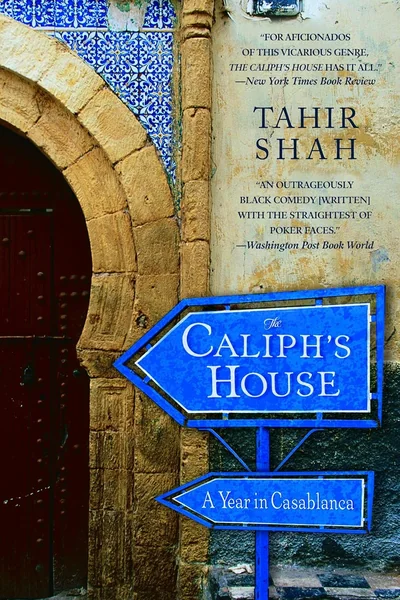
The Caliph's House: A Year in Casablanca by Tahir Shah Review: A Rich, Eccentric Memoir of Morocco
Tahir Shah's memoir chronicles his family's leap from England to Casablanca, where he purchases Dar Khalifa — a crumbling, jinn-haunted compound reputedly once belonging to the city's Caliph — and spends a tumultuous year restoring it, navigating Moroccan customs, and confronting a world where the supernatural and the everyday are inseparable.
LuvemBooks Verdict
Best for
Readers who enjoy fish-out-of-water expatriate memoirs — particularly fans of Peter Mayle or Frances Mayes — and who are open to a story where Moroccan jinn lore and folkloric belief are treated as seriously as bricks and mortar.
Worth it if
You want a witty, warmly observed account of cultural collision, eccentric characters, and a crumbling house slowly coaxed back to life, and you're willing to meet Shah on his own terms — supernatural framework and all.
Skip if
Skip it if you're expecting a tightly plotted renovation narrative or a sociological portrait of modern Casablanca, as the book stays close to Shah's domestic world and leans heavily on jinn lore that may feel repetitive if that framework doesn't engage you.
What readers & critics say
Publishers Weekly places Shah at the heart of "a realm of invisible spirits and their parallel world," praising the "entertaining, sometimes bizarre" cast that plagues and eventually enriches his household. The Guardian's review situates the book in Shah's personal motivation to bring "cultural colour" to his family, framing the Morocco move as both escape and inheritance.
“Shah enters a realm of 'invisible spirits and their parallel world,' encountering a cast of entertaining, sometimes bizarre characters.”
— Publishers Weekly“Morocco had brought colour to his sanitised English childhood — and he regarded it as his duty to pass on the same gift to his own children.”
— The GuardianAge & Reading Level
Recommended age
Adult
Reading level
Adult
who it suits
Skip if you want a tightly plotted narrative or a wide-ranging sociological portrait of modern Casablanca rather than a character-driven, domestic-focused memoir.
In This Review
- What Works & What Doesn't
- What the Book Is and What It Recounts
- The World Shah Enters: Jinn, Retainers, and Casablanca's Margins
- Strengths: Voice, Colour, and the Comedy of Cross-Cultural Collision
- Limitations and Who May Struggle
- Significance and Who It Is For
What Works & What Doesn't
What Works
- Vividly populated cast of characters — from jinn-governed retainers to scheming neighbours — sustains momentum across the memoir's episodic structure
- Shah's self-deprecating, witty voice transforms renovation frustration and cultural bewilderment into sustained comic and emotional payoff
- The integration of Moroccan jinn lore and folkloric belief gives the book a cultural specificity that distinguishes it from conventional expatriate memoirs
- A personal thread about Shah's grandfather and his childhood memories of Morocco adds depth beyond the house-restoration plot
- Published travel writer with established credentials (Sorcerer's Apprentice, Trail of Feathers) brings narrative craft and a genuine feel for extreme, unusual experience
What Doesn't
- The episodic, character-driven structure may feel loosely assembled to readers expecting a tightly plotted narrative arc
- The memoir's focus stays close to Shah's domestic world, leaving Casablanca's broader social and political landscape largely in the background
- The sustained emphasis on jinn lore and supernatural belief, central to the book's identity, may feel repetitive to readers who do not engage with that framework
What the Book Is and What It Recounts
The World Shah Enters: Jinn, Retainers, and Casablanca's Margins
Strengths: Voice, Colour, and the Comedy of Cross-Cultural Collision
Limitations and Who May Struggle
Significance and Who It Is For
Frequently Asked Questions
Sources & Further Reading
The key facts and claims in this review are grounded in the retrieved, verified sources listed below.
- Cited in this review
- 1
- 2
publishersweekly.com
- 3
fulltimeexplorer.com
- Further reading
- 4
Tahir Shah, Wikipedia
- 5
- 6
tahirshah.com
- 7
asuitcasefullofbooks.com
- 8
bewilderedinmorocco.com
- 9
athomewithbooks.net
Reader Comments
No comments yet
Be the first to share your thoughts!