7 min read
4.7
· 4,031 Amazon ratingsShare This Review
Letters from a Stoic by Seneca Review: Timeless Stoic Wisdom, Beautifully Translated
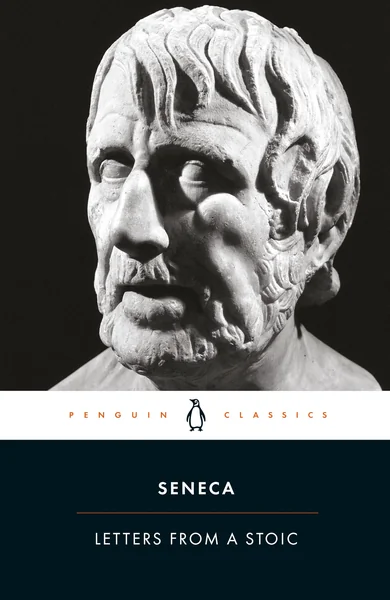
This Penguin Classics edition of Seneca's Epistulae Morales ad Lucilium — selected and translated by Robin Campbell — presents 124 letters written by the Roman philosopher Lucius Annaeus Seneca during his retirement after more than a decade serving Emperor Nero, offering one of antiquity's most enduring and personal meditations on how to live with virtue, courage, and equanimity.
LuvemBooks Verdict
Best for
Readers new to Stoic philosophy who want an accessible, well-contextualised entry point into Seneca's moral thought — particularly those drawn to questions of how to face adversity, mortality, and distraction with clarity and resolve.
Worth it if
Worth reading if you're prepared to sit patiently with dense philosophical argument and classical references, and want a translation that balances scholarly rigour with genuine readability.
Skip if
Skip it if you want the complete, unabridged 124-letter corpus in a single volume, or if you're looking for a breezy, narrative-driven introduction to philosophy rather than a demanding epistolary work that rewards slow, reflective reading.
What readers & critics say
Wikipedia's article on the Epistulae Morales notes that the letters — addressed to Lucilius Junior and moving from everyday observation to broader philosophical principle — read like "a diary, or handbook of philosophical meditations," with scholars generally agreeing the letters are arranged in the order Seneca wrote them. Saent.com rates the collection four out of five, describing it as "not an easy read" but "an invaluable and timeless guide on how to live a virtuous and fulfilling life," drawing a natural comparison to Marcus Aurelius's Meditations.
Sources: Wikipedia – Epistulae Morales ad Lucilium, Saent.comAsk LuvemBooks
Was this helpful?
- Is it worth reading?
- For readers drawn to questions of how to face adversity, mortality, and distraction with clarity and resolve, this edition stands as one of the most enduring and well-equipped translations of Seneca's letters available in English. Robin Campbell's scholarly introduction — covering Seneca's life, philosophy, literary style, and influence — provides the scaffolding a newcomer needs, while the curated selection format lowers the barrier to entry without sacrificing the breadth of Seneca's moral concerns. The key caveat is that the letters are dense with philosophical argument and classical references to figures such as Chrysippus, Epicurus, and Marcus Cato, requiring patience and reflection rather than a quick skim.
- Similar books
- Readers who find value in Letters from a Stoic often turn next to Marcus Aurelius's Meditations — itself a collection of private philosophical reflections that shares Seneca's preoccupation with virtue, mortality, and self-discipline. For a broader survey of ancient and modern philosophical consolation, The Consolation of Philosophy by Ancius Boethius and Alain De Botton's The Consolations of Philosophy both explore how philosophy can be applied to life's hardships. Massimo Pigliucci's How to Be a Stoic: Using Ancient Philosophy to Live a Modern Life offers a contemporary lens on the same tradition for readers who want explicit modern application. Viktor E. Frankl's Man's Search for Meaning approaches the question of living with meaning and endurance from a twentieth-century perspective, and resonates strongly with Seneca's preoccupations around mortality and equanimity.
- Who should read this?
- This edition is best suited to adult readers drawn to questions of how to face adversity, mortality, and distraction with philosophical clarity — particularly those curious about Stoicism but put off by more technical academic treatments. Robin Campbell's curated selection and scholarly introduction make it a well-equipped starting point for newcomers, while readers who already have some grounding in ancient philosophy will appreciate the depth and social criticism embedded in Seneca's letters. It is less well suited to readers seeking a light or narrative-driven read, or to scholars who require the complete, unabridged 124-letter corpus.
- About Lucius Annaeus Seneca
- Lucius Annaeus Seneca the Elder, also known as Seneca the Rhetorician, was a Roman writer, born of a wealthy equestrian family of Corduba, Hispania.
- What are the main themes?
- The letters centre on enduring Stoic preoccupations: the contempt of death, the cultivation of virtue as the supreme good, and the stout-heartedness of the self-possessed person immune to life's setbacks. Friendship, courage, and equanimity in the face of adversity — including illness and the noise and distraction of daily Roman life — recur across the letters. Notably, Seneca also uses the letters to engage in genuine social criticism, condemning the harsh treatment of slaves and the cruelties of the gladiatorial arena, giving the collection moral scope that extends well beyond personal self-improvement.
- Which edition should I get?
- This Penguin Classics edition — translated and introduced by Robin Campbell and first published on July 30, 1969 — is widely regarded as a strong entry point precisely because Campbell's introduction covers Seneca's life, philosophy, literary style, influence, and a note on translation and text, giving readers the scholarly scaffolding to situate the letters historically and intellectually. The curated selection format is a deliberate editorial choice that serves newcomers well. Readers or scholars who require the complete, unabridged 124-letter corpus in a single volume should note that this edition does not provide that, and would need to seek an alternative unabridged translation.
Summarize this book
Follow up
Synthesized from verified book data & published reviews · How we review
Press Enter to ask. Answers come from our editorial Q&A — start typing to see related questions.
Age & Reading Level
Recommended age
Adult
Reading level
Adult
who it suits
Skip if you want an unabridged text, a narrative-driven read, or a breezy introduction to philosophy without dense argument and classical references.
Our Review
What the Book Actually Is
The Central Argument and Themes
Significance and Intellectual Legacy
Strengths of This Edition
Who This Book Is For — and Where It Demands Patience
Sources & Further Reading
The key facts and claims in this review are grounded in the retrieved, verified sources listed below.
- Cited in this review
- 1
- 2
- 3
en.wikipedia.org
- Further reading
- 4
Lucius Annaeus Seneca, Wikipedia
- 5
- 6
lettersfromastoic.net
- 7
- 8
- 9
barnesandnoble.com
Books like Letters from a Stoic
Curated picks for readers who enjoyed Letters from a Stoic, with our reasoning for each match.
If you liked Letters from a Stoic