8 min read
4.8
· 5,131 Amazon ratingsShare This Review

Basic Economics by Thomas Sowell Review: A Rigorous, Jargon-Free Economics Primer
Now in its fifth edition, Thomas Sowell's Basic Economics is a non-fiction economics reference designed to explain the fundamental principles of how economies create prosperity or poverty — written entirely in plain English, without charts, graphs, or equations, for a general audience.
LuvemBooks Verdict
Best for
Curious general readers who want a rigorous, jargon-free grounding in economic thinking — from prices and labor markets to international trade — without needing any prior training in the subject.
Worth it if
You want to understand how economies actually work through real-world examples and plain English, and are not looking for a bridge into formal or quantitative academic study.
Skip if
Skip it if you need preparation for quantitative economics coursework, expect engagement with heterodox schools of thought, or want a framework that integrates sociological and political context alongside the economic analysis.
What readers & critics say
Kirkus Reviews delivered a pointed dissent, arguing that "Sowell's economics in a social vacuum is as meaningful as color in the absence of light," and characterising the book as ideologically slanted despite its claims of disinterested analysis. By contrast, the Mises Institute's review praised Sowell's "genius for the striking fact and the apt analogy," crediting those qualities with making the book's elementary economic principles both memorable and effective for a general audience.
“Sowell's economics in a social vacuum is as meaningful as color in the absence of light.”
— Kirkus ReviewsAsk LuvemBooks
Was this helpful?
- Is it worth reading?
- For readers who want a serious, accessible grounding in economic thinking without the technical apparatus of a textbook, Basic Economics is one of the strongest options available. Critical reception across the Cato Journal, Claremont Review of Books, Business Economics, The Appraisal Journal, the Journal of Economic Behavior & Organization, and even twice in The Physics Teacher — an unusually wide disciplinary spread — consistently commends Sowell's ability to make fundamentals clear through concrete examples. The significant caveat is for readers seeking preparation for quantitative coursework or a pluralistic survey of heterodox economic thought: the book's deliberate exclusion of graphs and formal models, and its firm grounding in one analytical tradition, make it a poor fit for those goals.
- Similar books
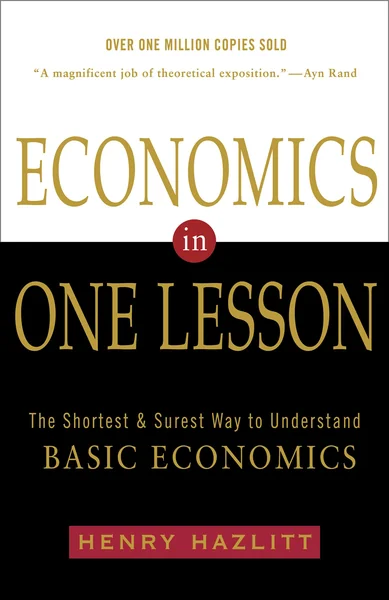
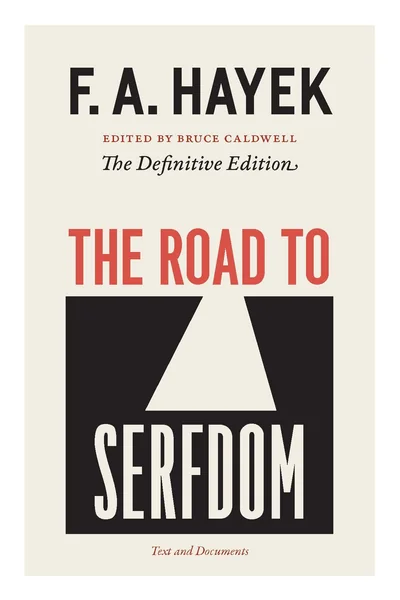
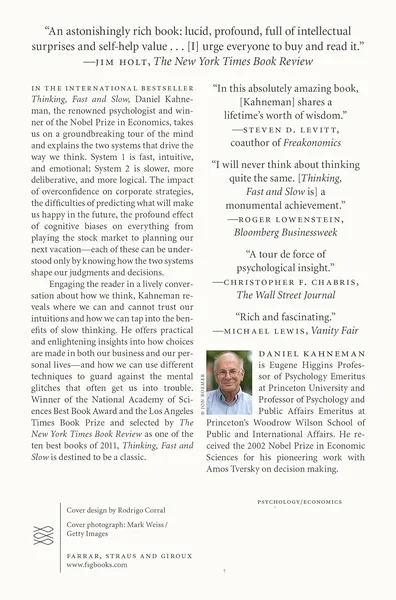
- Readers who enjoy Basic Economics will find natural companions in several of the titles curated below. Henry Hazlitt's Economics in One Lesson covers similar free-market fundamentals in an even more condensed format and is often read alongside Sowell's work. F. A. Hayek's The Road to Serfdom extends the argument about market coordination versus central planning — a theme Sowell addresses in his Industry and Commerce section — into explicit political philosophy. For a more data-driven and unconventional take on how economic incentives shape behavior, Steven D. Levitt and Stephen J. Dubner's Freakonomics offers a playful counterpoint. Those interested in broader questions of inequality and capital distribution may find Thomas Piketty's Capital in the Twenty-First Century a challenging but rewarding contrast to Sowell's framework, while Daniel Kahneman's Thinking, Fast and Slow complements the economic reasoning in Basic Economics with insights into the psychological biases that distort decision-making.
- Who should read this?
- Basic Economics is ideally suited to general adult readers who want a serious, self-contained introduction to economic thinking without the burden of jargon, graphs, or equations. The Claremont Review of Books put it plainly: 'anyone who hasn't studied economics formally should read Basic Economics to learn it in a logical, straightforward way.' It is also well suited to curious readers in adjacent fields — the book's unusually wide disciplinary reception, including two reviews in The Physics Teacher, suggests it resonates well beyond the economics community. Readers who need preparation for academic economics coursework, or who want pluralistic engagement with heterodox schools of thought, should look elsewhere.
- About Thomas Sowell
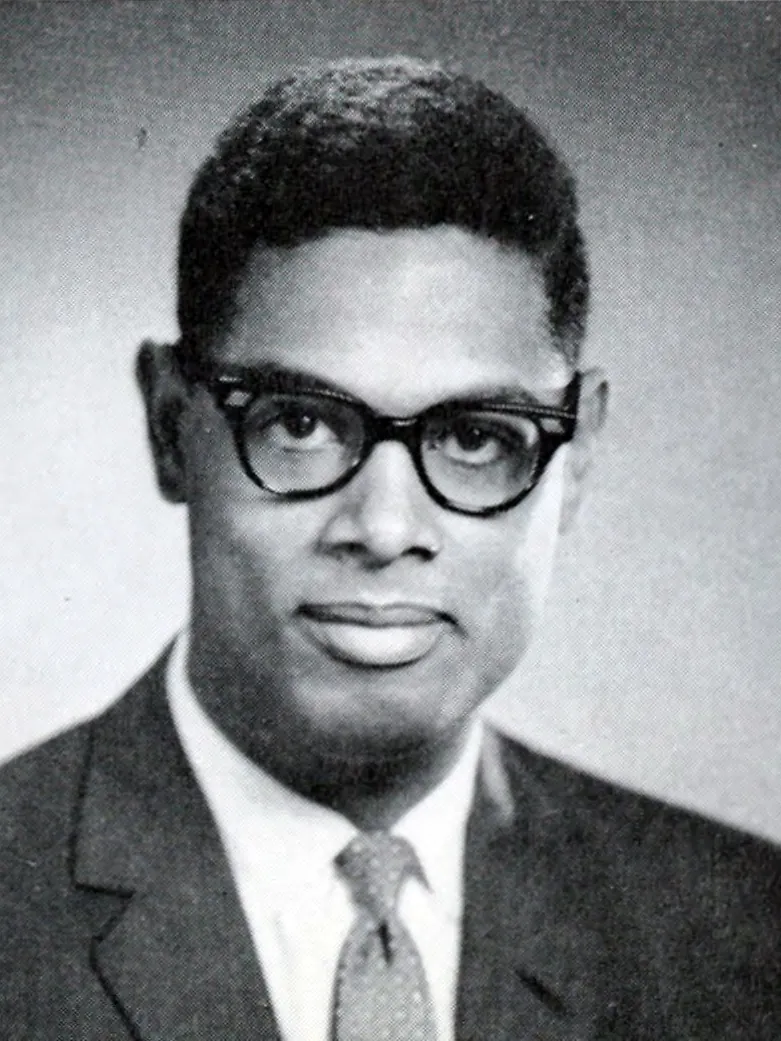
- Thomas Sowell is an American economist, economic historian, and social theorist.
- What are the main themes?
- The central theme of Basic Economics is how the organization of an economy — the rules, institutions, and incentives it creates — determines whether a society generates prosperity or poverty. Running through every section is Sowell's argument that prices function as a signaling and coordination mechanism, and that disrupting this mechanism through price controls, regulation, or central planning produces predictable negative consequences. The book also consistently contrasts market coordination with central planning, examines the role of incentives in shaping behavior across labor markets, investment, and international trade, and interrogates common economic myths by grounding abstract principles in concrete, often counterintuitive real-world examples.
- Does it prepare you for academic economics?
- No — and Sowell is explicit about this. The book is designed for general readers, not as a bridge to formal economics study. Because it deliberately excludes graphs, formal models, and mathematical notation, it does not build the quantitative skills or technical vocabulary that academic economics courses require. Edmund A. Mennis in Business Economics described it precisely as a book for 'someone who is interested in learning more about economics without working through the economic jargon, graphs, charts, and equations usually found in textbooks' — which is both its greatest strength for lay readers and its clear limitation for aspiring economics students.
Summarize this book
Follow up
Synthesized from verified book data & published reviews · How we review
Press Enter to ask. Answers come from our editorial Q&A — start typing to see related questions.
Age & Reading Level
Recommended age
Adult
Reading level
Adult
who it suits
Skip if you want a pluralistic, mathematically grounded introduction that prepares you for academic economics or engages with heterodox schools of thought.
Our Review
What the Book Is and What It Covers
Scope and Depth of Subject Matter
Reception and Reputation
Genuine Strengths
Limitations and Who May Find It Wanting
Sources & Further Reading
The key facts and claims in this review are grounded in the retrieved, verified sources listed below.
- Cited in this review
- 1
- 2
en.wikipedia.org
- 3
- Further reading
- 4
Thomas Sowell, Wikipedia
- 5
search.library.wisc.edu
- 6
app.thestorygraph.com
- 7
- 8
- 9
Books like Basic Economics
Curated picks for readers who enjoyed Basic Economics, with our reasoning for each match.
If you liked Basic Economics