
At a glance
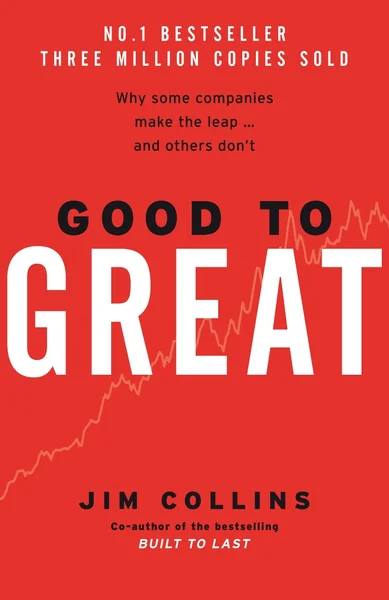
Good to Great
by Jim Collins
LuvemBooks Verdict
Best for: Managers, MBA students, or leadership-development participants who want a research-anchored introduction to organizational strategy and want frameworks — Level 5 Leadership, the Hedgehog Concept, the Flywheel — they can test and debate against real organizational contexts.
Worth it? Skip it? Read the full verdict →Ask LuvemBooks
Was this helpful?
- Is it worth reading?
- For readers new to management literature, Good to Great offers a structured, research-anchored introduction to organizational leadership, strategic focus, and disciplined culture — and its comparative methodology gives it considerably more intellectual texture than a straight advice book. For experienced practitioners, it functions best as a foundational text whose arguments reward critical reading rather than straightforward application: the post-publication failures of designated 'great' companies like Circuit City and Fannie Mae, and Levitt's finding that the portfolio underperformed the S&P 500, are substantive challenges that any serious reader should weigh. The strongest reading experience comes to those who engage the criticisms alongside the book, asking where the Flywheel logic holds and where the selection of companies does not survive scrutiny.
- Similar books
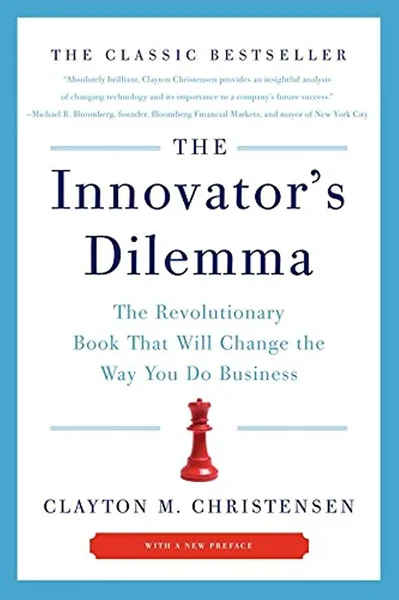
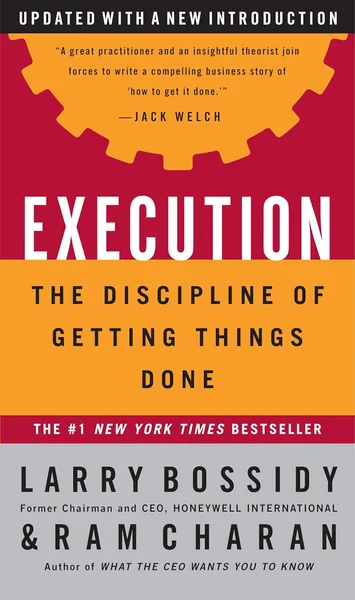
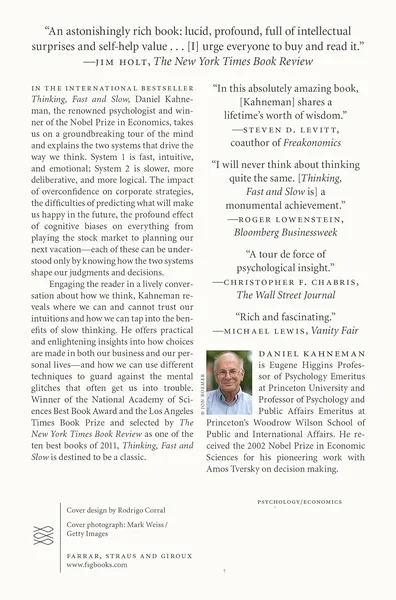
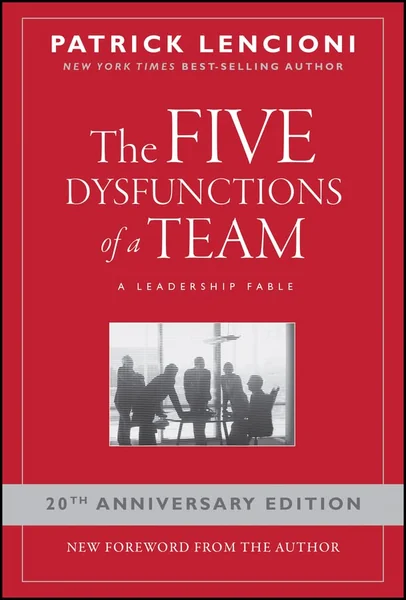
- Readers who respond to Good to Great's research-backed approach to organizational strategy will find strong companions in the curated selection below. Clayton M. Christensen's The Innovator's Dilemma offers a similarly rigorous, research-grounded framework for understanding why successful companies fail to adapt to disruptive change — a natural counterpoint to Collins' focus on what makes companies thrive. Larry Bossidy, Ram Charan, and Charles Burck's Execution: The Discipline of Getting Things Done addresses the operational layer that Collins' frameworks largely assume, making it a practical complement. Patrick M. Lencioni's The Five Dysfunctions of a Team zooms in on the leadership and team dynamics that underpin any good-to-great transformation. For readers interested in the cognitive and decision-making science behind organizational behavior, Daniel Kahneman's Thinking, Fast and Slow provides essential intellectual context, while Eric Ries' The Lean Startup applies rigorous, iterative thinking to the startup environment that Collins' large-company research largely bypasses.
- Who should read this?
- Good to Great is most directly aimed at managers, executives, and MBA students encountering foundational management literature, but its four-million-copy sales record and placement on Time's list of The 25 Most Influential Business Management Books reflect a readership that extended well beyond traditional business audiences. Experienced practitioners and researchers will get the most from treating it as a critical text — engaging the Levitt critique, the Holt and Cameron 'generic recipe' objection, and the post-publication failures of Circuit City and Fannie Mae alongside the frameworks themselves. Readers who want highly prescriptive, step-by-step operational guidance may find the book's strength lies more in its conceptual vocabulary than in tactical instruction.
- About Jim Collins
- The author's full name is James C. Collins. Beyond that detail, LuvemBooks' verified reference for this title does not supply additional biographical information about the author.
- Why is this book trending?
- Good to Great is currently making the rounds on TikTok, where creators are breaking down Jim Collins' frameworks chapter by chapter and bringing fresh attention to this long-established business staple. If leadership and management content has been appearing in your feed lately, this book is likely behind a significant portion of it — the Hedgehog Concept and Level 5 Leadership in particular translate well into the short-form explainer format that BookTok favors.
- What are the main criticisms?
- The most pointed empirical challenge came from economist Steven D. Levitt, who noted that several companies Collins designated as 'great' — including Circuit City and Fannie Mae — later ran into serious trouble, and that investing in all eleven companies at the time of publication would have underperformed the S&P 500; Levitt concluded such books are 'mostly backward-looking' and cannot reliably guide future decisions. Separately, critics Holt and Cameron argued the book offers a 'generic business recipe' that ignores the particular strategic opportunities and constraints facing individual organizations. Scholar Peter C. DeMarco raised a philosophical objection in a 2012 article, arguing that Collins makes an error by positioning good as the enemy of greatness, effectively creating a proxy for greed in DeMarco's reading.
- What are the key frameworks?
- Good to Great is built around three interlocking frameworks. Level 5 Leadership describes executives who combine fierce professional will with personal humility — a counter-intuitive profile Collins presents as essential to good-to-great transitions. The Hedgehog Concept, drawn from Isaiah Berlin's essay on the ancient Greek parable, argues that great companies ruthlessly focus on the single intersection of what they can be best at, what drives their economic engine, and what they are deeply passionate about. The Flywheel holds that transformations result not from dramatic moments but from consistent, compounding momentum built over time — a concept that became one of the book's most widely adopted strategic planning tools.
Summarize this book
Follow up
Synthesized from verified book data & published reviews · How we review
Press Enter to ask. Answers come from our editorial Q&A — start typing to see related questions.
Age & Reading Level
Recommended age
Adult
Reading level
Adult
who it suits
Skip if you want a prescriptive, step-by-step operational playbook rather than a research-based conceptual framework.
Editorial Review
Published on October 16, 2001, Jim Collins' Good to Great: Why Some Companies Make the Leap... And Others Don't is a research-driven management book that sold four million copies and crossed well beyond the traditional business-book audience — a genuine phenomenon that also accumulated a substantial body of serious criticism over the two decades since its release.
Read the Full ReviewBooks like Good to Great
Curated picks for readers who enjoyed Good to Great, with our reasoning for each match.
If you liked Good to Great
Why It’s Trending
Good to Great Is Back in Conversation — Here's Why People Keep Returning to It
More than two decades after its release, Good to Great keeps pulling readers back in. With economic uncertainty still shaping how people think about work and leadership, Collins' core questions about what separates lasting success from mediocrity feel as relevant as ever — even if the book itself has attracted some sharp criticism over the years.