

8 min read
4.7
· 107,690 Amazon ratingsShare This Review
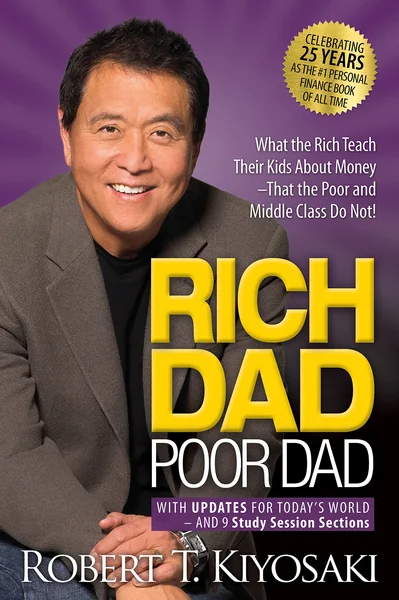
Rich Dad Poor Dad by Robert T. Kiyosaki Review: A Polarizing Personal Finance Classic
First published in 1997 and now in a 25th Anniversary edition from Plata Publishing, Rich Dad Poor Dad by Robert T. Kiyosaki is one of the most widely read personal finance books ever written, with over 32 million copies sold and more than six years on the New York Times bestsellers list — yet it remains as contested as it is celebrated, praised for shifting readers' mindsets around money and criticized for vague, parable-style advice that critics argue rarely translates into concrete action.
LuvemBooks Verdict
Best for
First-time readers of personal finance who have never encountered concepts like assets vs. liabilities, passive income, or the distinction between earning a salary and building wealth — and who respond better to parable-driven narrative than to technical instruction.
Worth it if
You're looking for a perspective-shifting introduction to financial thinking and are willing to treat the book's parables as motivational framing rather than actionable, step-by-step investment advice.
Skip if
You're an experienced investor or anyone seeking rigorously sourced, data-driven financial guidance — the book's abstraction and the long-running questions about the factual basis of its central narrative are likely to frustrate rather than inform.
What readers & critics say
According to en.wikipedia.org, Rich Dad Poor Dad has sold over 32 million copies, been translated into more than 51 languages, and spent years on major bestseller lists, cementing its status as a cultural phenomenon in personal finance. However, whitecoatinvestor.com notes that the online personal finance community is broadly critical, citing recurring charges that the "rich dad" figure was likely fictitious, that the book offers no concrete advice beyond financial clichés, and that Kiyosaki trades heavily on a cult of personality.
“Employees investing in index funds tend to be especially critical, while entrepreneurs and real estate investors tend to be less critical.”
— whitecoatinvestor.comAge & Reading Level
Recommended age
Adult
Reading level
Adult
who it suits
Skip if you're looking for rigorous, step-by-step, data-driven financial planning advice you can apply directly to a portfolio or tax situation.
Rich Dad Poor Dad: What the Rich Teach Their Kids About Money That the Poor and Middle Class Do Not! by Robert T. Kiyosaki is Trending
Rich Dad Poor Dad Is Sparking Fresh Debate About Whether Its Advice Actually Works
Readers are actively arguing about Rich Dad Poor Dad again, with sharp criticism circulating online about whether Kiyosaki's wealth mindset advice holds up — or just lets the ultra-rich off the hook. It's one of those books people can't stop debating.
Rich Dad Poor Dad is generating fresh reader discussion right now, and not all of it is flattering. Critics are pushing back hard on Kiyosaki's core arguments — particularly his framing of government and the middle class as the problem, while largely letting wealthy individuals off the hook. One widely circulated Goodreads critique called out the book for misrepresenting American healthcare as 'socialized' and argued that the real financial threat to ordinary people comes from the wealthy, not from government overreach as Kiyosaki suggests.
This kind of debate is exactly why the book keeps resurfacing. It's been a flashpoint since 1997 — praised for getting people to think differently about assets, income, and financial independence, but criticized for being too vague to act on and for oversimplifying complex economic realities. With financial stress still very much on people's minds, readers are returning to foundational personal finance titles and asking harder questions about which advice is actually useful.
If you're picking this up for the first time, go in knowing what you're getting: a mindset book more than a how-to guide. The core ideas around assets versus liabilities are genuinely worth thinking about, but you'll want to supplement it with more concrete resources. If you've already read it, the current debate online is a good reason to revisit whether its lessons have aged as well as its sales numbers suggest.
In This Review
- What Works & What Doesn't
- What the Book Is and What It Argues
- Cultural Reach and Legacy
- Strengths: Mindset and Accessibility
- Criticisms: Vagueness, Veracity, and Contested Advice
- Who This Book Is For
What Works & What Doesn't
What Works
- Over 32 million copies sold and more than six years on the New York Times bestsellers list, reflecting genuinely mass audience resonance
- Frames financial literacy concepts — assets vs. Liabilities, passive income, business ownership — in accessible, parable-driven language designed for readers new to the subject
- Credited by high-profile figures including Daymond John and Will Smith as a formative influence on their thinking about money
- The contrast between the 'rich dad' and 'poor dad' figures provides a memorable structural device for challenging conventional assumptions about employment and wealth
What Doesn't
- Slate reviewer Rob Walker characterized the advice as often vague and much of the content as 'self-help boilerplate,' a critique that has persisted across the book's long life
- The book's autobiographical framing was questioned for years due to Kiyosaki's long refusal to identify the 'rich dad,' raising doubts about the factual basis of its central narrative
- Competing financial writer John T. Reed has argued the book contains predominantly wrong or bad advice, making it a poor fit for readers seeking rigorous, actionable financial guidance
What the Book Is and What It Argues
Cultural Reach and Legacy
Strengths: Mindset and Accessibility
Criticisms: Vagueness, Veracity, and Contested Advice
Who This Book Is For
Frequently Asked Questions
Sources & Further Reading
The key facts and claims in this review are grounded in the retrieved, verified sources listed below.
- Cited in this review
- 1
en.wikipedia.org
- Further reading
- 2
Robert T. Kiyosaki, Wikipedia
- 3
thriftbooks.com
- 4
- 5
- 6
vivadifferences.com
- 7
- 8
- 9
justologist.com
Related Reviews
Reviews of books we picked for readers who enjoyed Rich Dad Poor Dad.

Reader Comments
No comments yet
Be the first to share your thoughts!