Our reviews
37 business & economics books we've reviewed, each with who it's for, who should skip it and every source we used.
37 reviews match
Joe Dominguez, Vicki Robin
Best for: Readers who suspect their earning and spending habits are out of step with what they genuinely value, and who want a structured, philosophically grounded nine-step framework — not just tactical tips — for diagnosing and reshaping their relationship with money.
Brené Brown
Best for: Readers who feel held back by shame, fear of failure, or the urge to self-protect, and who want a research-backed, accessible framework for understanding vulnerability across their relationships, work, and parenting life.
Benjamin Graham
Best for: Individual investors who want a principled, long-horizon framework for selecting undervalued stocks and are willing to engage with financial metrics like earnings ratios, dividend criteria, and asset values — particularly those drawn to the philosophical foundation of value investing rather than tactical, short-term trading guidance.
Thomas Piketty
Best for: Economists, historians, political scientists, policy professionals, and engaged general readers with a genuine tolerance for dense, data-heavy argumentation who want a rigorous, historically grounded account of wealth inequality and capitalism's long-run dynamics.
Mel Lindauer, Taylor Larimore, Michael LeBoeuf
Best for: Self-directed investors at any stage who want a philosophy-first, jargon-light framework for building long-term wealth through low-cost index funds — especially those new to Boglehead principles looking for the movement's canonical starting point.
Daron Acemoglu and James A. Robinson
Best for: Readers with an interest in political economy, history, or development who want a sweeping, accessibly written argument — grounded in fifteen years of original research — for why institutions, not geography or culture, determine whether nations prosper or fail.
J.L. Collins
Best for: Readers who feel overwhelmed or misled by the financial industry and want a clear, evidence-grounded starting point for building long-term wealth through index fund investing and financial independence principles.
Stephen R. Covey
Best for: Professionals, managers, or motivated self-improvers who want a cohesive, principle-grounded framework for personal and interpersonal effectiveness — and are willing to invest patience in a dense, philosophically serious read rather than a quick-fix checklist.
Raman Keane
Best for: Young adults who already have a working grasp of budgeting, saving, and investing — via the first volume or equivalent — and want a structured, accessible guide to the macroeconomic forces (inflation, interest rates, the Federal Reserve) that shape their everyday financial decisions.
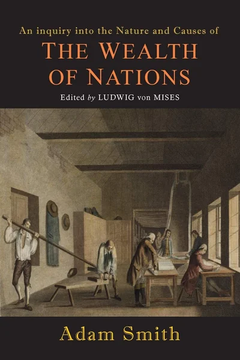
Adam Smith
Best for: Students of economics, political philosophy, or intellectual history who want to engage with the original primary text — unmediated, in full — rather than a summary or secondary account of Smith's ideas.
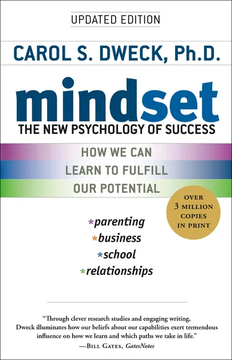
Carol S. Dweck
Best for: Curious general readers — whether in education, business, sport, or parenting — who want a research-grounded introduction to how beliefs about ability shape achievement across virtually every life domain.
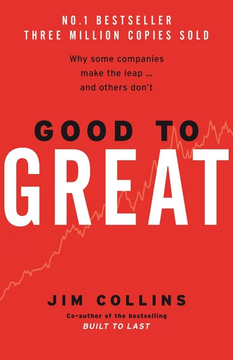
Jim Collins
Best for: Managers, MBA students, or leadership-development participants who want a research-anchored introduction to organizational strategy and want frameworks — Level 5 Leadership, the Hedgehog Concept, the Flywheel — they can test and debate against real organizational contexts.
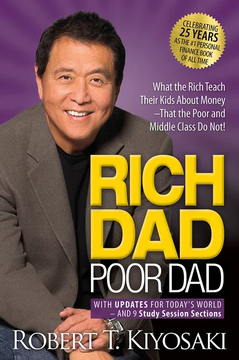
Robert T. Kiyosaki
Best for: First-time readers of personal finance who have never encountered concepts like assets vs. liabilities, passive income, or the distinction between earning a salary and building wealth — and who respond better to parable-driven narrative than to technical instruction.
