
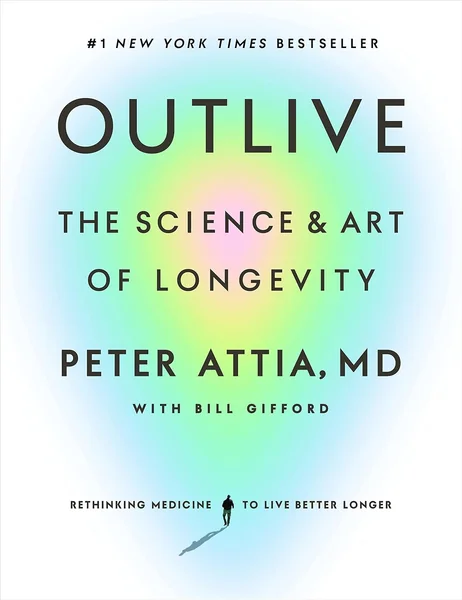
At a glance

LuvemBooks Verdict
Best for: Scientifically curious readers — particularly those with a family history of heart disease, cancer, neurodegenerative disease, or type 2 diabetes — who want a rigorous, evidence-grounded framework for rethinking preventive health across a lifetime rather than a quick-fix wellness checklist.
Worth it? Skip it? Read the full verdict →Ask LuvemBooks
Was this helpful?
- Is it worth reading?
- Outlive earns its place as one of the most ambitious and coherent longevity titles in recent years, distinguished by the clarity of its Medicine 2.0 vs. Medicine 3.0 framework and the granularity of its exercise guidance — from VO2 max as a cardiovascular fitness marker to neuromuscular control and injury prevention. Its New York Times Best Seller status across 2023 and 2024 reflects staying power beyond a launch spike, and critical coverage praised its rare balance of scientific rigour and practical applicability. For readers who want a science-grounded framework for rethinking preventive care, or who have a family history of any of the Four Horsemen conditions, it is especially well-suited. The key caveat is that readers seeking a brief, casual wellness introduction will find the 17-chapter clinical depth more demanding than anticipated.
- Similar books
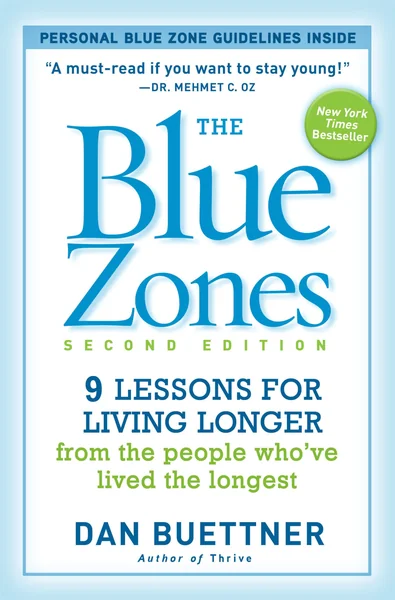
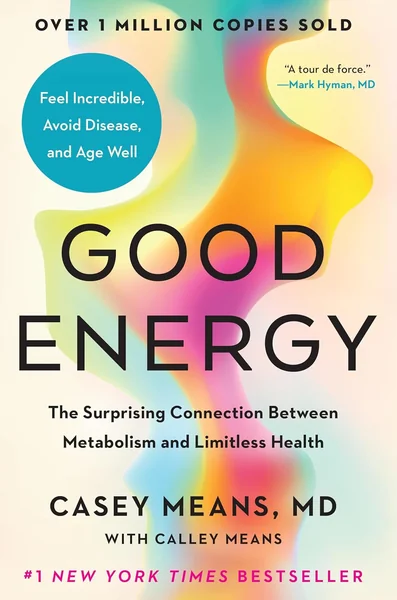
- Readers drawn to Outlive's science-backed approach to longevity and metabolic health will find strong companion reads among the curated titles below. Dan Buettner's The Blue Zones: 9 Lessons for Living Longer From the People Who've Lived the Longest explores longevity through the lens of real-world communities rather than clinical frameworks, offering a complementary cultural perspective. Casey Means and Calley Means' Good Energy: The Surprising Connection Between Metabolism shares Attia's focus on metabolic health as a longevity lever. For a more focused look at weight loss and insulin resistance, Jason Fung's The Obesity Code: Unlocking the Secrets of Weight Loss covers overlapping ground on metabolic dysfunction. Michael Pollan's In Defense of Food: An Eater's Manifesto addresses the nutritional quality argument that runs through Outlive, and Gabor Maté's When the Body Says No: Exploring the Stress-Disease Connection echoes Attia's attention to the role of emotional well-being in long-term health outcomes.
- Who should read this?
- Outlive is best suited to readers who want a science-grounded framework for rethinking their relationship with preventive care, and who are willing to engage with the evidence behind recommendations rather than simply follow a checklist. It is especially well-targeted at anyone with a family history of heart disease, cancer, neurodegenerative disease, or type 2 diabetes, given Attia's sustained focus on early detection and personalized risk management. Health professionals, fitness-minded adults, and scientifically curious general readers will find the most to engage with across its 17 chapters. Readers seeking a brief or casual wellness introduction, or those without access to the early screening and quantified monitoring tools Attia recommends, should go in with calibrated expectations.
- About Peter Attia MD
- Peter Attia is a Canadian-American author and former researcher known for his work in longevity medicine. Outlive was co-written with journalist Bill Gifford, whose prose craft helps make Attia's clinical expertise accessible to a broad general audience.
- What are the key takeaways?
- Outlive delivers several concrete, actionable frameworks: the distinction between lifespan and healthspan; the identification of the Four Horsemen as the primary threats to long life; and the Medicine 3.0 principle that proactive, personalized prevention is more effective than reactive treatment. On the exercise front, the book specifically highlights VO2 max as a measurable longevity indicator, advocates for intense exercise, and stresses neuromuscular control and safe movement patterns under the principle "First, do thyself no harm." Nutrition, sleep, metabolic health, and emotional well-being are each covered as distinct but interconnected pillars of the longevity project Attia outlines.
- Does it work for everyone, or are some recommendations out of reach?
- This is one of the book's most noted limitations: Attia's emphasis on personalized early screening, VO2 max testing, and continuous quantified health monitoring presupposes access to medical resources and tests that are not universally available to all readers. The Medicine 3.0 framework is built around a level of individualized clinical engagement — including early screening protocols and tailored lifestyle strategies — that may be difficult or costly to implement without good health insurance or specialist access. Readers in that position will still find the conceptual frameworks and general lifestyle guidance valuable, but should be aware that some of the most specific recommendations carry a real-world resource barrier.
Summarize this book
Follow up
Synthesized from verified book data & published reviews · How we review
Press Enter to ask. Answers come from our editorial Q&A — start typing to see related questions.
Age & Reading Level
Recommended age
Adult
Reading level
Adult
who it suits
Skip if you're looking for a brief, checklist-style wellness guide rather than a clinically detailed, evidence-grounded framework.
Editorial Review
Co-authored by longevity physician Peter Attia and journalist Bill Gifford, Outlive is a comprehensive non-fiction health and wellness guide that reframes aging as a preventable process — built around defeating the "Four Horsemen" of heart disease, cancer, neurodegenerative disease, and type 2 diabetes — and appeared on The New York Times Best Seller list in both 2023 and 2024.
Read the Full ReviewBooks like Outlive
Curated picks for readers who enjoyed Outlive, with our reasoning for each match.
If you liked Outlive
Why It’s Trending
Outlive Keeps Drawing Readers as Longevity Stays a Top Health Conversation
Peter Attia's guide to living longer and healthier continues to find new readers well after its debut. With longevity and preventive health still dominating wellness conversations, Outlive remains one of the go-to books for people who want a science-backed approach to aging better.