7 Science & Nature Books Experiencing a Cultural Resurgence

7 books
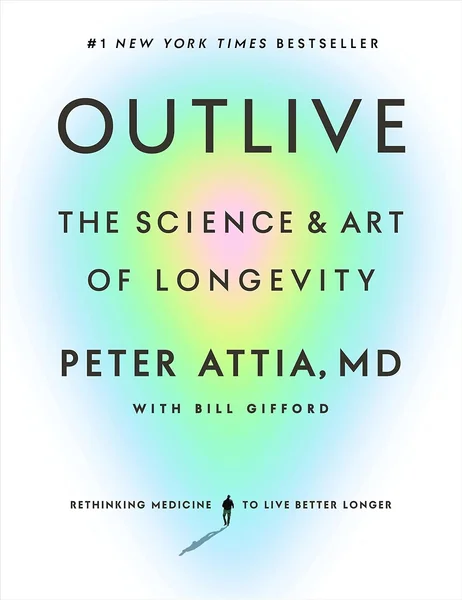
Outlive: The Science and Art of Longevity by Peter Attia
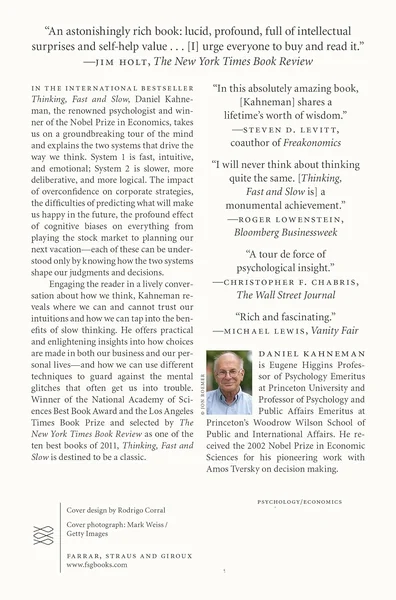
Thinking, Fast and Slow by Daniel Kahneman
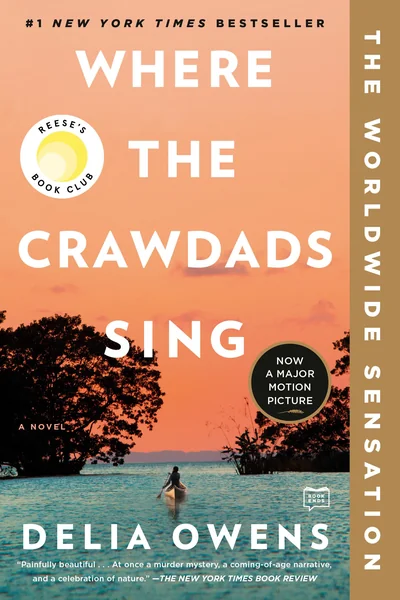
Where the Crawdads Sing by Delia Owens
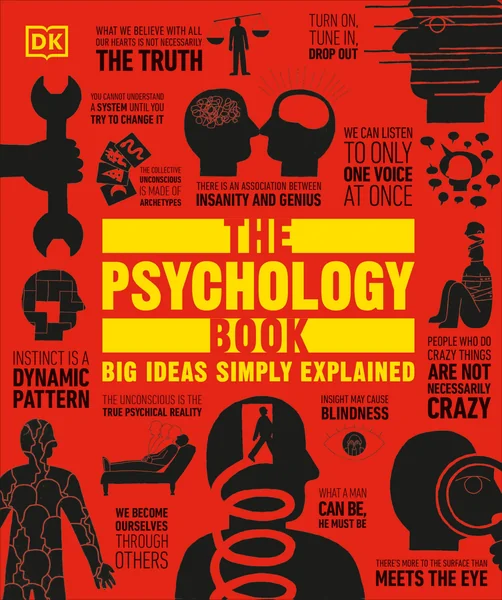
The Psychology Book: Big Ideas Simply Explained by DK
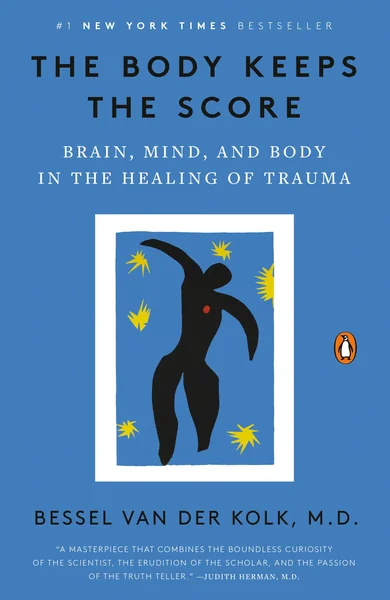
The Body Keeps the Score: Brain, Mind, and Body in the Healing of Trauma by Bessel van der Kolk
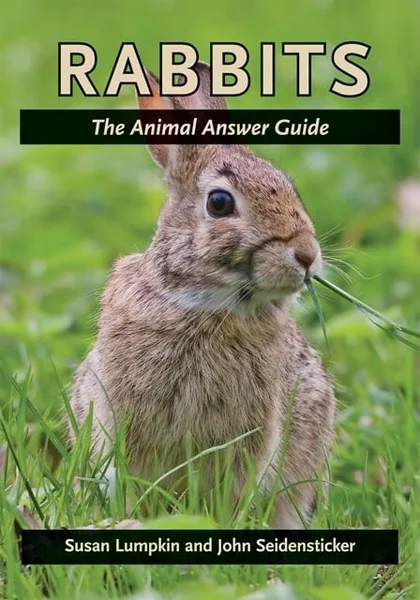
Rabbits: The Animal Answer Guide (The Animal Answer Guides: by Susan Lumpkin, John Seidensticker
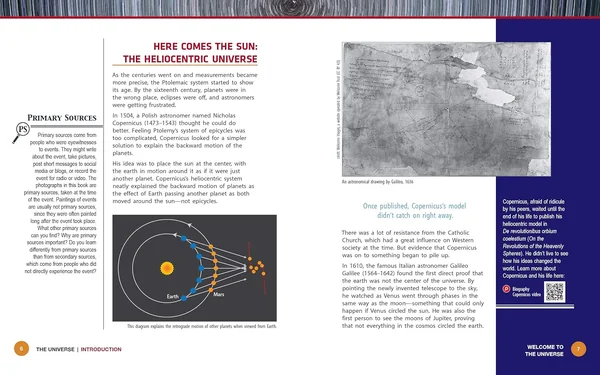
The Universe: The Big Bang, Black Holes, and Blue Whales (Inquire by Matthew Brenden Wood
Science & Nature

7 Science & Nature Books Experiencing a Cultural Resurgence

Curated recommendations for readers rediscovering classic and backlist titles getting renewed attention

7 Books
4.0 Avg

Some books don't just have a moment — they have multiple moments. Whether it's a viral social media conversation, a documentary adaptation, or a shift in cultural awareness, certain science and nature titles keep finding new audiences years after their initial release. This list celebrates exactly that: books that readers are returning to, recommending, and discovering for the first time all over again.

From Thinking, Fast and Slow by Daniel Kahneman — a cornerstone of behavioral science that never stops feeling relevant — to The Body Keeps the Score reshaping how millions understand trauma, these titles span human biology, psychology, the natural world, and the cosmos itself. Backlist science books often age better than we expect, because the questions they ask are enduring ones: How do we heal? How do we think? How do we survive? Whether you're a casual reader or a dedicated naturalist, there's something here calling you back.

Featured Books

Outlive: The Science and Art of Longevity by Peter Attia
Thinking, Fast and Slow by Daniel Kahneman
Where the Crawdads Sing by Delia Owens
The Psychology Book: Big Ideas Simply Explained by DK
The Body Keeps the Score: Brain, Mind, and Body in the Healing of Trauma by Bessel van der Kolk
Rabbits: The Animal Answer Guide (The Animal Answer Guides: by Susan Lumpkin, John Seidensticker
The Universe: The Big Bang, Black Holes, and Blue Whales (Inquire by Matthew Brenden Wood
7
Books in Collection
4.0/5
Average Rating
Jul 4, 2026
Published
#1
Outlive: The Science and Art of Longevity by Peter Attia by Peter Attia - book cover
Outlive: The Science and Art of Longevity by Peter Attia

by Peter Attia

4.6/5

Outlive by Peter Attia and Bill Gifford has stayed on bestseller lists long enough to suggest it's touched something real. The central argument — that American medicine is mostly waiting for you to get sick before it pays attention — will feel uncomfortably familiar to anyone who's navigated a doctor's office in the last decade. Attia's "Medicine 3.0" framework is essentially a case for treating your future self as a patient worth protecting now, built around four chronic diseases he calls the "Four Horsemen": heart disease, cancer, neurodegenerative disease, and type 2 diabetes. The book is most compelling when it reframes aging itself as something to be worked on, not simply endured. Fair warning: Attia goes deep on biomarkers, blood panels, and exercise physiology, so readers looking for breezy wellness tips may find the clinical detail exhausting. But if you want to understand the science behind longevity rather than just the lifestyle hashtags, this is the serious read the genre needed.
"Longevity has two inseparable dimensions: lifespan and healthspan — the portion of life free from disability or disease."
Level: N/A
#2
Thinking, Fast and Slow by Daniel Kahneman by Daniel Kahneman - book cover
Thinking, Fast and Slow by Daniel Kahneman

by Daniel Kahneman

4.6/5

Over a decade after its publication, Thinking, Fast and Slow by Daniel Kahneman remains one of the most-cited books in behavioral science — and one of the most honestly complicated. Kahneman's two-system framework, distinguishing automatic intuitive thinking from slow deliberate reasoning, has genuinely changed how millions of people understand their own decisions. That said, some of the priming studies featured in the book haven't held up well under replication, and Kahneman himself has been admirably candid about this. The book is still worth reading — not as a settled scientific bible, but as a record of a brilliant mind mapping the territory of human irrationality. Readers who want a tidy, reassuring self-help arc may be frustrated; this is psychology that complicates rather than resolves.
N/A
Level: N/A
#3
Where the Crawdads Sing by Delia Owens by Delia Owens - book cover
Where the Crawdads Sing by Delia Owens

by Delia Owens

4.7/5

Eighteen million copies sold, a film adaptation, and years on the bestseller list — most readers have at least heard of Where the Crawdads Sing. What's worth saying for this list specifically is that Delia Owens's zoologist background gives the novel's nature writing a density and credibility that separates it from comparable marsh-set fiction. Kya Clark's solitary survival in the North Carolina wetlands reads as both a coming-of-age story and an extended meditation on what wildness means — in an ecosystem, in a child left to raise herself, and eventually in a courtroom. The closing twist divided readers, and fairly so; it asks you to accept a fairly large narrative leap. But for readers returning to it or discovering it late, the ecology is the real reward.
N/A
Level: N/A
#4
The Psychology Book: Big Ideas Simply Explained by DK by DK - book cover
The Psychology Book: Big Ideas Simply Explained by DK

by DK

4.6/5

If psychology has always felt like a subject you meant to understand better, The Psychology Book: Big Ideas Simply Explained by DK is a genuinely painless place to start — or restart. The visual format does real work here, organizing everything from ancient philosophical questions about free will to 20th-century breakthroughs in cognition into something you can actually navigate without a syllabus. It spans the full sweep of the field: the key personalities, the foundational theories, the debates that haven't been resolved. That breadth is both its strength and its honest limitation — readers wanting rigorous engagement with any single school of thought will outgrow this quickly. But as a reference to dip into, return to, or use as a map before reading something denser, it earns its place on the shelf. Part of a series that has sold millions of copies worldwide for good reason.
"A broad, visually structured survey of psychology's most consequential ideas, built to make the field genuinely accessible without requiring any prior academic background."
Level: N/A
#5
The Body Keeps the Score: Brain, Mind, and Body in the Healing of Trauma by Bessel van der Kolk by Bessel van der Kolk - book cover
The Body Keeps the Score: Brain, Mind, and Body in the Healing of Trauma by Bessel van der Kolk

by Bessel van der Kolk

4.8/5

The Body Keeps the Score by Bessel van der Kolk has spent years on bestseller lists for reasons that are easy to understand: it names something many people feel but struggle to articulate — that trauma doesn't just live in memory, it lives in the body. Few books of the past decade have changed how ordinary readers think about psychological suffering as measurably as this one has. That cultural reach is real and worth acknowledging. So is the ongoing scholarly debate around some of van der Kolk's claims and the evidentiary basis for several of the healing approaches he champions, including EMDR and limbic system therapy. Read it as a compelling, humanizing introduction to trauma's reach — the patient histories alone make it worth your time — but pair it with current clinical literature before treating any of it as settled science. Essential, genuinely influential, and best approached with eyes open.
"A book of genuine cultural weight and genuine scientific controversy — demands both respect and scrutiny."
Level: N/A
#6
Rabbits: The Animal Answer Guide (The Animal Answer Guides: by Susan Lumpkin, John Seidensticker by Susan Lumpkin, John Seidensticker - book cover
Rabbits: The Animal Answer Guide (The Animal Answer Guides: by Susan Lumpkin, John Seidensticker

by Susan Lumpkin, John Seidensticker

Here's a book that catches you slightly off guard: you pick it up expecting something light and find yourself genuinely absorbed in an animal you thought you already understood. Rabbits: The Animal Answer Guide by Susan Lumpkin and John Seidensticker is published by Johns Hopkins University Press and belongs to a Q&A series aimed at curious non-specialists — and it takes its subject with complete seriousness. Ninety-five questions, twelve thematic chapters, and a great deal of quietly fascinating science about lagomorph anatomy, ecology, reproduction, and the long, complicated history between rabbits and humans. The authors bring real conservation credentials, and it shows in how they handle everything from predator-prey dynamics to the thornier question of rabbits as agricultural pests. It's not a pet guide, and readers hoping for practical care advice will need to look elsewhere. But for anyone whose curiosity about the natural world runs deeper than the obvious charismatic megafauna, this is exactly the kind of overlooked title worth finding.
"Far more complex — than casual familiarity might suggest."
Level: N/A
#7
The Universe: The Big Bang, Black Holes, and Blue Whales (Inquire by Matthew Brenden Wood by Matthew Brenden Wood - book cover
The Universe: The Big Bang, Black Holes, and Blue Whales (Inquire by Matthew Brenden Wood

by Matthew Brenden Wood

4.8/5

What does a blue whale have to do with the Big Bang? More than you'd expect — and that's exactly the point. *The Universe: The Big Bang, Black Holes, and Blue Whales* by *Matthew Brenden Wood* uses scale comparisons like that to make cosmic distances feel genuinely graspable rather than just abstractly enormous. The book moves from the universe's fiery origin through stars, black holes, and the eventual fate of everything, pausing along the way for hands-on STEM activities that push readers to actually *do* something with what they're learning — sketch, calculate, investigate. Wood isn't just a science writer; he's a working math and science teacher with a degree in astronomy from UMass Amherst and a habit of photographing the night sky in his spare time. That combination of classroom instinct and real subject knowledge shows in how naturally the material unfolds. Readers who prefer straight narrative science writing over activity-based formats may find the stop-and-do structure a little stop-and-go, but for curious middle schoolers who learn by making things, this hits a sweet spot between textbook and adventure.
"Starts with the Big Bang and takes readers all the way to the end of the universe, with many thrilling stops in between."
Level: Intermediate / Ages 12–15
Final Thoughts

The best science and nature books don't expire — they deepen. The titles on this list are proof that great ideas find their audience on their own timeline, sometimes years or even decades after publication. A renewed cultural moment is the perfect excuse to finally pick up that book you've had on your shelf, or to revisit seven you read years ago with entirely fresh eyes.

Whether you start with the sweeping scope of The Universe or the intimate ecology of Where the Crawdads Sing, you'll find that curiosity about the natural world is always worth feeding. Let these resurgent reads remind you why science writing, at its best, feels like a conversation that never really ends.

Frequently Asked Questions

Many science and nature titles experience renewed interest when they intersect with cultural conversations on social media, podcasts, or film adaptations. Books like The Body Keeps the Score by Bessel van der Kolk gained enormous second-wave popularity as mental health awareness grew online, while Thinking, Fast and Slow resurfaces regularly in productivity and economics communities.
Absolutely. Most of these titles were written with general audiences in mind. The Psychology Book: Big Ideas Simply Explained by DK is specifically designed for beginners, and Outlive by Peter Attia translates complex longevity medicine into practical, readable guidance — no medical degree required.
The Body Keeps the Score by Bessel van der Kolk is the standout choice for mental health readers. It's one of the most widely recommended books for understanding how trauma affects the brain and body, and its cultural resurgence reflects a broader societal reckoning with psychological healing.
Yes — The Universe: The Big Bang, Black Holes, and Blue Whales by Matthew Brenden Wood is specifically written for readers ages 12–15 and makes an excellent entry point into astronomy and scientific inquiry for curious young minds.
Rabbits: The Animal Answer Guide by Susan Lumpkin and John Seidensticker is a charming deep dive for dedicated naturalists, while Where the Crawdads Sing by Delia Owens weaves rich ecological detail about coastal marsh ecosystems into a compelling narrative — a wonderful gateway for nature lovers who also enjoy storytelling.
Start with the question you most want answered. If you're curious about how to live longer and healthier, begin with Outlive. If you want to understand your own thinking and biases, Thinking, Fast and Slow is an essential foundation. For something more narrative and immersive, Where the Crawdads Sing offers science and nature through the lens of a gripping story.
7 Science & Nature Books Experiencing a Cultural Resurgence | LuvemBooks