9 min read
Share This Review
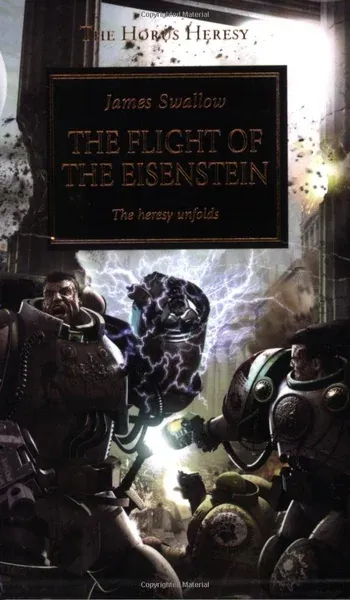
The Flight of the Eisenstein
The Flight of the Eisenstein by James Swallow Review: A Tense, Intimate Pivot in the Heresy
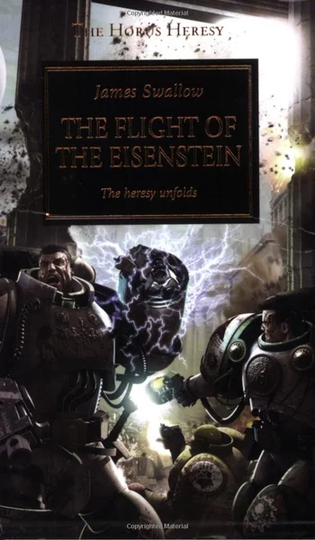
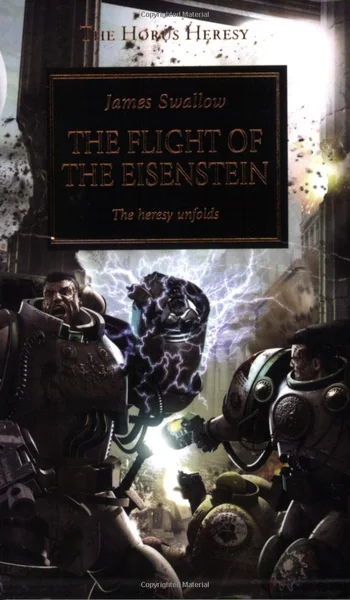
The Flight of the Eisenstein is the fourth novel in Black Library's 54-book Horus Heresy series, written by James Swallow and published in 2007. It follows Death Guard Battle-Captain Nathaniel Garro as he seizes the starship Eisenstein to warn the Emperor of Horus's treachery — only to be stranded in the warp with Chaos closing in. Its compact, character-driven focus sets it apart from the sweeping carnage of the books that precede it.
LuvemBooks Verdict
Best for
Horus Heresy series readers who want a tighter, more personal story after the sweeping Legion-scale events of the opening trilogy, and who are invested in the long-term continuity of Warhammer 40,000 lore.
Worth it if
Worth reading if you've worked through the first three Horus Heresy novels and want a claustrophobic, character-focused counterpoint to the epic battles of the opening trilogy, centred on a single loyalist's desperate race to save the Imperium.
Skip if
Skip it if you're new to the Horus Heresy and hoping for a satisfying standalone entry, or if you found Galaxy in Flames' propulsive action exactly what you came for and expect the same momentum to continue.
Where reviewers agree and split
Readers rate it 4.7 on Amazon. The reviews we read that discuss it in depth split on some points:
- Negative
Adventures with Peps · Book blog: the book feels like a dip in the series (from its headline)
- Mixed
Pins of War · Book blog: weak start with poor characters, though final chapters improve (from its headline)
What readers & critics say
Jacksbedtimereading.wordpress.com highlighted the novel's "closeness and intimacy" as a defining strength, singling out its tight focus as a deliberate and effective contrast to the broader Heresy. Adventureswithpeps.com called it "one of the most thrilling reads" in the series, though it also noted the book "can have the bad habit of feeling like a dip" for readers riding the wave of the preceding volume; pinsofwar.com took a harder line, judging most of the book as "padding" and finding the characterisation of Garro unconvincing, while conceding the final chapters deliver strong action.
Sources: jacksbedtimereading.wordpress.com, adventureswithpeps.com, pinsofwar.com, mattbyrumwriter.wordpress.com, swordsandspectres.wordpress.comThe Horus Heresy reading order
Book 4 of 64 books
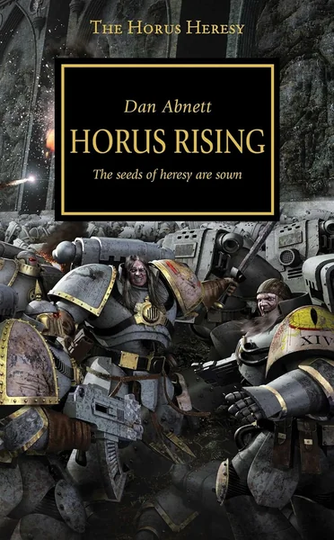
- Horus Rising2006
- False Gods2006
- Galaxy in Flames2006
- The Flight of the EisensteinThis book
- Fulgrim2007
- Descent of Angels2007
- Legion2008
- Battle for the Abyss2008
- Mechanicum2008
- Tales of Heresy2009
- Fallen Angels2009
- A Thousand Sons2010
- Nemesis2010
- The First Heretic2010
- Prospero Burns2010
- Age of Darkness2011
- The Outcast Dead2011
- Deliverance Lost2012
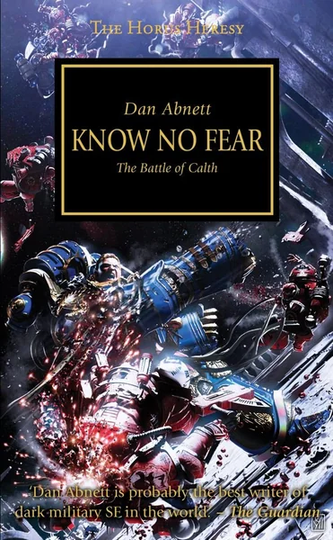
- Know No Fear2012
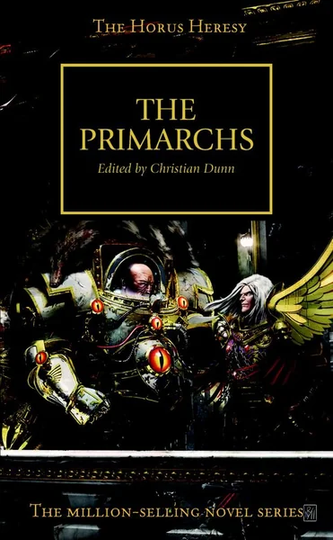
- The Primarchs2012
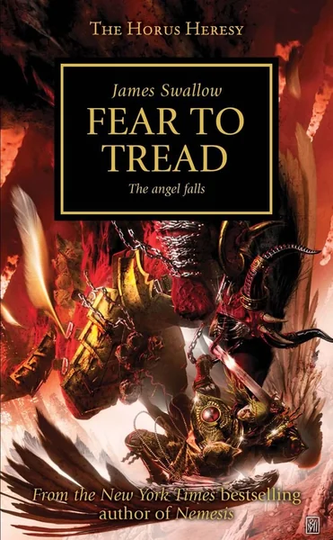
- Fear to Tread2012
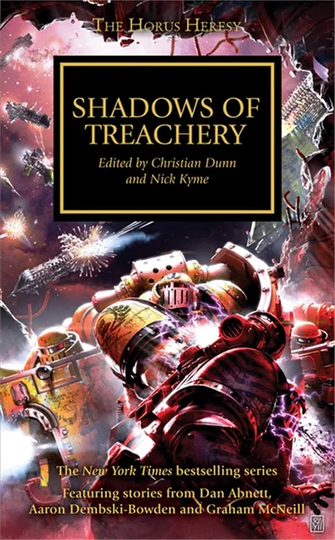
- Shadows of Treachery2012
- Angel Exterminatus2012
- Betrayer2012
- Mark of Calth2013
- Vulkan Lives2013
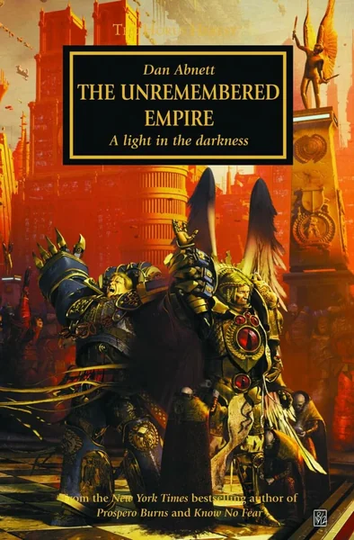
- The Unremembered Empire2013
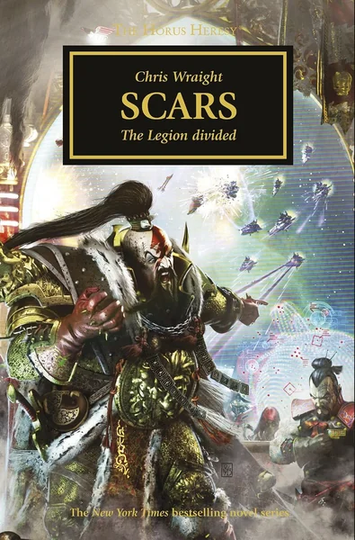
- Scars2014
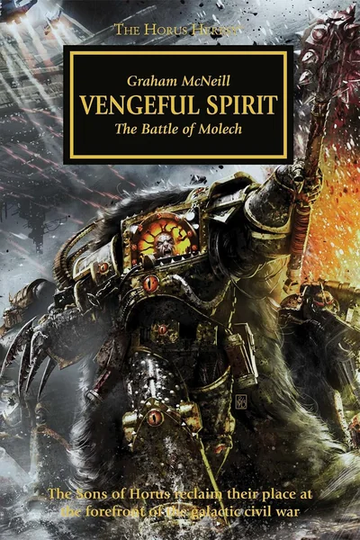
- Vengeful Spirit2014
- The Damnation of Pythos2014
- Legacies of Betrayal2015
- Deathfire2015
- War Without End2016 · on Amazon
- Pharos2015
- Eye of Terra2016 · on Amazon

- The Path of Heaven2016 · on Amazon

- The Silent War2016 · on Amazon

- Angels of Caliban2016 · on Amazon

- Praetorian of Dorn2016 · on Amazon

- Corax2016 · on Amazon

- The Master of Mankind2016 · on Amazon

- Garro2017 · on Amazon

- Shattered Legions2017 · on Amazon

- The Crimson King2017 · on Amazon

- Tallarn2017 · on Amazon

- Ruinstorm2017 · on Amazon

- Old Earth2017 · on Amazon

- The Burden of Loyalty2018 · on Amazon
- Wolfsbane2018 · on Amazon

- Born of Flame2018 · on Amazon

- Slaves to Darkness2018 · on Amazon

- Heralds of the Siege2018 · on Amazon

- Titandeath2018 · not reviewed
- The Buried Dagger2019 · on Amazon

- The Solar War2019 · on Amazon
- The Lost and the Damned2019 · on Amazon

- The First Wall2020 · on Amazon

- Saturnine2020 · on Amazon
- Mortis2021 · on Amazon

- Warhawk2021 · on Amazon

- Echoes of Eternity2022 · on Amazon
- The End and the Death, Volume I2023 · on Amazon

- The End and the Death, Volume II2023 · on Amazon

- The End and the Death, Volume III2024 · on Amazon

Ask LuvemBooks
Was this helpful?
- Is it worth reading?
- For readers already invested in the Horus Heresy series, The Flight of the Eisenstein is a structurally crucial and distinctly rewarding entry — it bridges the Isstvan massacre to its galaxy-wide consequences and introduces Nathaniel Garro as a compelling loyalist protagonist unlike anything the earlier, ensemble-driven volumes offered. Its intimacy of scale, praised by reviewers at jacksbedtimereading.wordpress.com for the 'closeness and intimacy of the story,' gives it a character-study quality that stands apart from the preceding carnage. The key caveat is pacing: the critic at eclectictheist.wordpress.com described it as 'a cool premise that gets dragged out a couple hundred pages too long,' and adventureswithpeps.com noted it 'can have the bad habit of feeling like a dip' after Galaxy in Flames. Readers who accept the deliberate tonal shift will find it essential; those chasing the momentum of the opening betrayal may find it frustrating.
- Similar books
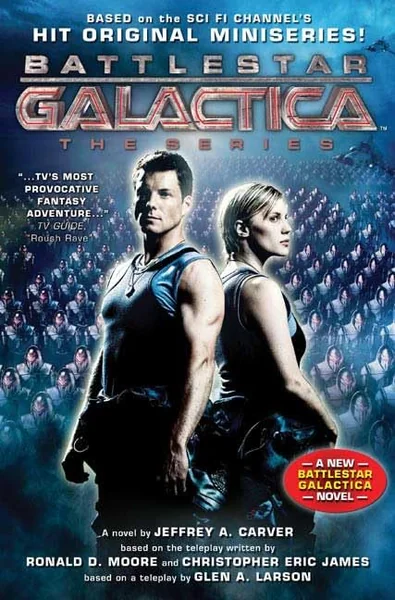
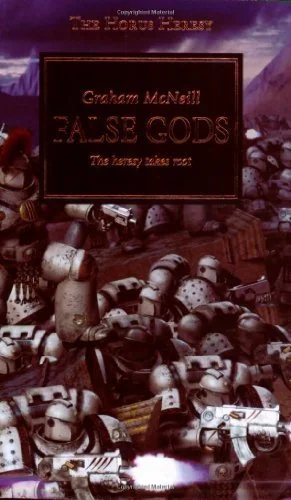
- Readers drawn to The Flight of the Eisenstein's blend of military science fiction and moral crisis will find several strong companions. False Gods by Graham McNeill is the second Horus Heresy novel and an immediate predecessor, deepening the corruption arc that makes Garro's mission so urgent — it is in catalogue and sits among the curated recommendations below. For military SF with a survival-at-all-costs intensity in space, The Lost Fleet: Dauntless by Jack Campbell and Battlestar Galactica by Jeffrey A. Carver — also featured below — offer comparable fleet-under-siege tension and lone-fleet-against-the-odds drama. Dan Abnett's First and Only, from the Gaunt's Ghosts line, shares the Warhammer 40,000 setting and similarly tight, character-anchored storytelling. Old Man's War by John Scalzi rounds out the recommendations for readers who want accessible, fast-paced military science fiction with a strong protagonist conscience at its centre.
- Who should read this?
- The Flight of the Eisenstein is designed primarily for readers already invested in the Horus Heresy series, particularly those who have read Horus Rising, False Gods, and Galaxy in Flames and want to follow the immediate consequences of the Isstvan betrayal. Warhammer 40,000 lore enthusiasts will find the Death Guard's pre-corruption portrayal and the early mechanics of Chaos corruption especially resonant. Beyond that dedicated audience, genre readers who prefer intimate, claustrophobic survival narratives over panoramic battle epics may appreciate its tonal contrast. The accessible, fast-moving prose also makes it viable for science fiction newcomers willing to begin the Horus Heresy series from its first volume.
- How important is this to the Horus Heresy series?
- The Flight of the Eisenstein occupies a pivotal narrative position as the fourth entry in the 54-book Horus Heresy saga. While the three preceding novels — Horus Rising, False Gods, and Galaxy in Flames — establish and then detonate the Heresy, this volume is the first to follow the immediate consequences radiating outward: specifically, whether knowledge of Horus's treachery can reach the Emperor in time. It also introduces Nathaniel Garro as a character who goes on to feature in further Horus Heresy works, making it a meaningful node in the broader continuity rather than a self-contained episode.
- What makes Garro a standout protagonist?
- Nathaniel Garro stands out in the Horus Heresy series because he provides something the earlier ensemble-driven volumes do not: a sustained, close focus on a single Astartes conscience navigating an impossible situation. As a Death Guard Battle-Captain sidelined from the Isstvan surface slaughter by injury, he witnesses the betrayal from a position of enforced distance, which frames his decision to commandeer the Eisenstein as an act of individual moral conviction rather than collective Legion loyalty. His portrayal as a loyalist stranded on the wrong side of history — one man acting unilaterally to warn the Emperor — gives the novel its distinctive character-study quality.
- Does the pacing hold up throughout?
- Pacing is the novel's most consistently flagged weakness. The critic at eclectictheist.wordpress.com described it as 'a cool premise that gets dragged out a couple hundred pages too long,' and adventureswithpeps.com noted it 'can have the bad habit of feeling like a dip' for readers arriving on the wave of Galaxy in Flames. The structural tension is real: a deliberately slower, more contained warp-survival scenario inserted into a series that had, up to that point, been escalating in scale and action. These are minority takes rather than a consensus verdict, and readers who embrace the tonal shift toward claustrophobic intimacy are less likely to feel the stretch.
Summarize this book
Follow up
Synthesized from verified book data & published reviews · How we review
What would you like to know about The Flight of the Eisenstein?
Answers come from our editorial notes on this book. If we haven't covered something, we'll say so.
Readers often ask
Our Review
What the Story Is and What Happens in It
Place in the Series and Its Structural Role
Tone and Narrative Focus
Where It Draws Criticism
Who the Book Is For
Sources & Further Reading
The key facts and claims in this review are grounded in the retrieved, verified sources listed below.
- Cited in this review
- 1
wh40k.lexicanum.com
- 2
- Further reading
- 3
jswallow.com
- 4
adventureswithpeps.com
- 5
- 6
jacksbedtimereading.wordpress.com
- 7
mattbyrumwriter.wordpress.com
- 8
swordsandspectres.wordpress.com
Age & Reading Level
Our age band
Adult
Our age band groups books for browsing; it isn't an age a review gave.
Tropes
From how readers describe it, not our own reading.
2 content notes · who it suits
Content to know about
Skip if you want a fast-paced, large-scale battle epic in the vein of Galaxy in Flames — this is a deliberately slow, claustrophobic survival story.
Reader reviews
No LuvemBooks readers have answered yet.
Read it? Was it right for you?
Books like The Flight of the Eisenstein
Curated picks for readers who enjoyed The Flight of the Eisenstein, with our reasoning for each match.

If you liked The Flight of the Eisenstein