False Gods (The Horus Heresy) (2006-06-15)
The second Horus Heresy novel follows the Warmaster Horus through the catastrophic betrayal and Chaos corruption that sets the entire galaxy-spanning conflict in motion.
Read our full reviewAt a glance
LuvemBooks Verdict
Best for: Readers already invested in the Horus Heresy series who have finished Horus Rising and want the pivotal, emotionally earned dramatisation of Warmaster Horus Lupercal's corruption and fall.
Worth it? Skip it? Read the full verdict →Ask LuvemBooks
Was this helpful?
- Is it worth reading?
- For readers already invested in the Horus Heresy through Horus Rising, False Gods is indispensable — it delivers the pivotal event the entire series exists to contextualise, and McNeill handles the weight of that responsibility with notable structural care. The tension between characters is described by fanfiaddict.com as ramping up in a "steady and plausible way," building to a conclusion likened to watching a train wreck in slow motion — devastating and impossible to look away from. McNeill's foreshadowing is credited as a particular strength, rewarding readers already versed in the broader Warhammer 40,000 lore with layers of meaning that deepen every ominous sign and whispered temptation. Readers without that prior investment, however, will find the emotional stakes significantly diminished.
- Similar books
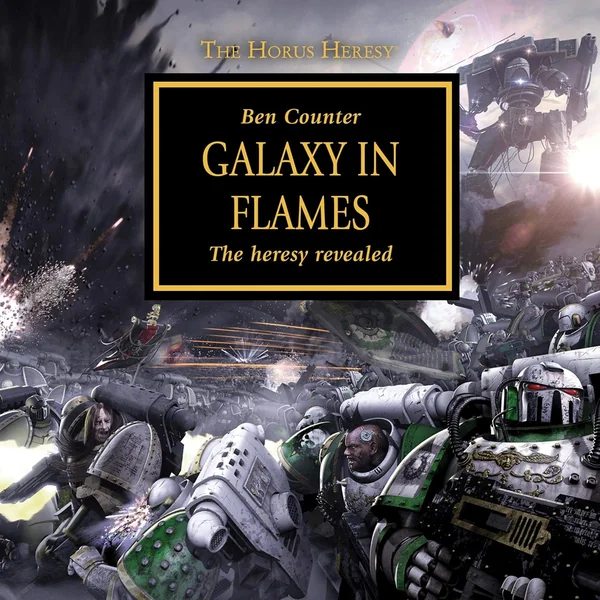
- Readers drawn to False Gods will find the most direct companion in Horus Rising by Dan Abnett — the first novel in the Horus Heresy series and the essential prerequisite for this volume, which introduces the 63rd Expeditionary Fleet and the characters whose fates McNeill puts in motion. The third entry, Galaxy in Flames by Ben Counter, continues the story set in motion here and is the natural next step after False Gods. For readers interested in the intersection of science, morality, and cosmically consequential choices explored through a science fiction lens, Dante's Equation by Jane Jensen offers a similarly ambitious scope. Prince of Thorns by Mark Lawrence shares the grimdark sensibility and morally complex central figure that defines False Gods.
- Who should read this?
- False Gods is written specifically for readers already committed to the Horus Heresy — it is the essential second chapter for anyone who finished Horus Rising and wants to see the catastrophe begin in earnest. Warhammer 40,000 fans with broader lore knowledge will find the foreshadowing and dramatic irony particularly rewarding, since every ominous sign carries the weight of ten thousand years of future consequence. Military science fiction readers who appreciate character-driven escalation alongside action sequences will find McNeill's steady, plausible ramping of tension genuinely effective. It is not the book for readers seeking a standalone entry point into either the Horus Heresy or the Warhammer 40,000 universe.
- About Graham McNeill
- Graham McNeill is a Scottish novelist and video game writer.
- What are the main themes?
- At its core, False Gods is a novel about the corruption of greatness — the mechanisms by which a figure of immense capability and loyalty can be turned against everything he once stood for. Manipulation, theological ambition, and the exploitation of vulnerability are central to Erebus's role as antagonist, while the novel explores how the brightest possibilities of the Imperium are systematically dismantled. Dramatic irony is woven into the fabric of the narrative: readers know Horus falls, so the theme becomes not surprise but inevitability — the painful weight of watching a catastrophe unfold across every ominous sign and whispered temptation, each carrying ten thousand years of future consequence.
- Where does this fit in the series?
- False Gods is the second novel in the Horus Heresy series, published by Black Library, and it occupies what the review describes as an "irreplaceable structural position" within the saga. It is the volume that dramatises Horus's corruption — the event the entire series, spanning dozens of volumes, exists to contextualise and explore. Where Horus Rising introduced a vision of the Imperium still bright with possibility, False Gods systematically dismantles that brightness, accelerating the Heresy storyline while maintaining the tone established by its predecessor. Everything that follows in the series traces back to what McNeill sets in motion on Davin.
Summarize this book
Follow up
Synthesized from verified book data & published reviews · How we review
Press Enter to ask. Answers come from our editorial Q&A — start typing to see related questions.
Age & Reading Level
Recommended age
Ages 16+
Reading level
Adult
3 content notes · who it suits
Content to know about
Best for: Adults / mature 16+ — demonic corruption, body horror, and occult ritual within a grimdark military science fiction setting.
Skip if you want a self-contained story with no prior series commitment required.
Editorial Review
The second entry in Black Library's landmark Horus Heresy series, False Gods by Graham McNeill is the novel that turns the tide — delivering the central corruption of Warmaster Horus Lupercal with escalating tension, body horror, and the tragic weight of a betrayal whose consequences echo across the entire Warhammer 40,000 universe.
Read the Full ReviewBooks like False Gods
Curated picks for readers who enjoyed False Gods, with our reasoning for each match.