8 min read
Share This Review
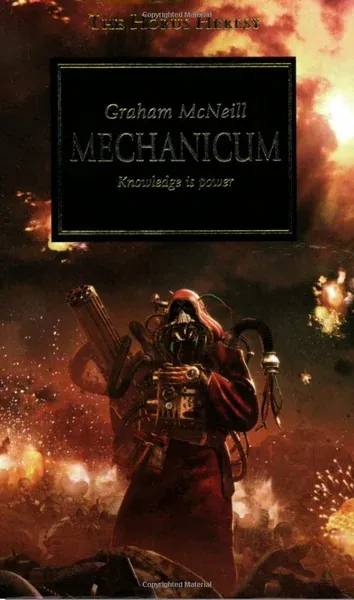
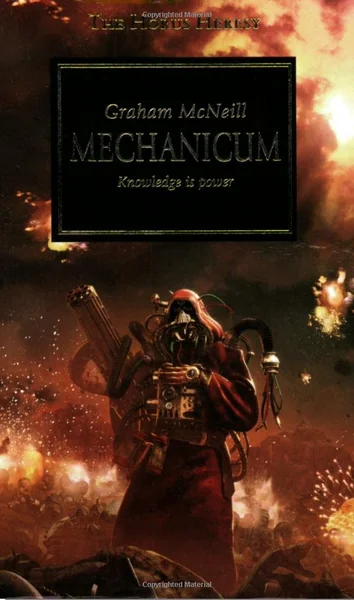
Mechanicum by Graham McNeil
Mechanicum by Graham McNeill Review: A Shakespearean Tragedy on the Red Planet
Mechanicum is the ninth book in Graham McNeill's Horus Heresy series, a New York Times bestselling franchise, tracing how Horus's betrayal tears the Mechanicum priesthood apart in a brutal civil war on Mars. It earns attention for shifting the Heresy's lens away from Space Marines and onto the forge-cities and ancient secrets of the Red Planet.
LuvemBooks Verdict
Best for
Readers already invested in the Horus Heresy series who want to see the galaxy-spanning conflict through the lens of institutional collapse — particularly those with an appetite for Adeptus Mechanicus lore, Titan Legion warfare, and the mythological origins of the Dark Mechanicum.
Worth it if
Worth reading if you are following the Horus Heresy series and want to understand how an entire branch of the Imperium's technical priesthood fractures from within, or if stories of ideological and institutional collapse interest you more than straightforward Space Marine action.
Skip if
Skip it if you are new to Warhammer 40,000 or the Horus Heresy, or if you are primarily invested in the primarchs and Space Marine storylines — the dense Martian theology and forge-city politics will feel like a steep, under-signposted detour.
Where reviewers agree and split
Readers rate it 4.4 on Amazon. The reviews we read that discuss it in depth agree:
- Positive
The Dark Fortress · Book blog: praised the Emperor's insight and foresight displayed in the novel (from its headline)
- Positive
Track Of Words · Book blog: highlighted the novel's unique qualities and firsts within the series (from its headline)
- Positive
Seattle Pi · Book blog: praised it as a wonderful continuation that restored quality to the series (from its headline)
- Positive
The Driftless Area Review · Book blog: celebrated the great battle scenes and wonderful continuation of the series (from its headline)
What readers & critics say
Civilianreader.com called it "a must read for any fan of the Horus Heresy series," praising its grounding in human stories amid the civil war on Mars. Track of Words highlighted it as a book of firsts — the first proper look at Mars and the Mechanicum in the Heresy series, the first depiction of Imperial Knights in Black Library fiction, and the first female-led Heresy novel — noting its strong sense of divided loyalty, while Driftless Area Review described it as "a wonderful continuation of the Horus Heresy, bringing a mix of space battles, ideological debates, and gothic imagery."
Sources: civilianreader.com, trackofwords.com, driftlessareareview.comThe Horus Heresy reading order
Book 9 of 64 books
- Horus Rising2006
- False Gods2006
- Galaxy in Flames2006
- The Flight of the Eisenstein2007
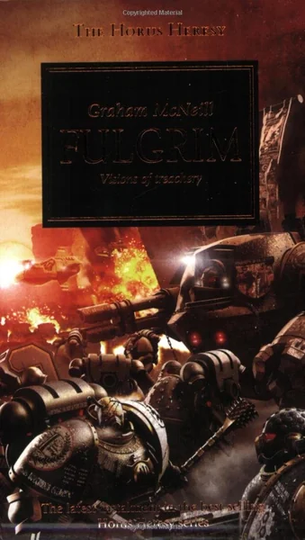
- Fulgrim2007
- Descent of Angels2007
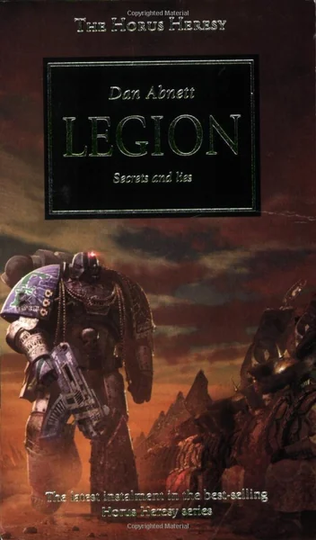
- Legion2008
- Battle for the Abyss2008
- MechanicumThis book
- Tales of Heresy2009
- Fallen Angels2009
- A Thousand Sons2010
- Nemesis2010
- The First Heretic2010
- Prospero Burns2010
- Age of Darkness2011
- The Outcast Dead2011
- Deliverance Lost2012
- Know No Fear2012
- The Primarchs2012
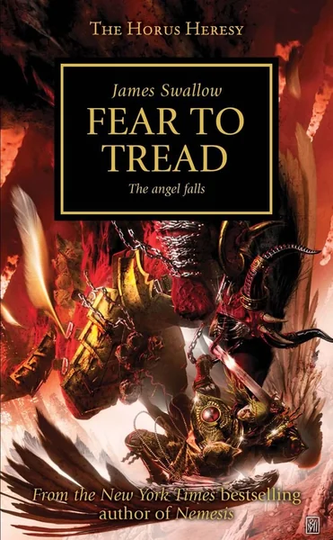
- Fear to Tread2012
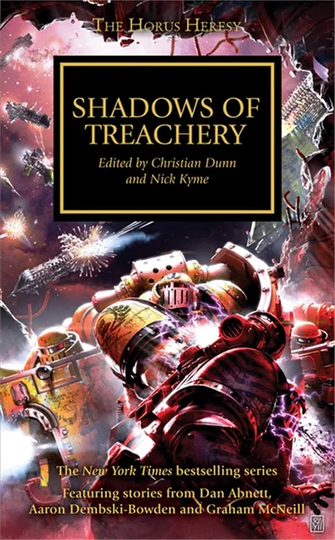
- Shadows of Treachery2012
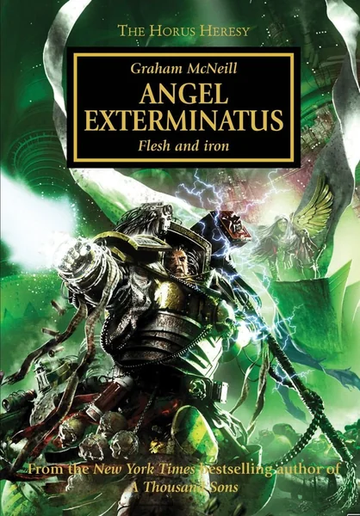
- Angel Exterminatus2012
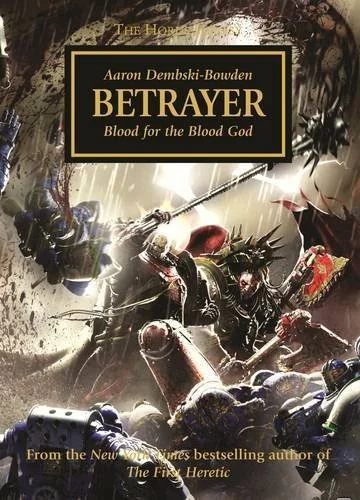
- Betrayer2012
- Mark of Calth2013
- Vulkan Lives2013
- The Unremembered Empire2013
- Scars2014
- Vengeful Spirit2014
- The Damnation of Pythos2014
- Legacies of Betrayal2015
- Deathfire2015
- War Without End2016 · on Amazon
- Pharos2015
- Eye of Terra2016 · on Amazon

- The Path of Heaven2016
- The Silent War2016 · on Amazon

- Angels of Caliban2016
- Praetorian of Dorn2016 · on Amazon

- Corax2016
- The Master of Mankind2016
- Garro2017 · on Amazon

- Shattered Legions2017 · on Amazon

- The Crimson King2017
- Tallarn2017
- Ruinstorm2017
- Old Earth2017 · on Amazon

- The Burden of Loyalty2018 · on Amazon
- Wolfsbane2018 · on Amazon

- Born of Flame2018 · on Amazon

- Slaves to Darkness2018 · on Amazon

- Heralds of the Siege2018 · on Amazon

- Titandeath2018 · not reviewed
- The Buried Dagger2019 · on Amazon

- The Solar War2019 · on Amazon
- The Lost and the Damned2019 · on Amazon

- The First Wall2020 · on Amazon

- Saturnine2020 · on Amazon
- Mortis2021 · on Amazon

- Warhawk2021 · on Amazon

- Echoes of Eternity2022 · on Amazon
- The End and the Death, Volume I2023 · on Amazon

- The End and the Death, Volume II2023 · on Amazon

- The End and the Death, Volume III2024 · on Amazon

Ask LuvemBooks
Was this helpful?
- Is it worth reading?
- For readers already engaged with the Horus Heresy series, Mechanicum is a compelling and distinctive entry — Civilianreader.com called it 'a must read for any fan of the Horus Heresy series.' It fills a narrative gap no other entry addresses directly, depicting the Martian civil war and the origins of the Dark Mechanicum through a lens of Shakespearean institutional tragedy. The mythological revelation about the Dragon and the Emperor's long-term design adds genuine depth to the wider lore. However, those new to Warhammer 40,000 or the Heresy will face a steep learning curve, and readers invested primarily in primarchs and Space Marine storylines may find Mars a lateral detour.
- Similar books
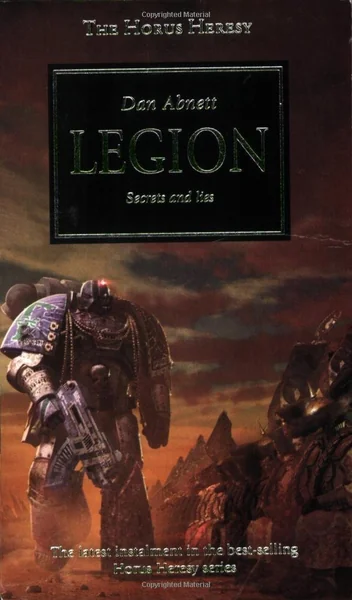
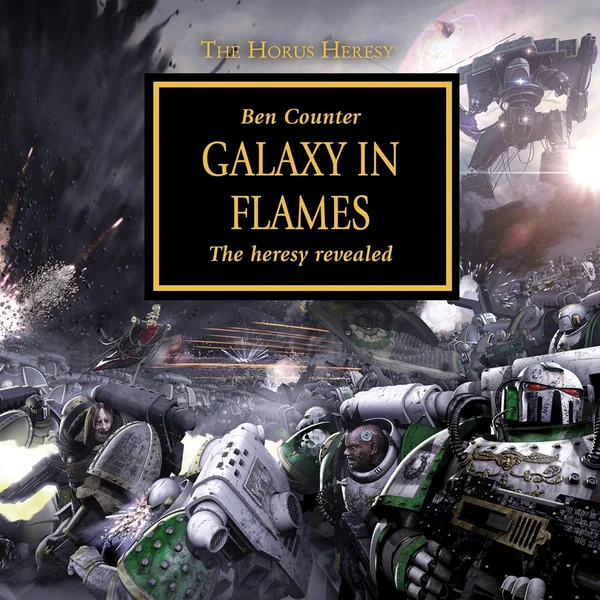
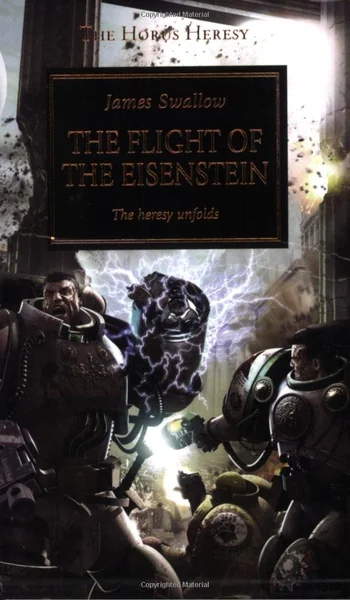
- Readers who enjoy Mechanicum will find much to explore in the surrounding Horus Heresy series. Graham McNeill's own False Gods and Fulgrim offer the same author's voice applied to other pivotal moments in the Heresy, while Dan Abnett's Legion similarly widens the Heresy's lens beyond straightforward Space Marine combat to examine loyalty and institutional allegiance. Galaxy in Flames by Ben Counter and The Flight of the Eisenstein by James Swallow are also essential entries that chart the Heresy's early escalation and the loyalist response to Horus's betrayal.
- Who should read this?
- Mechanicum is designed for readers already engaged with the Horus Heresy series who want a broader view of the galaxy-spanning conflict beyond its Space Marine fronts. It rewards those with an existing interest in the Adeptus Mechanicus, the Titan Legions, and the forge-world mythology of Warhammer 40,000. It also suits readers drawn to stories where institutions and ideologies collapse from within — the novel is structured less as a battlefield narrative and more as a tragedy of ambition, faith, and manipulation playing out across an entire planet.
- About Graham Mcneill
- Graham McNeill is a Scottish novelist and video game writer.
- Where does this fit in the series?
- Mechanicum is the ninth book in the Horus Heresy series, published by Black Library. While most entries in the series follow Space Marines or Imperial commanders through the escalating conflict, Mechanicum deliberately shifts the lens to Mars, establishing the conditions — the rise of the Dark Mechanicum, the fall of the Red Planet — whose consequences echo across the setting's wider lore. It functions as a critical expansion of the Heresy's scope rather than a direct continuation of any single character's arc.
- What makes it a tragedy?
- One source described Mechanicum as 'a great tragedy in the best Shakespearean mould played out over some 400 pages,' and McNeill structures the Martian civil war not as simple villainy but as institutional collapse driven by ambition, faith, and manipulation. Fabricator General Kelbor Hal's turn toward Horus tears an entire priesthood apart, and the mythological revelation about the Dragon deepens the tragedy further — the Emperor's centuries-long strategy to seed the Mechanicum casts his long-term design in an unsettling light. Dalia Cythera's outsider perspective anchors these grand-scale events in human stakes, making the collapse feel personal as well as cosmic.
- How does this compare to McNeill's other Heresy books?
- Among Graham McNeill's Horus Heresy contributions reviewed by LuvemBooks, Mechanicum is the most distinctive in setting and scope. Where False Gods focuses on Horus himself and the corruption at the Heresy's heart, and Fulgrim traces a primarch's fall into excess, Mechanicum shifts entirely away from Space Marines and primarchs to depict the Heresy fracturing an institution — the Mechanicum priesthood — rather than an individual or legion. This makes it a lateral expansion of McNeill's Heresy work rather than a direct continuation, offering the broadest view of the galaxy-spanning conflict's collateral destruction.
Summarize this book
Follow up
Synthesized from verified book data & published reviews · How we review
What would you like to know about Mechanicum by Graham McNeil?
Answers come from our editorial notes on this book. If we haven't covered something, we'll say so.
Readers often ask
Our Review
We review the evidence: reader verdicts, gathered and weighed with AI assistance and edited by LuvemBooks, rather than one reader's first-hand take.
What the Book Is and What Happens
Significance Within the Horus Heresy
Strengths: Tragedy, Mythology, and the Emperor's Long Game
Limitations: Accessibility and Series Dependency
Who This Book Is For
Sources & Further Reading
The key facts and claims in this review are grounded in the retrieved, verified sources listed below.
- Cited in this review
- 1
trackofwords.com
- Further reading
- 2
Graham McNeill, LuvemBooks
- 3
- 4
wh40k.lexicanum.com
- 5
thedarkfortress.co.uk
- 6
- 7
driftlessareareview.com
- 8
simonandschuster.com
Age & Reading Level
Our age band
Adult
Our age band groups books for browsing; it isn't an age a review gave.
2 content notes · who it suits
Content to know about
Best for: Adults — dense lore, political complexity, and Titan-scale warfare suit experienced readers of science fiction and the wider Warhammer 40,000 setting
Skip if you are new to Warhammer 40,000 or the Horus Heresy and want a self-contained, accessible entry point
Reader reviews
No LuvemBooks readers have answered yet.
Read it? Was it right for you?
Books like Mechanicum by Graham McNeil
Curated picks for readers who enjoyed Mechanicum by Graham McNeil, with our reasoning for each match.
More by Graham McNeill

If you liked Mechanicum by Graham McNeil