At a glance

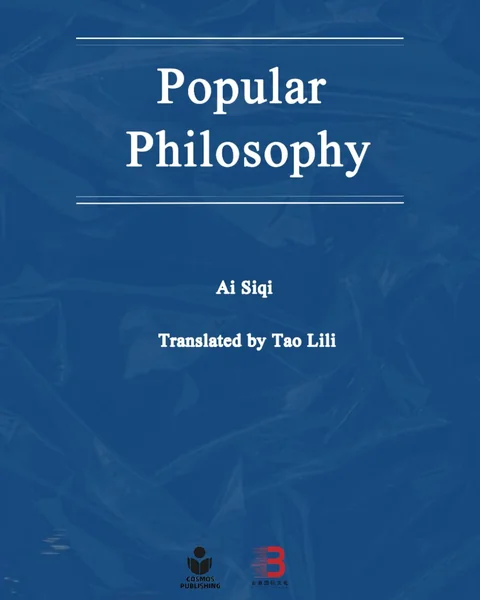
Popular Philosophy
by Siqi Ai
LuvemBooks Verdict
Best for: Students and scholars of modern Chinese history, Marxist philosophy, or the history of political thought who want access to a primary text long central to Chinese intellectual life, now available in full English translation for the first time.
Worth it? Skip it? Read the full verdict →Ask LuvemBooks
Was this helpful?
- Is it worth reading?
- For readers with a genuine interest in modern Chinese intellectual history, Marxist philosophy, or the history of political thought, Popular Philosophy is a uniquely valuable primary document — its importance in twentieth-century Chinese thought is well documented, and Ai Siqi's influence on Chinese Marxism is studied at major academic institutions. The book's deliberate accessibility, combining plain language with vivid illustration, means it remains navigable for readers without a specialist philosophical background. However, those seeking a neutral or comparative introduction to philosophy will be disappointed: the text argues explicitly and exclusively for Marxist dialectical materialism, and at 517 pages it is a substantive undertaking rather than a quick primer.
- Similar books
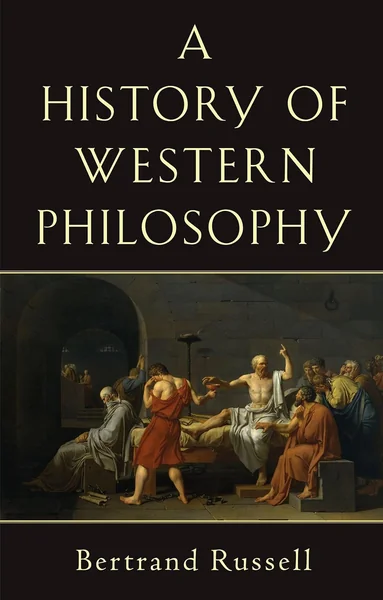
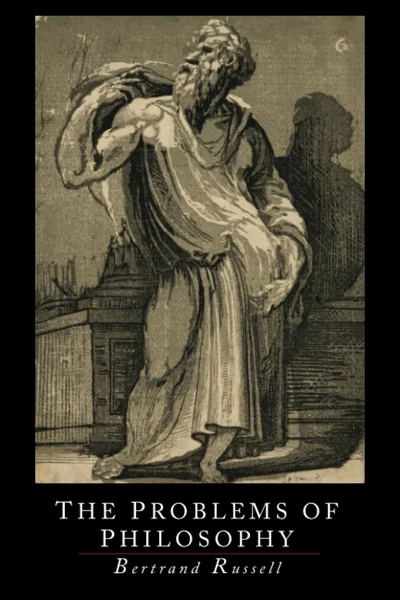
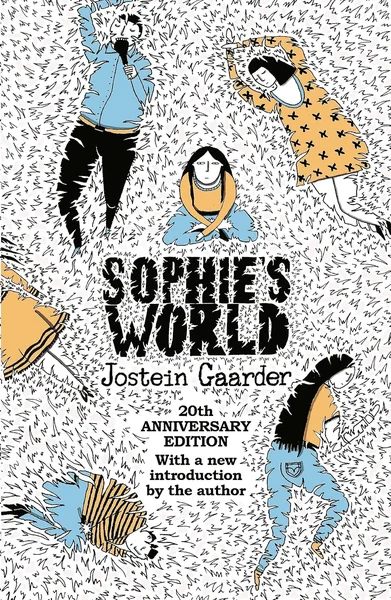
- Readers drawn to Popular Philosophy as an accessible entry point into philosophical thought — but seeking broader or more neutral coverage — will find several strong alternatives among the curated picks below. Philosophy 101: From Plato by Paul Kleinman and Simon Blackburn's Think: A Compelling Introduction to Philosophy both offer structured introductions designed for general readers. For a sweeping historical narrative of ideas, Will Durant's The Story of Philosophy and Bertrand Russell's The History of Western Philosophy are essential companions, while Jostein Gaarder's Sophie's World presents the history of philosophy through an engaging narrative lens. Russell's The Problems of Philosophy rounds out the list for those wanting a focused analytical entry point.
- Who should read this?
- Popular Philosophy is most clearly suited to students and scholars of modern Chinese history, Marxist philosophy, and the history of political thought. It also holds value for general readers with a specific interest in how Marxist ideas were shaped, argued for, and transmitted within a distinctly Chinese context in the 1930s. Readers approaching Marxist philosophy through its twentieth-century Chinese expression — rather than through its European origins — will find this an indispensable primary document. It is less well matched to readers looking for a neutral, comparative introduction to philosophy or a short primer.
- About Siqi Ai
- Ai Siqi was the pen name of Li Shengxuan, a Chinese Marxist philosopher and author of Persian descent. Popular Philosophy stands as his most widely known contribution to Chinese intellectual history.
- What's the historical background?
- Popular Philosophy was published in China in the 1930s during a period of intense political and ideological contest. Ai Siqi wrote the book after being introduced to the Chinese Social Scientists Association and taking up work on the magazine Reading Life and the Shenbao library — experiences that gave him both the intellectual network and the popular platform needed to reach a mass readership. The text engaged directly with rival philosophical positions of the era, including what Ai Siqi characterised as the idealism underlying Chen Lifu's Vitalism and Chiang Kai-shek's Philosophy of Practice with Earnestness, arguing instead for Marxist dialectical materialism as the philosophical foundation of China's revolutionary labour movement. A collected edition was later published by People's Publishing House in Beijing in 1981.
- Is this philosophy or propaganda?
- This is a question the book's structure itself raises directly. Popular Philosophy is a work of philosophy in the sense that it rigorously explicates materialism, epistemology, and dialectics using reasoned argument and illustration — but it is also, unambiguously, an ideological text: it argues for the superiority of Marxist dialectical materialism over competing worldviews and frames its analysis within the context of Chinese Communist Party thought. Readers should approach it as a primary document of political philosophy with explicit commitments, not as a neutral academic survey. That transparency about its position is, in many ways, a strength for readers who want to understand how Marxist ideas were argued for in 1930s China.
Summarize this book
Follow up
Synthesized from verified book data & published reviews · How we review
Press Enter to ask. Answers come from our editorial Q&A — start typing to see related questions.
Age & Reading Level
Recommended age
Adult
Reading level
Adult
1 content note · who it suits
Content to know about
Skip if you're looking for a neutral or comparative introduction to philosophy rather than a primary text of Marxist thought.
Editorial Review
Ai Siqi's Popular Philosophy is a foundational text of Chinese Marxist thought, originally written in the 1930s and now made available to English-language readers in a translation by Lili Tao, published by Cosmos Publishing Group INC. Structured across five chapters covering materialism, epistemology, and dialectics, the book was designed to bring Marxist philosophy within reach of ordinary readers using plain, vivid language — a mission that earned it an enduring place in twentieth-century Chinese intellectual history.
Read the Full ReviewBooks like Popular Philosophy
Curated picks for readers who enjoyed Popular Philosophy, with our reasoning for each match.
If you liked Popular Philosophy