
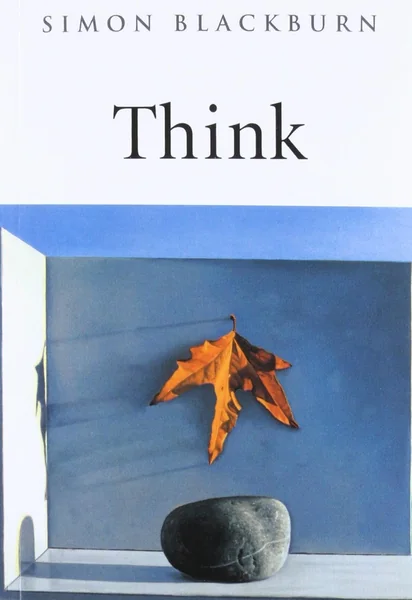
Think: A Compelling Introduction to Philosophy
A survey of philosophy's central questions — knowledge, mind, free will, the self, God, ethics, and politics — written for general readers by philosopher Simon Blackburn.
Read our full reviewAt a glance

LuvemBooks Verdict
Best for: Curious general readers with no prior philosophy training who want a substantive, historically grounded entry point into Western philosophy's major questions — from epistemology and free will to ethics and the existence of God.
Worth it? Skip it? Read the full verdict →Ask LuvemBooks
Was this helpful?
- Is it worth reading?
- For a general reader seeking a substantive — rather than superficial — first encounter with Western philosophy, Think has proven itself one of the more enduring works in a crowded category. The convergence of praise from the Sunday Times, The Irish Times (where John Banville called it 'a wonderfully stimulating, incisive and — the word is not too strong — thrilling introduction'), and the Denver Post points to a text that consistently delivers on its promise of rigor without inaccessibility. The important caveat comes from philosopher Mark Sainsbury, who in the journal Mind raised a specific criticism of the epistemology chapter — the book's opening and one of its most foundational sections. Readers with a particular interest in the theory of knowledge should treat that chapter with extra scrutiny.
- Similar books
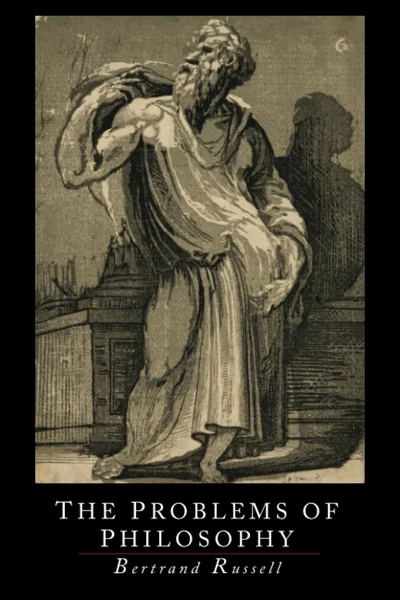
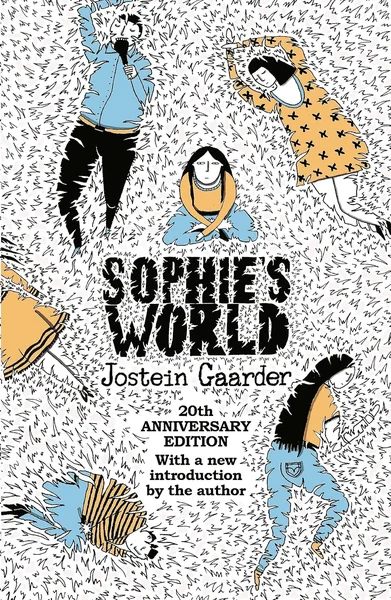
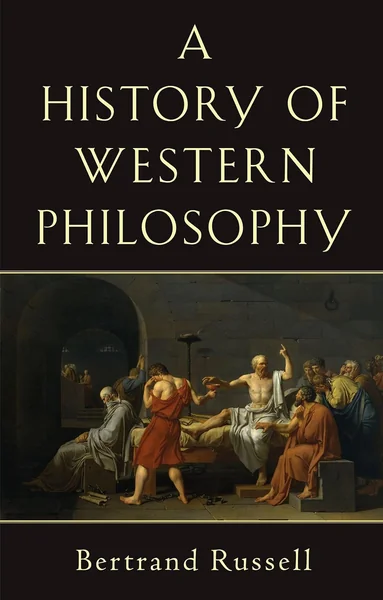
- Readers who enjoy Think are well served by several classics in accessible philosophy writing. Bertrand Russell's The History of Western Philosophy covers overlapping terrain on a grander historical scale, while his earlier The Problems of Philosophy is an even more compact entry point. J. Gaarder's Sophie's World wraps a survey of Western philosophical thought in a novel format, making it a popular choice for readers who prefer narrative framing. Alain De Botton's The Consolations of Philosophy offers a more personal, essayistic take on how philosophical ideas apply to everyday life. For a format closer to a study guide, Paul Kleinman's Philosophy 101 provides a quick-reference overview of key concepts and thinkers. Will Durant's The Story of Philosophy is another widely read narrative survey worth considering alongside Think.
- Who should read this?
- Think is designed for the general reader who wants a substantive encounter with Western philosophy without any expectation of prior formal study. Readers who enjoy intellectual history — or who want a clear framework for thinking about consciousness, free will, the existence of God, and ethical reasoning — will find the chapter structure, built around named thinkers and named questions, both accessible and rigorous. Those already versed in philosophy, or academic readers expecting a contribution to ongoing debate, will find it covers familiar ground. The book is also well suited to readers who want to understand the thinkers — Descartes, Hume, Kant, Wittgenstein — who appear constantly in cultural and intellectual conversation.
- What's the reading level?
- Think is written for a general adult audience with no assumed background in philosophy. Blackburn, a Cambridge professor, writes with scholarly precision but consistently illustrates abstract ideas through example and analogy — a quality the Denver Post's Allison McCulloch specifically praised — keeping the prose accessible without becoming superficial. Readers comfortable with serious non-fiction will find the level appropriate; it is not a light skim, but neither does it require specialist preparation.
- How was it received by academics?
- Reception among scholars was generally positive but not uncritical. The philosopher Anthony Quinton, writing in the second edition of The Oxford Companion to Philosophy, situated Think within a meaningful shift he identified in 'the field of popularization by professionals,' framing the book as part of a broader development in serious scholars writing accessibly for general audiences. The most pointed academic criticism came from philosopher Mark Sainsbury, reviewing in the peer-reviewed journal Mind, who praised the book's writing overall but raised a specific objection to Blackburn's treatment of knowledge — a notable gap given that epistemology opens the book. The commercial success, with Oxford University Press commissioning a follow-up (Being Good), suggests the book's reception went well beyond academic circles.
- Where should I start with Simon Blackburn?
- Think is widely considered Blackburn's most accessible starting point and the natural entry for readers new to his work or to philosophy in general. For readers who finish Think and want to continue with Blackburn, Being Good: A Short Introduction to Ethics is the most direct next step — it was commissioned by Oxford University Press specifically as a follow-up, applying a similar introductory approach to the philosophy of ethics. Both books share the same structured, thinker-anchored approach that characterizes Think.
Summarize this book
Follow up
Synthesized from verified book data & published reviews · How we review
Press Enter to ask. Answers come from our editorial Q&A — start typing to see related questions.
Age & Reading Level
Recommended age
Adult
Reading level
Adult
who it suits
Skip if you're already grounded in philosophy and want something beyond an introductory survey.
Editorial Review
First published by Oxford University Press in 1999 and issued in paperback in 2001, Simon Blackburn's Think: A Compelling Introduction to Philosophy remains one of the most widely read entry points into Western philosophical thought, structured around the canonical fields of the discipline and animated by the great thinkers who shaped them — though specialist readers may find its treatment of epistemology uneven.
Read the Full ReviewBooks like Think
Curated picks for readers who enjoyed Think, with our reasoning for each match.
If you liked Think
Why It’s Trending
Philosophy Books Are Having a Moment as Mind-Bending Films Dominate Netflix
With philosophical and thought-provoking films dominating Netflix right now, a lot of viewers are finding themselves wanting to go deeper. Simon Blackburn's Think is one of the books they're turning to — it's accessible, covers the big questions, and doesn't require a philosophy degree to follow.