At a glance
LuvemBooks Verdict
Best for: Intellectually curious adults — self-directed learners, students about to take their first philosophy course, or general readers who've encountered terms like "utilitarianism" or "Cartesian dualism" in podcasts or journalism and want a reliable, structured orientation without enrolling in a university course.
Worth it? Skip it? Read the full verdict →Ask LuvemBooks
Was this helpful?
- Is it worth reading?
- For readers who are new to philosophy and want a reliable, wide-ranging orientation to Western thought, Philosophy 101 delivers genuine value — it consolidates an enormous timeline from ancient Athens to Enlightenment Europe into a single manageable volume and gives practical relevance to its subject by covering concepts like the Trolley Problem and the Prisoner's Dilemma that surface constantly in ethics, economics, and popular culture. The entry-by-entry format, paired with an index, also makes it a useful ongoing reference rather than a one-time read. However, readers with prior philosophy coursework or those hoping for close analysis of primary texts — such as the internal tensions within Kant's critical philosophy or Hegel's dialectic — will find the coverage too compressed to offer much new insight; the book is explicitly a starting point, not a destination.
- Similar books
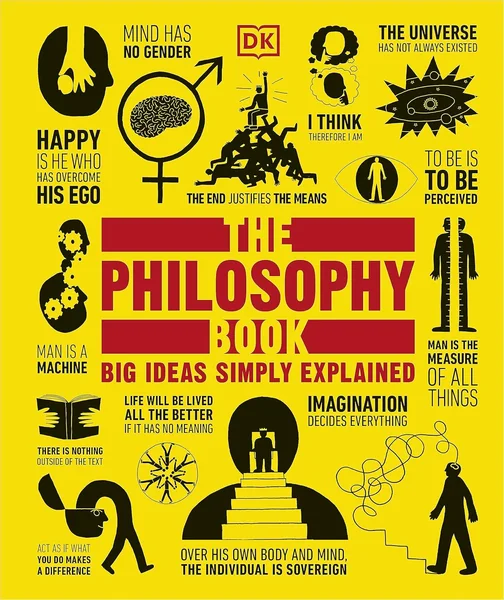
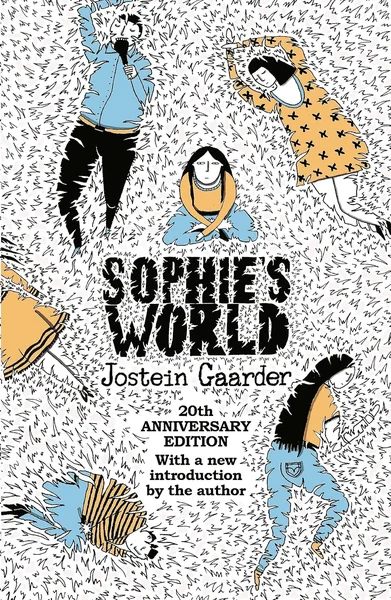
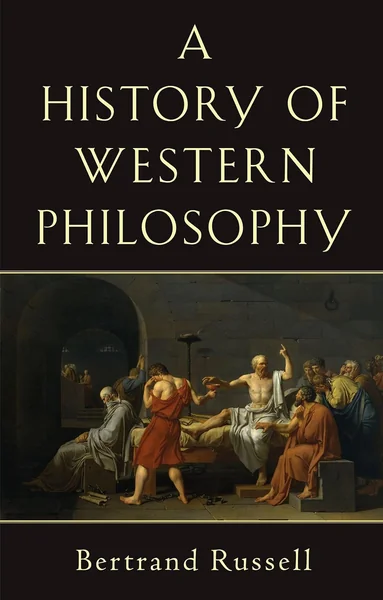
- Readers who enjoy Philosophy 101 as an accessible survey of Western thought have several strong next steps. DK The Philosophy Book: Big Ideas Simply Explained (D.K. Publishing) offers a visually rich entry-level overview in a similar spirit. Bertrand Russell's The History of Western Philosophy provides a more analytically robust chronological survey for those ready to go deeper. Simon Blackburn's Think: A Compelling Introduction to Philosophy is another respected gateway text that balances accessibility with rigour. For a narrative approach, J. Gaarder's Sophie's World weaves the history of Western philosophy into a novel, making it a particularly engaging alternative for readers who prefer story-driven learning. And for those ready to engage with primary source material, Plato's The Republic is a natural companion to any introductory philosophy text.
- Who should read this?
- Philosophy 101 is built for the intellectually curious adult who wants to understand references to the Socratic method, utilitarianism, or Cartesian dualism without enrolling in a university course. It also suits self-directed learners, students preparing for their first philosophy class who want a preview of the terrain, and general readers who have encountered philosophical concepts through journalism, podcasts, or popular culture and want a reliable orientation. Readers with prior philosophy coursework, or those seeking scholarly engagement with primary texts or the internal tensions within Kant's or Hegel's thought, are not the target audience — the book is designed as a starting point, not a destination.
- About Paul Kleinman
- Paul Kleinman was born in New York City, New York, and grew up in White Plains, New York. He graduated from the University of Wisconsin in 2009 with degrees in Art and Communication Arts: Radio, Television and Film. He is the author of works including Philosophy 101: From Plato and Socrates to Ethics and Metaphysics, an Essential Primer on the History of Thought.
- How does this compare to Kleinman's Psych 101?
- Both Philosophy 101 and Psych 101: Psychology Facts, Basics, Statistics, Tests follow the same Adams 101 series formula — compact, entry-by-entry reference guides designed to make a complex intellectual discipline accessible to general audiences rather than academic specialists. Philosophy 101 focuses on the history of Western thought, pairing thinker profiles with standalone concept and thought experiment entries, while Psych 101 applies the same accessible approach to the field of psychology. Readers who appreciate the format and scope of one are likely to find the other a natural companion.
- What are the main themes?
- Philosophy 101 is organized around two interlocking tracks: the chronological history of Western philosophy and the enduring conceptual puzzles that have shaped the discipline. On the historical side, it traces the lineage from Pre-Socratic thought through Socrates, Plato, Aristotle, Aquinas, Bacon, Locke, Hume, Rousseau, Kant, Hegel, Voltaire, and beyond. On the conceptual side, it gives dedicated treatment to schools of thought — Hedonism, Hard Determinism, Dualism, Utilitarianism, Empiricism versus Rationalism, Realism, and Existentialism — and to famous thought experiments including the Ship of Theseus, the Cow in the Field, the Prisoner's Dilemma, and the Trolley Problem. The underlying concern throughout is why these ideas and puzzles have endured across centuries and why they remain relevant beyond the academy.
Summarize this book
Follow up
Synthesized from verified book data & published reviews · How we review
Press Enter to ask. Answers come from our editorial Q&A — start typing to see related questions.
Age & Reading Level
Recommended age
Adult
Reading level
Adult
who it suits
Skip if you're looking for deep scholarly engagement with primary philosophical texts or close analysis of individual thinkers rather than a broad introductory survey.
Editorial Review
Paul Kleinman's Philosophy 101: From Plato and Socrates to Ethics and Metaphysics, an Essential Primer on the History of Thought, published by Adams Media in October 2013, is a wide-ranging introductory reference that walks general readers through the major figures, schools, and thought experiments of Western philosophy — from the Pre-Socratics through thinkers such as Kant, Hegel, and Voltaire — in a compact, entry-by-entry format designed for curious newcomers rather than academic specialists.
Read the Full ReviewBooks like Philosophy 101
Curated picks for readers who enjoyed Philosophy 101, with our reasoning for each match.
If you liked Philosophy 101