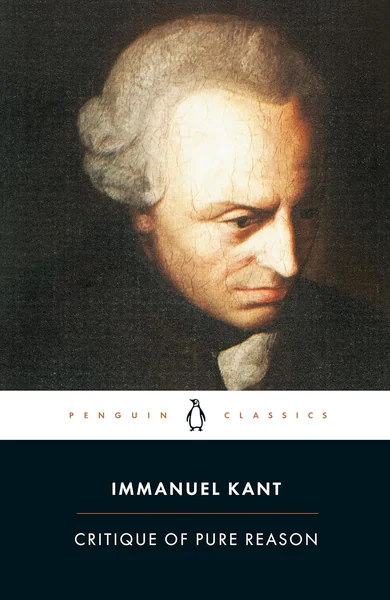
At a glance
Critique of Pure Reason by
LuvemBooks Verdict
Best for: Philosophy students, intellectual historians, and serious general readers who want to engage directly with the foundational text of modern epistemology and understand the roots of the Western philosophical tradition.
Worth it? Skip it? Read the full verdict →Ask LuvemBooks
Was this helpful?
- Is it worth reading?
- For anyone serious about Western philosophy, intellectual history, epistemology, or metaphysics, the Critique of Pure Reason is irreplaceable. LuvemBooks' assessment is that it is 'indispensable for students of philosophy, intellectual historians, and anyone seeking to understand the roots of modern epistemology and metaphysics.' Its historical influence is enormous: though it received little attention upon first publication, it subsequently became a sustained source of philosophical controversy and shaped German Idealism and philosophy of mind. That said, the payoff demands real investment — Kant's prose is notoriously dense even in translation, and the work runs to nearly 800 pages of layered argumentation.
- Similar books
- Readers drawn to the Critique of Pure Reason will find rich companion reading among the titles curated below. Bertrand Russell's The History of Western Philosophy provides a panoramic account of the tradition Kant was intervening in, including empiricism and rationalism, and is far more accessible as a starting point. Russell's shorter The Problems of Philosophy addresses epistemological questions in a concise, reader-friendly form. Plato's The Republic is another foundational text in the Western canon that grapples with knowledge, reality, and the limits of human understanding. Friedrich Nietzsche's Beyond Good and Evil is a key work in the post-Kantian tradition that engages and challenges many of Kant's assumptions. For a more accessible introduction to philosophy before tackling Kant, Simon Blackburn's Think: A Compelling Introduction to Philosophy is an ideal primer.
- Who should read this?
- The Critique of Pure Reason is essential reading for students of philosophy, intellectual historians, and anyone seeking to understand the foundations of modern epistemology and metaphysics. It is also a key text for those studying German Idealism, philosophy of mind, or the history of Western thought more broadly. LuvemBooks is clear that it is best approached 'with supplementary guidance or alongside a course of study' — readers without prior exposure to Hume, Locke, Descartes, Leibniz, or the problems of early modern philosophy may find the technical vocabulary and argumentative architecture a steep barrier.
- About Immanuel Kant
- The Critique of Pure Reason is a book by the German philosopher Immanuel Kant, in which the author seeks to determine the limits and scope of metaphysics.
- What are the main themes?
- The central themes of the Critique of Pure Reason include the limits of human reason, the possibility of metaphysics, and the nature of knowledge — specifically, how synthetic a priori judgments (knowledge that is both informative and independent of experience) are possible. Kant addresses Hume's skepticism about causation and Descartes' skepticism about knowledge of the external world through his doctrine of transcendental idealism, which holds that objects of experience are appearances rather than things in themselves, and that space and time are forms of human intuition. A further key theme is the demarcation of what reason can and cannot legitimately claim to know, including the limits of substantive metaphysical claims about God, the soul, and the world as a whole.
- How should I approach reading this?
- LuvemBooks recommends approaching the Critique of Pure Reason 'with supplementary guidance or alongside a course of study.' The editorial introduction by Marcus Weigelt in this Penguin Classics edition provides a valuable contextualizing entry point, and readers are well advised to make use of it before diving into the main text. Prior familiarity with the problems of early modern philosophy — particularly the empiricism of Hume and Locke and the rationalism of Descartes, Leibniz, and Wolff — will significantly ease navigation of Kant's technical vocabulary and argumentative architecture. A shorter preparatory text such as Bertrand Russell's The Problems of Philosophy or Simon Blackburn's Think can also provide a useful foundation.
Summarize this book
Follow up
Synthesized from verified book data & published reviews · How we review
Press Enter to ask. Answers come from our editorial Q&A — start typing to see related questions.
Age & Reading Level
Recommended age
Adult
Reading level
Adult
who it suits
Skip if you are looking for an accessible or introductory read on philosophy — this is a primary source of the first order requiring sustained engagement and prior grounding.
Editorial Review
Immanuel Kant's Critique of Pure Reason (first published in 1781, with a revised second edition in 1787) is one of the most consequential works in the history of Western philosophy, undertaking a systematic investigation into the limits and scope of human reason and metaphysics — this Penguin Classics edition, translated by Max Müller and revised with an introduction by Marcus Weigelt, makes that landmark text available in a widely accessible English paperback.
Read the Full ReviewBooks like Critique of Pure Reason by
Curated picks for readers who enjoyed Critique of Pure Reason by, with our reasoning for each match.
If you liked Critique of Pure Reason by