BOOKS
Published

Read Time

4 min read

Curated & edited by

LuvemBooks Editorial

How we create our reviews →
Share This Review

Critique of Pure Reason by Immanuel Kant Review: A Landmark, Demanding Philosophical Treatise

Immanuel Kant's Critique of Pure Reason, first published in 1781 and revised in 1787, remains one of the most consequential works in the history of philosophy — a rigorous and formidably dense investigation into the scope, limits, and very possibility of metaphysical knowledge. This Penguin Classics edition, translated by Max Muller and revised with an introduction by Marcus Weigelt, brings Kant's foundational text to English-language readers in an accessible scholarly format. It is essential reading for students of philosophy and serious general readers, though its difficulty demands genuine commitment.

LuvemBooks Verdict

Best for

Philosophy students, scholars, and intellectually serious general readers who want to engage with the foundational text of modern epistemology and metaphysics — especially those with some prior exposure to Hume, Descartes, or Locke.

Worth it if

The difficulty is worth confronting if you are pursuing serious study of philosophy, epistemology, theology, cognitive science, or political theory, where Kantian concepts have left a lasting and unavoidable mark.

Skip if

Readers new to philosophy with no background in the rationalist or empiricist traditions Kant is directly engaging will find the text prohibitively dense — even Kant's own second-edition revisions were explicitly motivated by the confusion they caused among careful first-edition readers.

What readers & critics say

Wikipedia documents that although the Critique of Pure Reason received little attention when first published, it subsequently attracted sustained criticism and controversy from both empiricist and rationalist quarters, confirming how thoroughly it disrupted established philosophical consensus on both sides. Notre Dame Philosophical Reviews notes that Kant scholarship on the First Critique rewards depth over breadth, with the work remaining essential reading for specialists, while fivebooks.com records critics describing it as "the greatest philosophical book of all time" and Kant's undisputed masterpiece.

Sources: Wikipedia, Notre Dame Philosophical Reviews, Five Books
4.5from 1,309 Amazon ratings— reader ratings, not a LuvemBooks score

Look inside the book

Preview the actual pages, via Google Books
In This Review
  • What Works & What Doesn't
  • What the Work Is and What It Sets Out to Do
  • Its Place in Philosophy and Its Historical Significance
  • What the Text Achieves — Its Genuine Philosophical Strengths
  • The Edition's Apparatus and Its Scholarly Context
  • Who This Book Is For — and Who Should Prepare Accordingly

What Works & What Doesn't

What Works
  • Represents one of the most consequential works in the history of Western philosophy, foundational to epistemology and metaphysics
  • Engages systematically with both empiricist (Hume, Locke) and rationalist (Descartes, Leibniz, Wolff) traditions, making it a keystone text across philosophical schools
  • Kant's transcendental idealism offers a genuinely original framework for understanding how a priori knowledge is possible
  • This Penguin Classics edition includes an introduction and editorial apparatus by Marcus Weigelt, designed to orient readers approaching a complex text
What Doesn't
  • Widely acknowledged to be among the most difficult texts in the philosophical canon — Kant himself revised the second edition specifically to address obscurities and misapprehensions that confused even careful readers of the first
  • Readers without prior familiarity with the rationalist and empiricist traditions Kant is responding to will face a steep entry point
One of the most transformative works in Western philosophy, the Critique of Pure Reason does not yield its rewards easily — but the rewards it offers have shaped every serious conversation about knowledge, metaphysics, and the limits of human reason for over two centuries.

What the Work Is and What It Sets Out to Do

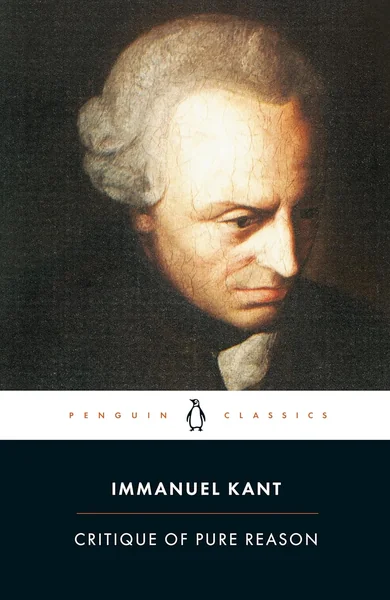
Critique of Pure Reason (Penguin Classics) by Author front cover
First published in German as Kritik der reinen Vernunft in 1781, with a substantially revised second edition in 1787, the Critique of Pure Reason is Immanuel Kant's systematic philosophical treatise on the nature and limits of human knowledge. As Wikipedia documents, Kant's stated aim is to determine "the possibility or impossibility of metaphysics" by critiquing "the faculty of reason in general, in respect of all knowledge after which it may strive independently of all experience." The central question driving the work — how synthetic a priori judgments are possible — cuts to the heart of what human minds can know before or independent of sensory experience. Kant calls such knowledge "a priori," defining it as both necessary (not falsifiable under any condition) and universal (admitting of no exceptions), in contrast with "a posteriori" knowledge derived through the senses.
The treatise is structured around the Doctrine of Elements and the Doctrine of Method, preceded by two prefaces (one from each edition) and an introduction. Within this architecture, Kant develops his theory of transcendental idealism, arguing that objects of experience are representations rather than things in themselves, and that space and time are subjective forms of human intuition rather than independent features of the world.

Its Place in Philosophy and Its Historical Significance

The Critique of Pure Reason is widely referred to as Kant's "First Critique," and it initiated a trilogy that continued with the Critique of Practical Reason (1788) and the Critique of Judgment (1790). Wikipedia notes that although the work received little attention when first published, it subsequently attracted sustained criticism and controversy from both empiricist and rationalist quarters — a sign of how thoroughly it disrupted established philosophical consensus on both sides.
Kant explicitly builds on and responds to the work of major predecessors: empiricists John Locke and David Hume and rationalists René Descartes, Gottfried Wilhelm Leibniz, and Christian Wolff. His ambition, famously compared in the second preface to Copernicus's revolution in astronomy, was to reorient philosophy by taking seriously the role of human cognitive faculties in structuring the knowable world. That comparison has proved apt: the Critique permanently altered the terrain of epistemology and metaphysics.

What the Text Achieves — Its Genuine Philosophical Strengths

The scope of what Kant attempts — and largely accomplishes — in the Critique is extraordinary. He develops original accounts of space and time as forms of sensible intuition, offers a systematic deduction of the pure concepts of the understanding (the categories), and constructs arguments designed to resolve Hume's skepticism about causation and Descartes's skepticism about the external world. His transcendental idealism provides the framework through which a priori knowledge becomes coherent: because objects as appearances "must conform to our cognition," the mind's contribution to experience can be mapped and its limits specified.
Kant himself, in the preface to the second edition, described his revisions as designed to "remove misapprehensions," "clear away obscurity," and "supply the supposed want of sufficient evidence" in earlier demonstrations — a candid acknowledgment that the first edition's arguments were not always transparent. This edition's translation by Max Muller, revised and introduced by Marcus Weigelt, is designed to make the text navigable for English-language readers engaging with this demanding material.

The Edition's Apparatus and Its Scholarly Context

The Penguin Classics edition under review, published in its revised form in 2008, pairs Max Muller's translation with editorial work and an introduction by Marcus Weigelt. For readers approaching Kant without prior specialist training, editorial apparatus of this kind matters: the introduction is positioned to orient readers within the text's historical and philosophical context before they encounter the argument itself. Contemporary Kant scholarship, as noted across the academic literature, encompasses a wide range of interpretive approaches — some reading the Critique in relation to Kant's philosophical predecessors, others focused on the internal logic of his arguments, and still others connecting his ideas to contemporary philosophy. An accessible scholarly edition does not resolve those debates, but it provides the foundational text from which readers can enter them.

Who This Book Is For — and Who Should Prepare Accordingly

The Critique of Pure Reason is indispensable for anyone pursuing serious study of philosophy, epistemology, or the history of ideas. It is equally relevant to readers in fields — theology, cognitive science, political theory — where Kantian concepts have left a lasting mark. However, the text's density is not incidental; Kant's own revisions to the second edition were motivated by widespread confusion among even acute readers of the first. Readers new to philosophy who come to this volume without background in either the rationalist or empiricist traditions Kant is engaging will find the going steep. Those who arrive with some familiarity with Hume, Descartes, or Locke will have the context to follow Kant's arguments as they unfold. For dedicated students and scholars, the Critique is not optional — it is the text against which a significant portion of modern philosophy has been written.

Sources & Further Reading

The key facts and claims in this review are grounded in the retrieved, verified sources listed below.

  1. Cited in this review
  2. 1
  3. 2
  4. 3
  5. Further reading
  6. 4

    Immanuel Kant, Wikipedia

  7. 5
  8. 6
  9. 7
  10. 8
  11. 9

    cpb-us-w2.wpmucdn.com

  12. 10
  13. 11